CM Mohan Yadav Pays Tribute to C.V. Raman on Death Anniversary
Synopsis
Madhya Pradesh Chief Minister Dr. Mohan Yadav honoured Sir C.V. Raman on his death anniversary, calling the Nobel laureate's discovery of the Raman Effect a gift to science that continues to inspire the world.
Key Takeaways
Mohan Yadav paid tribute to Sir C.V.
Raman on his November 21 death anniversary.
Raman discovered the Raman Effect in 1928 , revealing inelastic scattering of light and unlocking new understanding of molecular structures.
Raman won the Nobel Prize in Physics in 1930 , becoming the first Asian to receive the honour in that field.
He was also awarded India's highest civilian honour, the Bharat Ratna, in 1954 .
Tributes to Raman on his death anniversary are a recurring practice among Indian political leaders across parties, affirming the nation's scientific heritage.
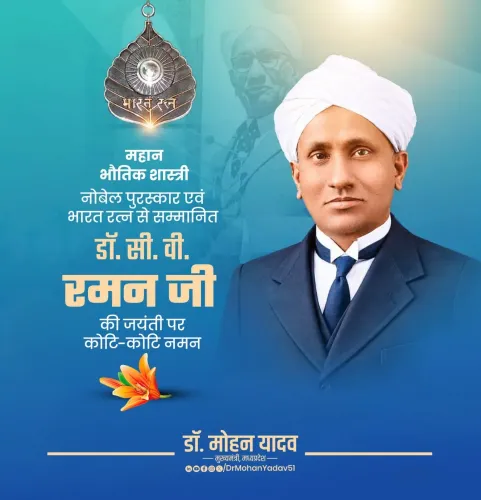
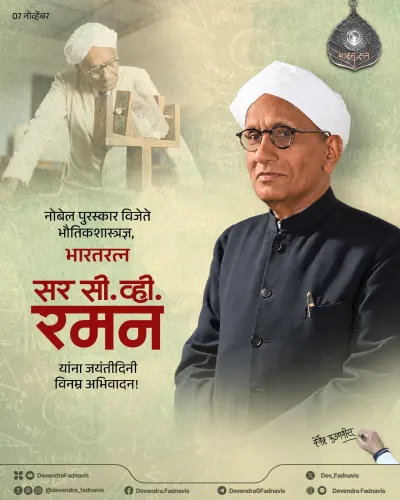
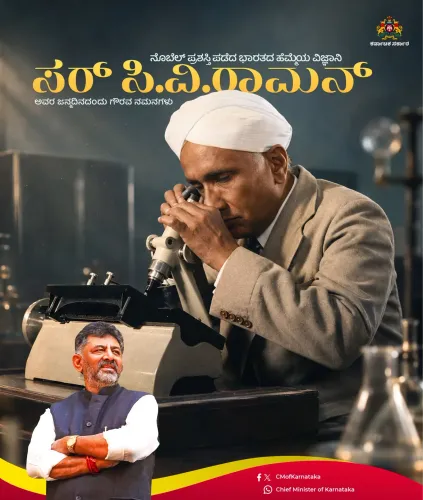
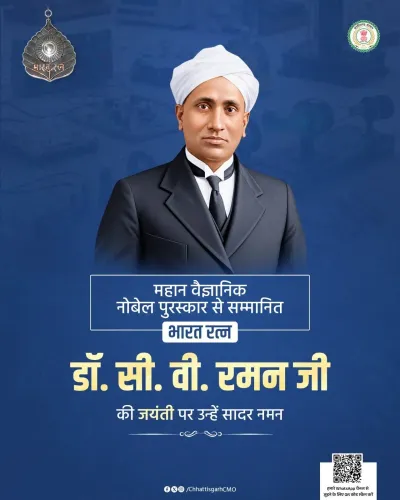
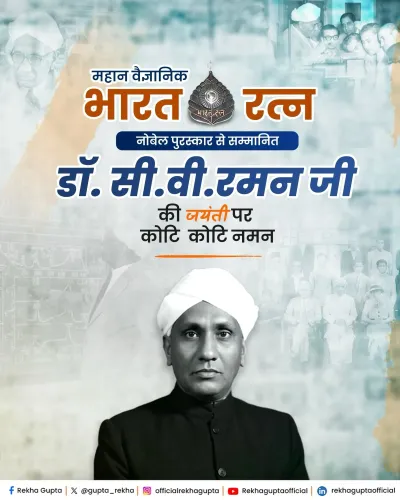
On the death anniversary of Sir C.V. Raman, Madhya Pradesh Chief Minister Dr. Mohan Yadav paused to honour the physicist whose discovery of the Raman Effect gave science a new direction — a legacy, the CM noted, that continues to inspire generations.
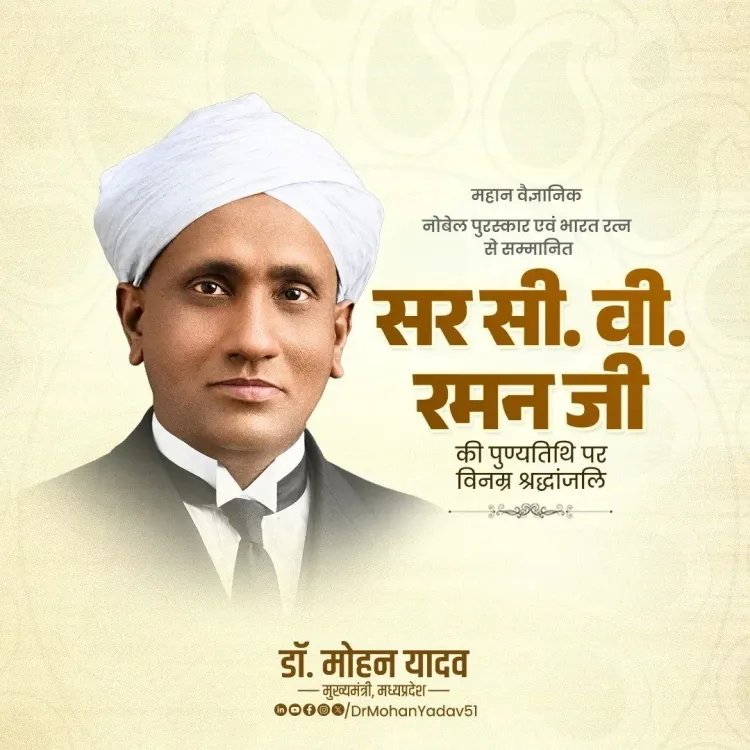
Posting on Saturday, November 21, Chief Minister Yadav wrote in Hindi: 'Nobel Puraskar evam Bharat Ratna se sammanit mahan vaigyanik Sir C.V. Raman ji ki punyatithi par unhe saadar naman karta hoon' — 'On the death anniversary of the great scientist Sir C.V. Raman, honoured with the Nobel Prize and Bharat Ratna, I bow to him with respect.' He added that Raman's 'unparalleled talent and dedication gifted science the knowledge of the Raman Effect, which showed science a new path,' and that his contributions 'remain an inspiration for all even today.'
The discovery that changed how science sees light
Sir Chandrasekhara Venkata Raman made his landmark discovery in 1928, demonstrating that when light passes through a transparent material, a small fraction of it scatters at a different wavelength — a phenomenon now known universally as the Raman Effect. The finding opened an entirely new window into molecular structure and quantum mechanics.
Two years later, in 1930, Raman became the first Asian and the first non-white scientist to win the Nobel Prize in Physics — a moment that reverberated far beyond the laboratory. India later conferred on him its highest civilian honour, the Bharat Ratna, in 1954. His death anniversary on November 21 is observed each year as a moment of national scientific reflection.
A tradition of honouring pre-Independence science
Tributes to Raman on this date have become a fixture in Indian political discourse — leaders across parties and states use the anniversary to invoke the country's scientific heritage and the contributions made well before Independence. For Chief Minister Yadav, the message carries that same intent: situating Madhya Pradesh's political leadership within a broader national pride in homegrown scientific genius.
Raman's work remains practically alive: Raman spectroscopy today is a standard tool in pharmaceuticals, materials science, and forensic analysis — proof that a discovery made nearly a century ago continues to do real work in the world.
Point of View
The gesture aligns with the BJP's broader cultural-nationalist framing, which frequently elevates pre-Independence Indian achievers as proof of civilisational excellence. While the message is ceremonial, its consistency across the political spectrum signals a consensus that scientific heritage carries electoral and cultural capital. The deeper question is whether such tributes translate into sustained investment in fundamental research — the kind Raman himself championed.
NationPress
21 Nov 2026
Frequently Asked Questions
When did C.V. Raman die?
Sir C.V. Raman passed away on November 21, 1970 , and his death anniversary is observed each year on that date.
What is the Raman Effect?
The Raman Effect, discovered in 1928 , is the inelastic scattering of light when it passes through a transparent material, causing a change in the photon's energy and providing detailed information about molecular structure.
Why did C.V. Raman win the Nobel Prize?
Sir C.V. Raman won the Nobel Prize in Physics in 1930 for the discovery of the Raman Effect, becoming the first Asian scientist to receive the prize in that category.
Was C.V. Raman awarded the Bharat Ratna?
Yes, Sir C.V. Raman was awarded the Bharat Ratna in 1954 , India's highest civilian honour, in recognition of his extraordinary contributions to science.
Why does Mohan Yadav pay tribute to C.V. Raman?
Madhya Pradesh Chief Minister Dr. Mohan Yadav paid tribute on Raman's death anniversary as part of a broader tradition among Indian political leaders to publicly honour the country's scientific heritage and inspire citizens through the legacy of great Indian scientists.