Trump Demands Answers on Ilhan Omar's Net Worth Discrepancy

Synopsis
President Donald Trump publicly challenged Rep. Ilhan Omar over a dramatic shift in her financial disclosure — from a reported net worth of up to $30 million to a corrected figure of $100,000 — demanding immediate answers on behalf of the American public.
Key Takeaways
President Trump publicly questioned a financial disclosure by Rep.
Ilhan Omar that reportedly shifted from up to $30 million to $100,000 after a correction.
The White House post quoted Trump directly, closing with a demand that 'America wants answers, and we want them, NOW!' Under the Ethics in Government Act of 1978 , all House members must file annual public financial disclosures with the Clerk of the House.
The specific figures and correction timeline in the post are unverified against publicly available official filings.
The House Ethics Committee has authority to investigate disclosure discrepancies — a formal referral is a key development to watch.
Omar has faced prior financial and campaign finance scrutiny since her first election in 2018 .
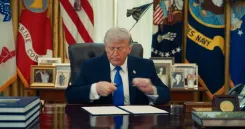
A financial disclosure filing that reportedly swung from up to $30 million to just $100,000 — and a swift correction that followed — has drawn a pointed, public challenge from the highest office in the United States. President Donald J. Trump, speaking through the White House's official communications account on Tuesday, October 13, 2026, demanded that Representative Ilhan Omar of Minnesota explain the dramatic gap, framing it as a matter of national accountability.
The $30 Million Question at the Heart of the Dispute
Trump's statement quoted directly: 'Why did Ilhan Omar report a Net Worth of up to 30 Million Dollars just a short time ago, and then immediately say, Oh, I made a mistake! It's really $100,000.' The White House post closed with a sharp demand — 'America wants answers, and we want them, NOW!' — signalling that the administration intends to keep this in the public eye.
At the centre of the controversy is a mandatory financial disclosure filing. Under the Ethics in Government Act of 1978, every member of the U.S. House of Representatives must submit annual financial disclosure reports, made public by the Clerk of the House. These filings are a cornerstone of the federal ethics framework, designed to reveal potential conflicts of interest and ensure transparency about lawmakers' personal wealth.
Omar's Record Under the Microscope
Ilhan Omar, first elected in 2018 as the Democratic Representative for Minnesota's 5th Congressional District, has faced earlier rounds of financial and campaign finance scrutiny during her tenure. The research block flags that the specific figures and the correction timeline cited in Trump's statement postdate verifiable public records — meaning the precise sequence of events has not yet been independently confirmed through official filings available to date.
That caveat matters. A $30 million figure versus a $100,000 figure is not a rounding error — it is a discrepancy of almost three hundred times. If borne out, such a gap in a congressional disclosure would typically trigger review by the House Ethics Committee, which has the authority to investigate members and recommend sanctions.
A Pattern Bigger Than One Filing
Presidents and congressional leaders have periodically spotlighted alleged discrepancies in lawmakers' financial filings, turning ethics paperwork into political ammunition amid partisan divides between the executive and legislative branches. Trump, both as the 45th and now 47th President, has consistently used direct-to-public social media posts to amplify pressure on political opponents — bypassing traditional channels and forcing opponents onto the defensive in the court of public opinion.
The immediate question for watchdogs and legal observers: will Trump's public demand be followed by a formal White House referral to ethics authorities, or does this remain a rhetorical broadside? Any amended disclosure filing by Omar, or a formal Ethics Committee inquiry, will determine whether this escalates from a social-media moment into a genuine institutional reckoning.
When a President of the United States personally calls out a sitting lawmaker's financial paperwork before a global audience, the burden of a clear, documented answer falls squarely on the accused — and the clock is running.
Point of View
Raising the stakes before any formal inquiry has even begun. For ethics watchdogs, the core question is whether a documented discrepancy of this magnitude will trigger a House Ethics Committee process independent of political theatre. The episode underscores how financial transparency laws meant to depoliticise accountability can themselves become political battlegrounds.
NationPress
14 Oct 2026
Frequently Asked Questions
Why is Trump targeting Ilhan Omar's financial disclosures?
President Trump publicly alleged that Rep. Omar filed a disclosure showing a net worth of up to $30 million, then quickly corrected it to $100,000, calling the gap unexplained and demanding public accountability.
Are US Congress members required to disclose their net worth?
Yes. Under the Ethics in Government Act of 1978, all members of the House of Representatives must file annual financial disclosure reports that are made public by the Clerk of the House.
What happens if a congressperson files an inaccurate financial disclosure?
Inaccurate or misleading financial disclosures can be referred to the House Ethics Committee, which has authority to investigate members and recommend sanctions ranging from reprimand to expulsion.
Has the $30 million net worth figure been verified?
The specific figures and correction timeline cited in Trump's statement have not been independently confirmed against official public filings available to date; the claim remains unverified pending official disclosure records.