Trump Designates Oval Office a National Monument
Synopsis
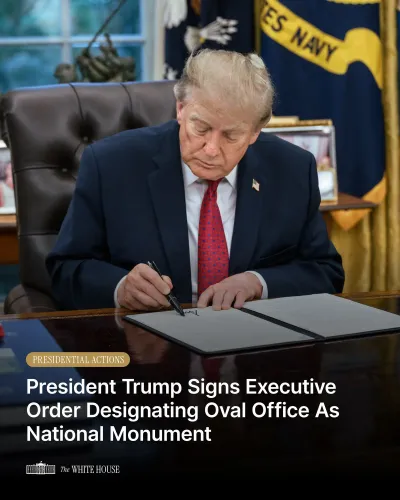
President Donald J. Trump has designated the Oval Office as a national monument under the Antiquities Act of 1906 — an unprecedented use of executive authority that raises immediate questions about future preservation rules and what successors may legally alter inside the room.
Key Takeaways
President Trump signed a proclamation on 6 November 2026 designating the Oval Office as a national monument.
The move invokes the Antiquities Act of 1906 , which allows presidents to protect objects of historic significance on federal land.
The Oval Office is already inside the White House , a designated National Historic Landmark managed by the National Park Service .
No prior president has applied the Antiquities Act to an active, occupied interior room inside an existing federal building.
Key open questions include whether future presidents could legally redecorate or alter the room without federal preservation review.
Formal National Park Service implementation guidance is expected to follow the White House fact sheet.
In a move with no modern precedent, President Donald J. Trump has signed a proclamation designating the Oval Office — the beating heart of American executive power — as a national monument, invoking the century-old Antiquities Act of 1906 to extend formal federal protection to the iconic interior room inside the West Wing of the White House.
What the Antiquities Act Actually Allows
The Antiquities Act of 1906 grants any sitting president the authority to proclaim national monuments on federal lands to protect objects of historic, cultural, or scientific significance. Every administration since Theodore Roosevelt has used the law — typically to shield sweeping outdoor landscapes, archaeological sites, or historic structures from development or degradation.
Applying that authority to a single interior room inside an already federally managed building is a sharp departure from the law's traditional use. The White House complex is already a designated National Historic Landmark, managed under National Park Service oversight and multiple existing historic-preservation statutes — making the layering of a monument designation unusual in legal terms.
The Oval Office: Symbol, Workspace, and Now Monument
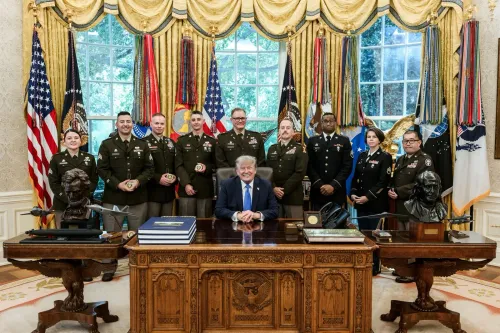
The Oval Office, situated in the West Wing rebuilt after the 1929 renovation under President William Howard Taft and reconstructed to its current form in 1934, serves simultaneously as the president's formal working office and one of the most televised rooms on Earth. Every modern president has redecorated it — the choice of drapes, rug, and desk becoming a cultural shorthand for a new administration's identity.
Designating it a national monument raises immediate practical questions: what preservation standards would now govern future redecoration? Could a successor president legally alter the room, and would doing so require federal review? The White House's official fact sheet, published at whitehouse.gov on 6 November 2026, is expected to address implementation, with formal National Park Service guidance anticipated to follow.
Legal and Historical Precedent — or the Absence of It
Historians and legal scholars are likely to scrutinise whether the Antiquities Act's language — 'objects of historic or scientific interest situated on the lands owned or controlled by the Government' — was ever intended to apply to an active, regularly used executive workspace. Prior monument designations have covered everything from Devils Tower in Wyoming to Bears Ears in Utah, but none has targeted a functioning, occupied room inside a building already under federal stewardship.
What is not in dispute: the symbolic weight of the act. By placing the Oval Office inside the monument framework, the Trump administration is asserting a formal, legally codified claim on the room's historical permanence — a declaration, in effect, that what happens inside those walls belongs to the ages.
Whether the courts, Congress, or future administrations agree is a question the proclamation has just put squarely on the table.
Point of View
It is a reminder that Washington's domestic politics continue to shape the predictability and durability of US institutional commitments — the same executive pen that protects a room can, by precedent, redraw far larger maps.
NationPress
6 Nov 2026
Frequently Asked Questions
What does it mean for the Oval Office to be a national monument?
It means President Trump has formally placed the Oval Office under the legal protection framework of the Antiquities Act, which could restrict how future presidents alter or redecorate the room without federal review.
What is the Antiquities Act and how has it been used before?
The Antiquities Act of 1906 allows US presidents to declare national monuments on federally owned land to protect historic or scientific objects. It has traditionally been used for outdoor landscapes and archaeological sites, not interior rooms.
Is the White House already a protected historic site?
Yes. The White House is a designated National Historic Landmark managed under National Park Service oversight and multiple existing historic-preservation laws, making this monument designation an additional — and legally novel — layer of protection.
Can a future US president undo this monument designation?
Presidents have historically modified or revoked prior monument designations, though legal challenges frequently follow. Whether a future president could freely redecorate or use the Oval Office without restriction would likely require legal clarification.
Why does this matter for people outside the United States?
The move signals the extent to which the Trump administration is willing to use executive authority in unprecedented ways, raising broader questions about institutional continuity and the durability of US governance norms — matters closely watched by allies and partners globally, including India.