Trump policies eroding US power, warns ex-Obama aide Smart

Synopsis
Foreign money is still flooding into US markets — $261 billion net in September alone. But ex-Obama aide Christopher Smart warns this masks a deeper erosion. As China, Russia and Europe build systems that bypass the dollar, Visa and Mastercard, Trump's unpredictability may be quietly reshaping global finance.
Key Takeaways
Former US official Christopher Smart warned in a New York Times guest essay that Donald Trump's policies are eroding America's long-term power.
US Treasury data showed a net inflow of $261 billion in September , including $186.7 billion in net purchases of long-term US securities.
Smart cited China and Russia building non-dollar payment systems and Europe cutting reliance on Visa and Mastercard .
A Pew Research Center survey found a median of 37% across 36 countries viewed the US favourably, while 57% viewed it unfavourably.
Smart urged the incoming Democratic Congress to begin repairing America's reputation immediately.
Former US economic official Christopher Smart has warned that President Donald Trump's unpredictable policies are steadily eroding America's long-term global power, even as foreign investors keep pouring money into US financial markets. In a guest essay published by The New York Times on Saturday, Smart argued that strong capital inflows should not be read as unshaken confidence in Washington.
The essay, titled “America's Power Is Eroding, One Bad Decision at a Time”, is Smart's personal assessment of the trend. It is not a new official finding about the American economy.
Key Arguments in the Essay
“The continued strength of the U.S. economic position masks the long-term erosion of America's power,” Smart wrote.
He argued that uncertainty over US policy is pushing investors to rethink future plans. It is also prompting foreign governments to cut their financial exposure to Washington.
“But beneath these flows, the ground is shifting. Foreign governments are scrambling to limit their economic exposure to America's unpredictability,” he wrote.
Smart pointed to concrete moves abroad. “As Washington has rapidly expanded financial sanctions, China and Russia have built international payment systems that avoid using dollars altogether. Europeans have accelerated efforts to reduce reliance on Visa and Mastercard, which currently process nearly half of euro-area card payments,” he said.
“Foreign governments have also advanced digital currencies and blockchain cross-border settlements that avoid the U.S. Treasury's choke points,” he added.
Who Is Christopher Smart
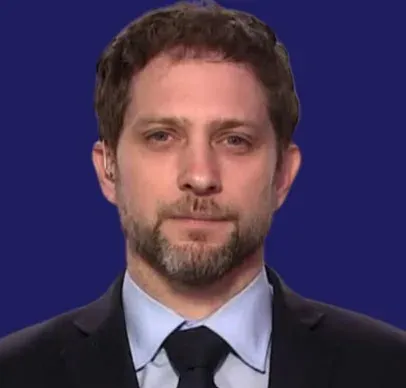
Smart served in the Obama administration as a special assistant to the president on the National Economic Council and the National Security Council. In that role, he advised on trade, investment and international economic issues.
He was also a deputy assistant secretary of the Treasury. He now heads the Arbroath Group, an investment and geopolitical advisory firm.
What the Official Data Shows
Official figures show that large volumes of foreign money are still entering US markets. Treasury Department data released on 18 November recorded a net inflow of $261 billion in September. That figure covers the securities and banking flows tracked by the Treasury International Capital system.
Foreign residents bought a net $186.7 billion of long-term US securities during the month. Private investors accounted for $148.3 billion and official institutions for $38.4 billion.
This creates the apparent contradiction at the centre of Smart's argument. Money keeps flowing in, while governments abroad quietly build alternatives to US financial infrastructure.
Global Sentiment Towards the US
Smart's warning comes amid research showing weaker public views of the United States in many countries. A Pew Research Center survey released in June found that a median of 37 per cent of adults across 36 countries viewed the US favourably, while 57 per cent viewed it unfavourably.
Favourable ratings fell significantly in 15 of the 24 countries where comparisons with the previous year were available. The survey interviewed 42,151 people between 8 February and 13 May. Its cross-country median reflects the middle country result, not the combined share of all respondents.
What Lies Ahead
Smart acknowledged that foreigners still admire America's record of innovation and growth. He added that they are, however, learning how to resist Washington's economic pressure.
“The consequences — which will probably include a more chaotic, less America-friendly world — might not be fully visible now, or in the remainder of Mr. Trump's term. But the incoming Democratic Congress should take note: Shoring up America's reputation must begin immediately if the damage is to be contained,” he said.
Whether that warning gains traction in Washington may depend on whether the slow shift away from US financial channels starts to appear in hard capital-flow data.
Point of View
Not where trust will sit tomorrow. The dollar's dominance rests partly on a lack of alternatives, and sanctions-driven payment systems, euro-area card rails and digital currencies are slowly building those alternatives. For India, which trades heavily in dollars while expanding rupee settlements, a less predictable Washington means both risk and room to manoeuvre. Still, it is an op-ed by a former Democratic administration official, and the hard data has not yet confirmed the decline he describes.
NationPress
29 Nov 2026
Frequently Asked Questions
What did Christopher Smart say about Trump's policies?
Christopher Smart argued that President Donald Trump's unpredictable policies are eroding America's long-term power, even though foreign investment keeps flowing into US markets. He made the case in a guest essay in The New York Times.
Who is Christopher Smart?
Christopher Smart is a former US economic official who served in the Obama administration as a special assistant to the president on the National Economic Council and National Security Council. He was also a deputy assistant secretary of the Treasury and now heads the Arbroath Group.
How much foreign money entered US markets in September?
US Treasury data released on 18 November recorded a net inflow of $261 billion in September. Foreign residents bought a net $186.7 billion of long-term US securities during the month.
How are other countries reducing reliance on the US financial system?
According to Smart, China and Russia have built payment systems that avoid the dollar, and Europe is working to reduce reliance on Visa and Mastercard. Governments are also advancing digital currencies and blockchain cross-border settlements.
What did the Pew survey find about views of the United States?
A Pew Research Center survey released in June found a median of 37% of adults across 36 countries viewed the US favourably, while 57% viewed it unfavourably. Favourable ratings fell significantly in 15 of the 24 countries with year-on-year comparisons.