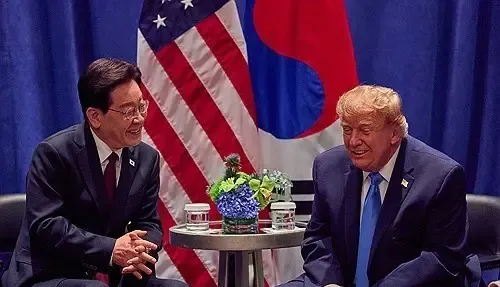
Trump views OPCON transfer as route to US troop withdrawal from Korea: Experts
Synopsis
Top US defence experts, including former officials from the Pentagon and US Forces Korea, have warned that President Trump views the OPCON transfer to South Korea as a vehicle for withdrawing American troops from the peninsula — a move that would fundamentally reshape the Indo-Pacific security order and alarm allies in Seoul, Tokyo, and beyond.
Key Takeaways
Victor Cha of CSIS assessed that President Trump views the OPCON transfer as a means to withdraw US troops from the Korean Peninsula .
Former assistant secretary of defence Randall Schriver said he '100 per cent agrees' that Trump could use OPCON transition to reduce the US military footprint in South Korea.
Former US Forces Korea commander Vincent Brooks cautioned against a purely political OPCON transfer, stressing mutually agreed conditions must first be met.
South Korean Defence Minister Kang Shin-chul had previously said South Korea could defend itself without major difficulty even if OPCON were transferred immediately.
Approximately 28,500 US troops are currently stationed in South Korea , a cornerstone of the region's post-war security architecture.
US President Donald Trump reportedly views the envisioned transfer of wartime operational control (OPCON) to South Korea as a potential pathway for withdrawing American troops from the Korean Peninsula, according to assessments by prominent US defence experts. The remarks emerged during an online discussion on the state of the South Korea-US alliance, hosted by the Washington-based think tank Center for Strategic and International Studies (CSIS) on 14 November 2026.
What US Experts Are Saying
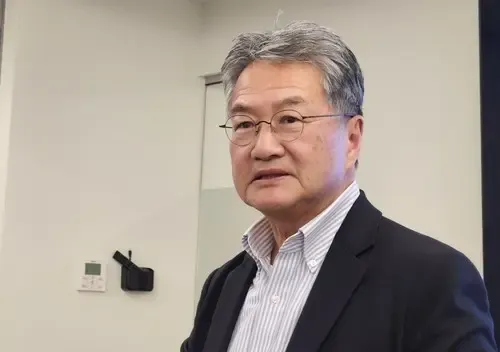
Victor Cha, Korea chair at CSIS, stated plainly: 'It has been said, and I think said very credibly, that President Trump sees OPCON transition as a way to pull the forces from the peninsula.' Cha cautioned that even if Congress were to establish a minimum troop level in South Korea through the National Defense Authorisation Act (NDAA), Trump could still find means to reduce the American military presence on the peninsula.
'They should have no illusions that this is not the way the US president thinks,' Cha said. 'He clearly sees this as a way for him to remove troops from the peninsula.'
Randall Schriver, a former assistant secretary of defence for Indo-Pacific security affairs, echoed that assessment. 'I 100 per cent agree that the potential for him to view OPCON transfer as a way out or a way to reduce (US troops in Korea) is there,' Schriver said. He expressed hope that any such move would allow sufficient time for deliberations involving the Pentagon, military leaders, and Congress over the strategic value of maintaining the US military footprint in South Korea.
Former US Forces Korea Commander Raises Concerns
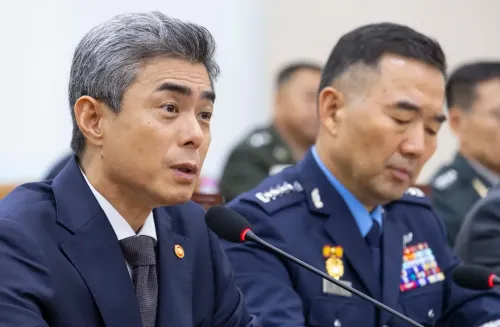
Vincent Brooks, a former commander of US Forces Korea, expressed disappointment over remarks by South Korean Defence Minister Kang Shin-chul, who had earlier endorsed the view that Seoul could defend itself without major difficulty even if wartime OPCON were transferred immediately.
'I was very disappointed that the South Korean minister of defence, whom I know very well, General and now Minister Kang Shin-chul, said it could happen today,' Brooks said. He drew an analogy to caution against premature action: 'Well, that's kind of true. It could if there's a political decision, but if I'm a college student, I can say I could graduate today, even if I haven't taken the requisite courses and passed the final exam.' Brooks stressed that the transfer should proceed only after both allies fulfil mutually agreed conditions — not merely through a political decision.
Seoul's Position on OPCON
Minister Kang Shin-chul, in a written response to a parliamentary inquiry in September, said he agreed with former Defence Minister Ahn Gyu-back's assessment that South Korea would have no major difficulty defending itself even if wartime OPCON were returned the following day. Kang, however, stressed that mutual trust within the South Korea-US alliance must be guaranteed as a precondition.
Notably, the OPCON transfer has been a long-debated issue between Seoul and Washington, with the timeline repeatedly pushed back over readiness concerns. This latest round of expert commentary suggests the debate has taken on renewed urgency under the current US administration.
Broader Alliance Implications
The Korean Peninsula hosts approximately 28,500 US troops, a presence that has underpinned regional security architecture since the 1953 Korean War armistice. Any reduction would have significant consequences not only for the South Korea-US alliance but also for the broader Indo-Pacific security balance, including reactions from Japan, China, and North Korea. This comes amid ongoing concerns about North Korea's continued weapons programme and its deepening ties with Russia.
How the alliance navigates the OPCON question in the months ahead will serve as a critical indicator of Washington's long-term commitment to the Indo-Pacific security order.
Point of View
It becomes a political off-ramp from an alliance he has long treated as a burden rather than a strategic asset. The concern is not that South Korea cannot eventually assume full wartime command, but that an accelerated, politically-driven transfer would outpace operational readiness and send a destabilising signal to Pyongyang and Beijing simultaneously. With North Korea deepening its partnership with Russia and China recalibrating its Taiwan posture, the timing of any US retrenchment from the peninsula carries consequences far beyond the bilateral alliance. The burden is now on Seoul and Washington's institutional actors — the Pentagon, Congress, and the Joint Chiefs — to slow-roll a decision that the commander-in-chief appears inclined to make on his own terms.
NationPress
14 Nov 2026
Frequently Asked Questions
What is OPCON transfer and why does it matter for South Korea?
OPCON, or wartime operational control, refers to the authority to command South Korean and US forces during a conflict on the Korean Peninsula. Currently held by a US general under the Combined Forces Command, its transfer to a South Korean commander has been debated for decades, with the timeline repeatedly deferred over readiness concerns. A transfer under political pressure, rather than verified conditions, could weaken deterrence against North Korea.
Why do US experts believe Trump sees OPCON transfer as a troop withdrawal tool?
CSIS Korea chair Victor Cha stated at a Washington discussion that Trump 'clearly sees this as a way for him to remove troops from the peninsula,' and former Pentagon official Randall Schriver agreed '100 per cent' with that assessment. Experts note that even Congressional safeguards in the NDAA may not fully constrain a president determined to reduce the US military footprint in South Korea.
What is South Korea's official position on OPCON transfer?
South Korean Defence Minister Kang Shin-chul said in a September parliamentary response that Seoul would have no major difficulty defending itself even if wartime OPCON were transferred the following day, while stressing that mutual trust in the alliance must be guaranteed. His remarks drew criticism from former US Forces Korea commander Vincent Brooks, who argued readiness conditions must be formally met before any transfer.
How many US troops are currently stationed in South Korea?
Approximately 28,500 US troops are stationed in South Korea, a presence maintained since the 1953 Korean War armistice. This deployment is considered a central pillar of the Indo-Pacific security architecture and a key deterrent against North Korean aggression.
What happens next in the OPCON debate?
The debate is expected to intensify as experts urge that any OPCON transition involve deliberations among the Pentagon, military leaders, and Congress rather than a unilateral presidential decision. The outcome will be closely watched by regional actors including Japan, China, and North Korea, as it signals the durability of the US commitment to the Korean Peninsula.