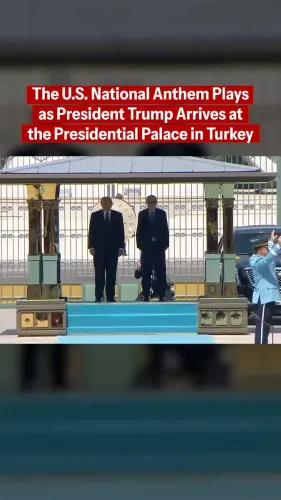
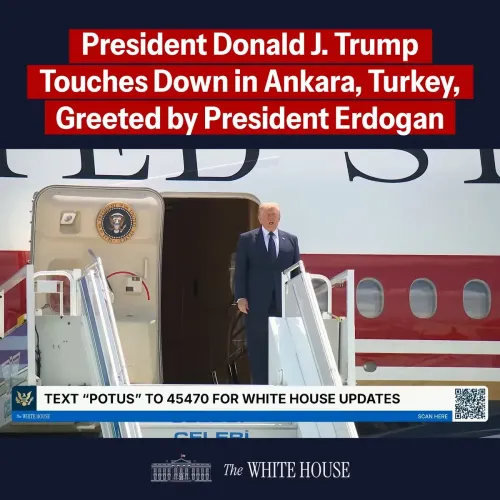
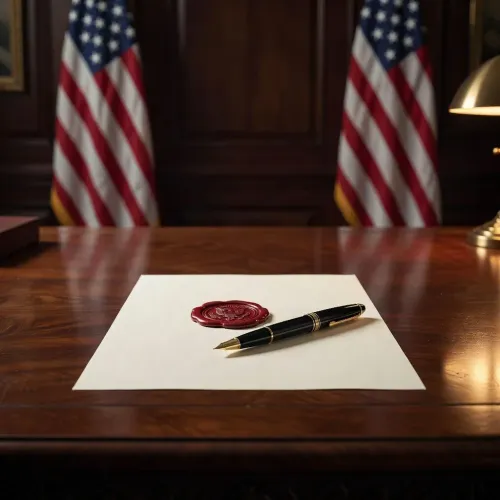
Trump Hosts State Arrival Ceremony and Honor Guard Review
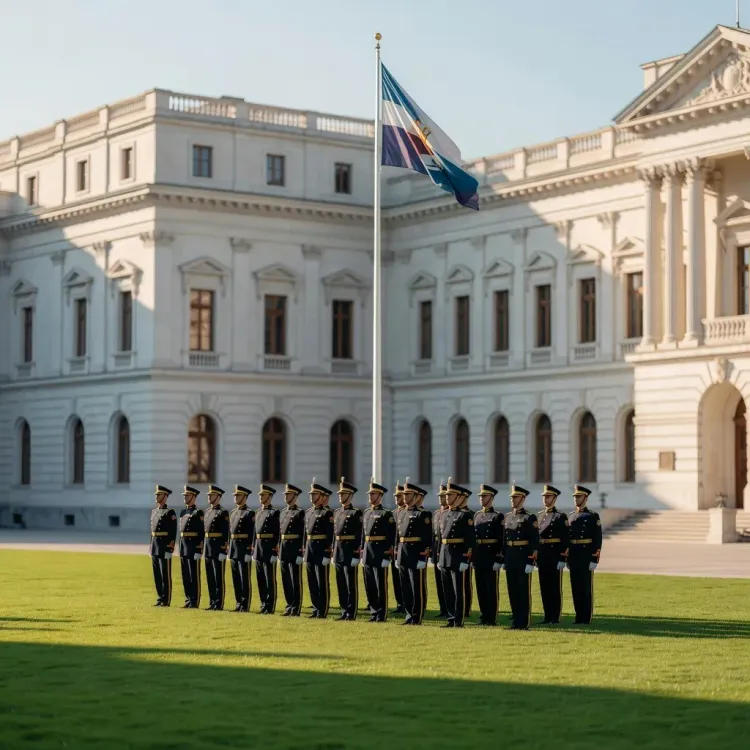
Synopsis
President Donald Trump participated in a State Arrival Ceremony and Honor Guard Review at the White House on July 7, 2026, formally welcoming a foreign dignitary in keeping with established US diplomatic protocol. Substantive bilateral discussions are expected to follow the ceremony.
Key Takeaways
President Trump participated in a State Arrival Ceremony and Honor Guard Review on Tuesday, July 7, 2026 .
The ceremony was held at the White House , following longstanding US diplomatic protocol for receiving foreign heads of state.
Honor guard reviews and state arrival ceremonies typically precede bilateral talks on security, trade, and regional issues.
During Trump's first term, similar ceremonies were conducted, including for French President Emmanuel Macron in April 2018 .
Joint statements or agreements emerging from subsequent bilateral meetings are expected to be closely watched by diplomatic observers.
The White House announced on Tuesday, July 7, 2026, that President Donald Trump participated in a State Arrival Ceremony and Honor Guard Review, marking the formal welcome of a foreign dignitary to the United States in keeping with longstanding diplomatic protocol.
Context
State arrival ceremonies are among the most formal expressions of diplomatic engagement in the American executive tradition. Conducted typically on the South Lawn of the White House, these events feature military ceremonial units, a formal review of the honor guard, and official greetings between heads of state. The White House confirmed Trump's participation in Tuesday's ceremony through its official communications channel.
The ceremony follows an established protocol that successive US administrations have used to signal the importance of a bilateral relationship. During Trump's first term (2017–2021), similar ceremonies were held for visiting leaders, including a notable state arrival for French President Emmanuel Macron in April 2018.
Policy Backdrop
State arrival ceremonies are not merely ceremonial — they set the diplomatic tone for the substantive meetings that follow. They typically precede bilateral discussions on security cooperation, trade relations, and pressing regional issues, and signal that the visiting leader's country holds a position of significance in Washington's foreign policy calculus.
Since beginning his second term in January 2025, President Trump has continued the tradition of using formal state ceremonies to engage with international counterparts. The resumption and continuation of such protocols underscores the executive branch's commitment to traditional diplomatic engagement even as specific policy positions have evolved.
Stakeholders and Impact
The primary stakeholders in any state arrival ceremony are the two heads of government and the nations they represent, along with the US military ceremonial units that execute the honor guard review. For the visiting dignitary, the ceremony represents a formal acknowledgement of their country's standing in the bilateral relationship with the United States.
For Indian observers, such ceremonies carry particular significance when they involve leaders from the Indo-Pacific region or countries with close economic and strategic ties to India. Bilateral outcomes — including joint statements, trade frameworks, or security agreements — that emerge from meetings following the ceremony can directly affect regional dynamics.
What's Next
The State Arrival Ceremony and Honor Guard Review typically serves as the opening event of a broader diplomatic programme. Observers will watch closely for subsequent bilateral meetings between President Trump and the visiting leader, as well as any joint statements, memoranda of understanding, or agreements that may be announced in the hours and days following the ceremony.
The outcomes of such high-level engagements often shape the trajectory of bilateral relations for months ahead, making the post-ceremony discussions the most consequential element of the visit.
Point of View
The identity of the visiting dignitary and the substance of the bilateral agenda that follows will be the true measure of this engagement's significance. The continuity of traditional ceremonial protocols also suggests that, whatever the rhetorical shifts in American diplomacy, the structural machinery of executive-branch engagement with international partners remains intact.
NationPress
7 Jul 2026
Frequently Asked Questions
What is a State Arrival Ceremony at the White House?
A State Arrival Ceremony at the White House is a formal diplomatic event in which the US President officially welcomes a visiting foreign head of state, typically featuring a military honor guard review, national anthems, and formal greetings on the South Lawn.
Who did Trump welcome at the White House on July 7, 2026?
The White House confirmed President Trump participated in a State Arrival Ceremony on July 7, 2026, but the identity of the visiting dignitary was not specified in the official announcement.
What happens after a State Arrival Ceremony at the White House?
After a State Arrival Ceremony, the two leaders typically hold bilateral meetings to discuss issues such as trade, security cooperation, and regional affairs, often concluding with a joint statement or signing of agreements.
Has Trump held State Arrival Ceremonies before?
Yes. During his first term, President Trump held State Arrival Ceremonies for several foreign leaders, including French President Emmanuel Macron in April 2018.
Why are State Arrival Ceremonies important for India?
State Arrival Ceremonies at the White House matter for India when they involve leaders from the Indo-Pacific or countries with close ties to India, as the bilateral outcomes — trade deals, security pacts, or joint statements — can directly affect regional dynamics relevant to New Delhi.