Trump Hosts Xi Jinping at White House in Reciprocal State Visit
Synopsis
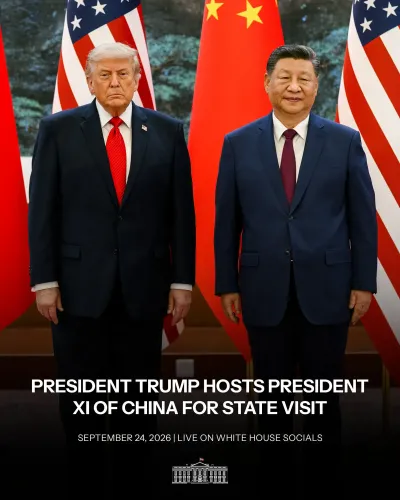
President Trump hosted Chinese President Xi Jinping and First Lady Peng Liyuan at the White House on September 24, 2026, for a formal State Visit that reciprocates Xi's earlier hosting of Trump in China, with Trump publicly citing a 'truly great friendship' between the two leaders.
Key Takeaways
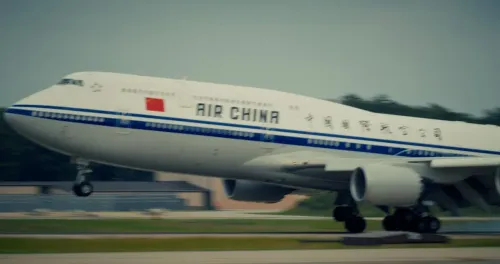
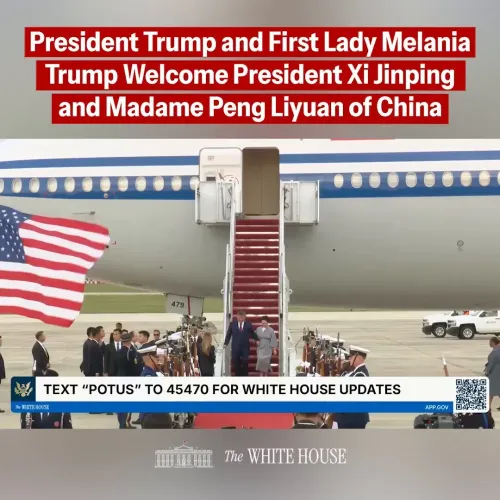
President Xi Jinping and First Lady Peng Liyuan arrived at the White House on September 24, 2026 for a formal State Visit.
The visit explicitly reciprocates President Xi's hosting of President Trump in China earlier in 2026.
Trump described his relationship with Xi as 'a truly great friendship' built on 'mutual respect and the vital interests of our people.' Reciprocal State Visits at this level typically precede joint communiqués or mandates for high-level trade and security working groups.
The diplomatic temperature set by the visit has downstream implications for Indo-Pacific trade, technology, and security alignments.
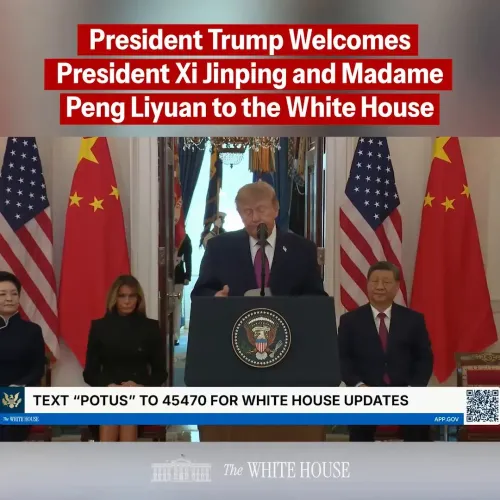
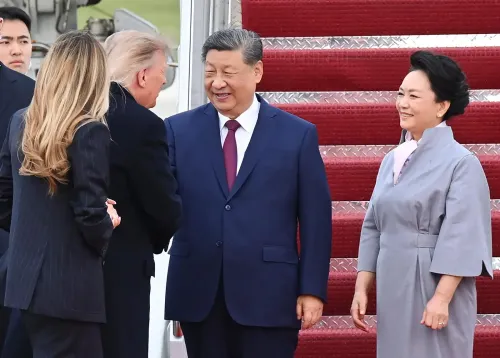
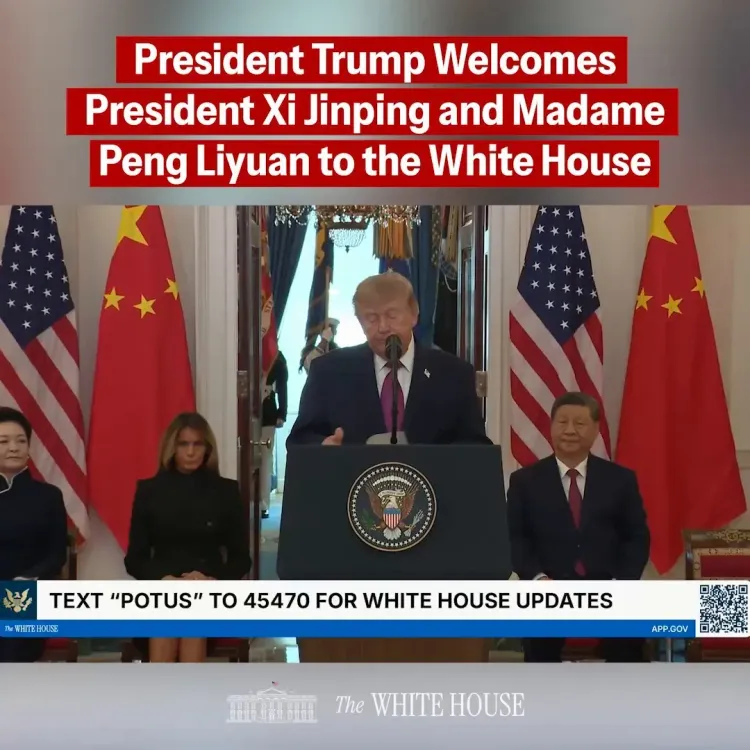
A handshake between the world's two most powerful leaders landed at the White House on Thursday, September 24, 2026, as President Donald Trump welcomed Chinese President Xi Jinping, First Lady Peng Liyuan, and the full Chinese delegation for a formal State Visit — one that Trump described as rooted in a 'truly great friendship' built on 'mutual respect and the vital interests of our people.'
Trump and Xi face-to-face: what the White House said
The White House framed Thursday's visit explicitly as a reciprocation — President Xi had earlier this year hosted President Trump in China, and Washington is now returning that hospitality on home soil. In his own words, Trump said: 'President Xi and I have forged a friendship, a truly great friendship actually, built on the mutual respect and the vital interests of our people.' The language of personal rapport — rare in formal diplomatic statements — signals that both capitals are invested in keeping direct leader-to-leader channels open.
Peng Liyuan, who regularly plays a visible role in Chinese state diplomacy and cultural outreach, travelled with the delegation, lending the visit the full ceremonial weight of a reciprocal State Visit rather than a working summit.
Why the symmetry of reciprocal visits matters
Reciprocal State Visits are among the most deliberate signals in the diplomatic playbook. Each country hosting the other's head of state at the highest protocol level communicates, publicly and formally, that the relationship is being managed — whatever the underlying tensions. US-China summits have historically served as the primary pressure-release valve for the world's most consequential bilateral relationship, covering fault lines in trade, technology, security, and global governance.
The two economies remain deeply intertwined even as competition has intensified across semiconductors, military posture in the Indo-Pacific, and multilateral institutions. Leader-level meetings of this kind typically produce either joint communiqués or mandates for high-level working groups — the diplomatic machinery that follows a summit often matters as much as the summit itself.
What comes next from Washington and Beijing
Analysts and trade negotiators on both sides will be watching closely for any follow-on announcements — whether on tariff frameworks, technology transfer guardrails, or security hotlines. A State Visit of this formality rarely arrives without some deliverable in the pipeline. The warmth of Trump's public framing sets a cooperative tone, but the test will be in the joint readout, if any, and in the working-group mandates that emerge in the days that follow.
For India and other major economies caught between Washington and Beijing, the temperature of this visit carries direct consequences — a thaw or a freeze at the top reshapes trade flows, supply chains, and security alignments across the entire Indo-Pacific.
Point of View
Where direct personal rapport was used to create negotiating space unavailable through institutional channels. For India, positioned squarely between Washington and Beijing, a warming at the apex of US-China relations recalibrates the strategic calculus in the Indo-Pacific almost immediately. The durability of any rapprochement, however, will depend less on summit optics and more on whether the working groups that follow produce concrete movement on the structural disputes — tariffs, technology controls, and maritime security — that have defined the relationship for years.
NationPress
24 Sept 2026
Frequently Asked Questions
Why did Trump host Xi Jinping at the White House in September 2026?
The White House stated the visit was a reciprocation of President Xi's hosting of President Trump in China earlier in 2026, following standard diplomatic protocol for State Visits.
What did Trump say about his relationship with Xi Jinping?
President Trump said he and President Xi have 'forged a friendship, a truly great friendship actually, built on the mutual respect and the vital interests of our people.'
Who is Peng Liyuan and why did she accompany Xi Jinping?
Peng Liyuan is the First Lady of China and wife of President Xi Jinping . She regularly participates in state visits and cultural diplomacy, and her presence signals the full ceremonial weight of a formal State Visit.
What does the US-China State Visit mean for India?
A warming or cooling at the top of the US-China relationship directly affects Indo-Pacific trade flows, supply chains, and security arrangements, making the summit's outcomes highly consequential for India .
What outcomes are expected from the Trump-Xi summit at the White House?
Observers are watching for joint communiqués or mandates for high-level working groups on trade, technology, and security issues — the deliverables that typically follow a summit of this formality.