Trump says Iran-US peace deal 'very close', nuclear weapons clause accepted
Synopsis
Trump told NBC on 7 June that Iran has accepted a clause renouncing nuclear weapons development — and that only 'a couple of points' stand between Washington and Tehran and a formal peace deal. With enriched uranium disposal, Hezbollah strikes, and a new, reportedly injured Supreme Leader all in the frame, this is the most detailed public account yet of where the negotiations actually stand.
Key Takeaways
President Trump said on 7 June that Iran and the US are 'very close' to a peace agreement, with only 'a couple of points' unresolved.
Iran has accepted a clause committing it not to develop nuclear weapons, but Trump wants it to also renounce acquiring them through other means.
Trump has never spoken directly with new Supreme Leader Ayatollah Mojtaba Khamenei , though he described him as 'more rational' than his father Ali Khamenei , who was killed on 28 February .
If a deal is reached, the US will cooperate with Iran to recover and destroy enriched uranium; if not, Trump warned of military elimination of the stockpiles.
Israeli air raids on Lebanon have killed more than 3,560 people since 2 March ; Trump called for 'more surgical' strikes against Hezbollah .
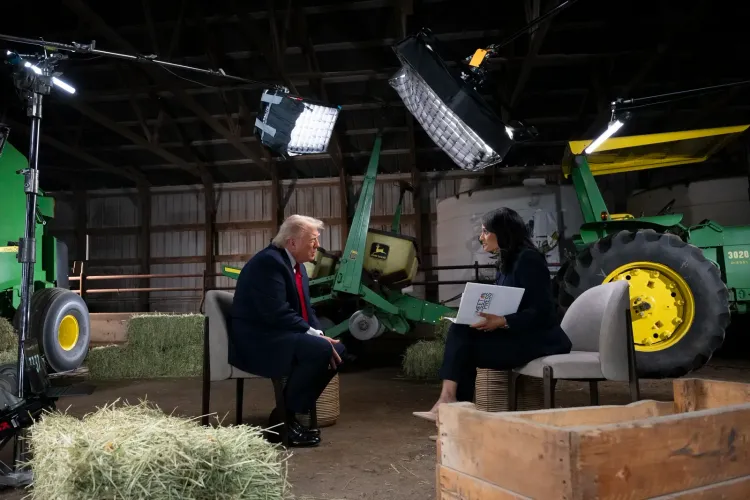
US President Donald Trump said on Sunday, 7 June that Iran and the United States are 'very close' to finalising a peace agreement, disclosing that Tehran has already accepted a clause committing it not to develop nuclear weapons. The remarks came during a wide-ranging interview with NBC News, in which Trump also addressed the ongoing conflict in Lebanon and the fate of Iran's enriched uranium stockpiles.
State of the Nuclear Talks
Trump acknowledged that 'a couple of points' of disagreement remain between Washington and Tehran, but downplayed their significance, saying they 'don't even seem like important points.' Crucially, he said Iran has accepted a clause renouncing the development of nuclear weapons. However, Trump specified that he wants Iran to also formally give up the right to acquire such weapons through other means — a demand to which Iran initially showed 'some resistance and then stopped doing so,' according to reports.
Trump confirmed he has 'never spoken directly' with Iran's new Supreme Leader Ayatollah Mojtaba Khamenei, but said the Iranian leader 'is participating in the process to reach an agreement.' Trump described Mojtaba Khamenei as 'more rational than his father' Ali Khamenei, who was killed in an air raid on Tehran on 28 February — the first day of the current conflict. The US President also called the new Supreme Leader 'quite seriously injured' but praised what he characterised as the leader's courage in continuing negotiations.
'He is quite seriously injured. So there is courage in him. Many people, if they were so seriously injured, would not talk about, you know, ‘How are we doing with the United States?’. They would have other things on their mind,' Trump said in the NBC interview.
What Happens to Iran's Enriched Uranium
Trump outlined two distinct scenarios for dealing with Iran's enriched uranium stockpiles. If a peace agreement is reached, he said the US will cooperate with Iran to recover and dispose of the uranium using American equipment. 'We will take away and destroy the uranium, whether it is on site or we take it elsewhere,' he said.
If talks collapse, Trump warned of a harder line: 'We will militarily eliminate the uranium stockpiles very harshly.' He added a pointed caveat — 'We will not allow anyone to shoot at us' — signalling that any US-led uranium recovery operation would be conducted under military protection.
Trump Urges 'More Surgical' Israeli Strikes in Lebanon
Separately, Trump called on Israel to conduct 'more surgical' raids against Hezbollah targets in Lebanon, expressing a desire for a more targeted approach. 'I would like Lebanon to have a better life. I would like to see a more targeted attack against Hezbollah. I think it should be more surgical,' he said.
The appeal came on a day when an Israeli raid in Beirut left two dead and 11 others injured. According to the latest official data, Israeli air raids on Lebanon have killed more than 3,560 people since the conflict resumed on 2 March. On the Israeli side, the army confirmed 29 soldiers and one civilian contractor have been killed in Lebanon.
What Comes Next
Trump reiterated his openness to direct talks with Mojtaba Khamenei, saying 'I would do it if he wanted to.' The new Iranian leadership is 'more rational and very intelligent,' he added. Whether the remaining sticking points can be bridged — particularly on the question of acquiring nuclear weapons through third-party means — will determine whether the first Iran-US peace framework since the war began on 28 February can be formalised in the coming weeks.
Point of View
And glossing over it as a minor point risks setting up a very public collapse. The Lebanon thread complicates things further: urging Israel toward 'surgical' strikes while a ceasefire with Iran is being negotiated sends a mixed signal to Tehran about Washington's actual leverage over Tel Aviv. And the uranium disposal question — cooperate if deal, destroy if not — frames the entire negotiation as a countdown, which may accelerate agreement or harden Iranian resistance.
NationPress
21 Sept 2026
Frequently Asked Questions
What did Trump say about the Iran-US peace deal on 7 June?
Trump said in an NBC News interview on 7 June that Iran and the United States are 'very close' to a peace agreement, with only 'a couple of points' of disagreement remaining. He said those points 'don't even seem like important points,' though he did not detail a timeline for finalising the deal.
Has Iran agreed to give up nuclear weapons under the proposed deal?
According to Trump, Iran has accepted a clause committing it not to develop nuclear weapons. However, Trump said he also wants Iran to renounce the right to acquire such weapons through other means — a demand Iran initially resisted before dropping its objections, according to reports.
Who is Mojtaba Khamenei and what role is he playing in the talks?
Ayatollah Mojtaba Khamenei is Iran's new Supreme Leader, following the death of his father Ali Khamenei in an air raid on Tehran on 28 February. Trump said Mojtaba is 'participating in the process' to reach an agreement, and described him as 'more rational' and 'very intelligent,' though Trump confirmed he has not spoken with him directly.
What will happen to Iran's enriched uranium stockpiles?
Trump said that if a deal is reached, the US will cooperate with Iran to recover and destroy its enriched uranium stockpiles using American equipment. If no agreement is reached, he warned the US would 'militarily eliminate the uranium stockpiles very harshly.'
Why did Trump call for more surgical Israeli strikes in Lebanon?
Trump said he wants Israel to conduct more targeted attacks against Hezbollah in Lebanon, expressing a desire for Lebanon to 'have a better life.' His remarks came on a day when an Israeli raid in Beirut killed two people and injured 11 others; more than 3,560 people have been killed in Lebanon since the conflict resumed on 2 March.