Trump vows to block new wind farms, backs nuclear and coal as reliable energy
Synopsis
Trump didn't just criticise wind energy — he declared a de facto moratorium on new wind farm approvals, while championing coal, nuclear, and gas at a White House nuclear technology event. With AI and data centre demand reshaping the US grid, the administration is betting that weather-dependent renewables can't carry the load. The wind industry faces its stiffest federal headwind in years.
Key Takeaways
President Trump declared on 25 July that his administration would seek to block all new wind farm approvals.
Trump criticised wind energy as expensive, noisy, visually disruptive, and heavily dependent on Chinese manufacturing .
Interior Secretary Doug Burgum backed the shift, arguing wind survives only on government subsidies.
The administration kept 35 gigawatts of coal-fired generation online over the past year, citing grid reliability during extreme winter weather.
The policy pivot is framed around rising electricity demand from AI, manufacturing, and data centres requiring round-the-clock baseload power.
No specific regulatory mechanism to block wind approvals has yet been detailed by the administration.
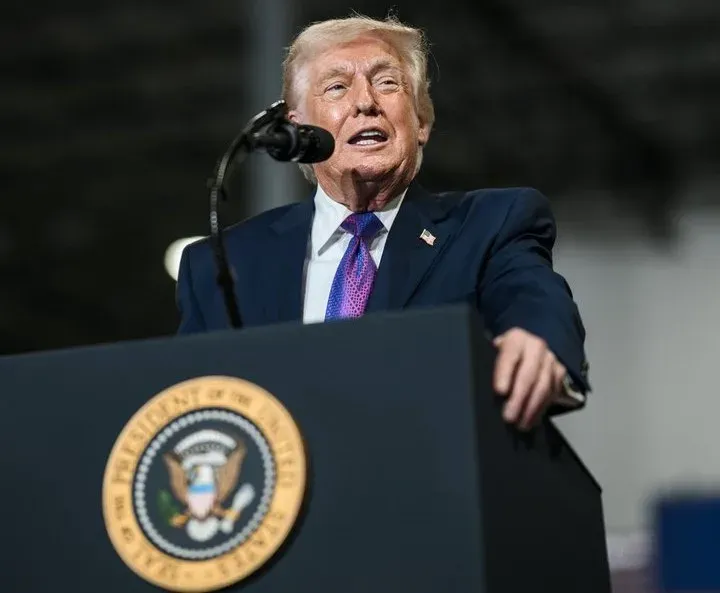
US President Donald Trump on 25 July declared that his administration would seek to halt approvals for new wind farms, renewing sharp criticism of wind energy at a White House event focused on advances in civilian nuclear technology. Trump positioned the move as part of a broader push toward what he called reliable, weather-independent electricity generation, including nuclear power, coal, natural gas, and hydropower.
Trump's Case Against Wind Energy
Responding to a question on federal support for new wind projects, Trump was unequivocal. 'We have not approved anything having to do with windmills,' he said, adding: 'They are horrible. They are unsightly. They ruin housing values of people if you're looking at a windmill or hearing a windmill because they're noisy.'
Trump repeated long-standing claims that wind turbines harm bird populations. 'They kill all the birds. They kill all the eagles,' he said, contrasting existing legal penalties for harming protected birds with what he described as the unchecked impact of wind farms: 'You shoot an eagle, you go to jail for two years. If you kill an eagle with a windmill, you don't go to jail.'
He also criticised the industry's dependence on Chinese manufacturing. 'They're all made in China. But China has very few windmills,' Trump said, adding that China itself relies primarily on coal, oil, gas, and nuclear for its energy needs. On turbine blade disposal, he acknowledged uncertainty, saying: 'I don't know if that's true or not.'
Pointing to Palm Springs, California, as a visual example, Trump said: 'As you enter beautiful Palm Springs, California, it looks like a junkyard.' His administration's stated goal: 'Unless there's a trick reason, we will have hopefully no wind farms approved.'
Interior Secretary Burgum Backs the Shift
Interior Secretary Doug Burgum endorsed the President's position, arguing that wind energy had survived primarily on government subsidies. 'President Trump has wisely understood that wind was unreliable, intermittent, depending on the weather,' Burgum said.
He framed the administration's energy strategy as a pivot toward what he called 'seven by 24 energy' — round-the-clock generation not contingent on weather. 'President Trump shifting the policy towards energy dominance, which is reliable, affordable, seven by 24 energy that's not dependent on the weather,' Burgum said. The strategy, he noted, spans nuclear, hydropower, geothermal, oil, natural gas, and coal.
Coal and Nuclear in the Spotlight
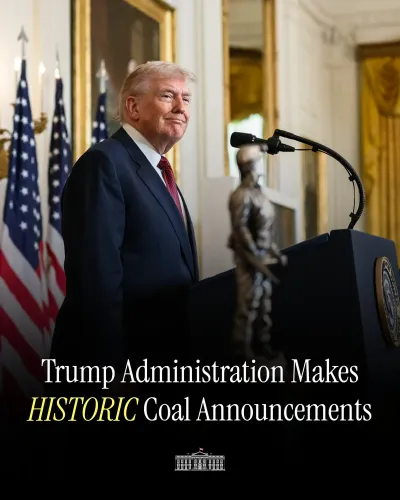
Burgum defended coal as a cornerstone of the US electricity system. 'Coal was the number one electric producer in the world 125 years ago and it was for the last 125 years in a row and it will be again this year,' he said. He added that the administration had kept 35 gigawatts of coal-fired generation online over the past year, arguing it had bolstered grid reliability during extreme winter weather events.
Trump echoed that sentiment, calling it 'clean, beautiful coal' and crediting technological advances for improving its environmental profile — a claim that energy researchers broadly contest. Nuclear power received particular emphasis at the event, with both Trump and Burgum highlighting the role of private entrepreneurs in advancing next-generation reactor technologies.
The Demand Argument: AI, Manufacturing, Data Centres
The administration framed its energy posture around surging electricity demand driven by artificial intelligence, manufacturing, and data centres. Officials argued that this demand profile requires dependable baseload generation — power that is available continuously, regardless of weather — rather than intermittent renewables. This comes amid a broader national debate over how the US grid should be modernised to meet next-decade load projections.
What Comes Next
The administration has not yet detailed the specific regulatory or legislative mechanisms it would use to block new wind farm approvals, and it remains to be seen how existing federal permitting frameworks would be affected. Wind energy industry groups and clean energy advocates are expected to mount legal and political challenges to any formal moratorium. The policy direction signals a significant departure from the previous administration's renewable energy priorities and will likely intensify the ongoing national energy debate.
Point of View
Blocking wind approvals while demand from AI infrastructure surges does not resolve the baseload problem — it simply narrows the supply options. The administration's nuclear enthusiasm is credible on paper, but advanced reactors remain years from commercial scale. Coal's revival, meanwhile, runs counter to the economics: wind and solar are now the cheapest new-build electricity sources in most US markets. The real story is not Trump versus wind — it is whether political preference can override market forces long enough to reshape the grid.
NationPress
23 Oct 2026
Frequently Asked Questions
What did Trump say about wind farms on 25 July?
President Trump said his administration would seek to prevent approval of any new wind farms, calling wind energy expensive, unreliable, noisy, and visually damaging. He made the remarks at a White House event on civilian nuclear technology advances.
What energy sources is the Trump administration promoting instead of wind?
The administration is backing nuclear power, coal, natural gas, hydropower, and geothermal energy as alternatives, describing them as reliable, weather-independent baseload sources. Interior Secretary Doug Burgum specifically cited a need for 'seven by 24 energy' not dependent on weather conditions.
What did Trump say about Chinese manufacturing and wind turbines?
Trump claimed that wind turbines are predominantly manufactured in China, while noting that China itself relies mainly on coal, oil, gas, and nuclear for its own electricity. He used this to argue that the US wind industry depends on a geopolitical rival's supply chain.
What role does coal play in the administration's energy plan?
The administration has kept 35 gigawatts of coal-fired generation operating over the past year, which officials say strengthened grid reliability during extreme winter weather. Burgum predicted coal would again be the top electricity producer in the US this year.
How might the wind energy industry respond to Trump's position?
The administration has not yet specified the regulatory mechanism it would use to block new wind approvals, leaving room for legal challenges. Wind energy industry groups and clean energy advocates are widely expected to contest any formal moratorium through the courts and Congress.