Trump Moves to Crush US Immigration Asylum Backlog
Synopsis
The White House announced President Trump is working to eliminate the US immigration asylum backlog, framing the effort as a government efficiency drive. The move continues a long-standing Trump administration focus on expedited removal, stricter asylum standards, and faster immigration enforcement across federal agencies.
Key Takeaways
The White House announced on 28 July 2026 that President Trump is working to eliminate the immigration asylum backlog.
The effort is framed as a push for greater government efficiency and faster immigration enforcement.
The US immigration asylum backlog has grown across multiple administrations since the 1990s due to rising claims and limited court capacity.
During his first term ( 2017–2021 ), Trump pursued Migrant Protection Protocols , stricter credible-fear standards, and expedited removal to reduce backlogs.
Key agencies involved include DHS , ICE , CBP , and the Executive Office of Immigration Review (EOIR) .
Quarterly EOIR backlog statistics and new executive actions will be the primary indicators to watch going forward.
The White House announced on Monday, 28 July 2026 that President Donald Trump is actively working to eliminate the longstanding immigration asylum backlog in the United States, framing the effort as a drive toward greater government efficiency and accelerated immigration enforcement.
Context
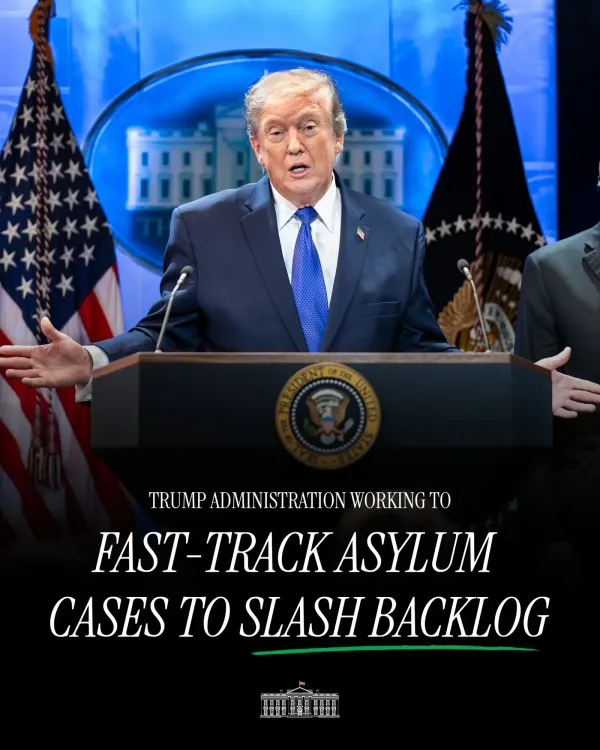
The official White House post stated that President Trump is working to 'crush the immigration asylum backlog — making the government more efficient and speeding up immigration enforcement.' The announcement signals a continued high-priority focus on immigration court processing as a central pillar of the administration's governance agenda.
The United States immigration asylum system has faced mounting case backlogs for decades. Rising numbers of asylum claims, combined with limited adjudicatory capacity in immigration courts, have created a structural bottleneck that has persisted across multiple administrations since the 1990s.
Policy Backdrop
During Trump's first term from 2017 to 2021, the administration pursued a range of measures aimed at reducing asylum case volumes and accelerating enforcement. These included the expansion of the Migrant Protection Protocols, stricter credible-fear screening standards, and regulatory changes designed to narrow asylum eligibility.
The administration also pushed for expedited removal procedures, which allow immigration authorities to deport certain individuals without a full immigration court hearing. These measures were consistently framed by the White House as necessary steps to restore order and sovereignty to the immigration system.
The Executive Office of the Immigration Review (EOIR), the body that oversees immigration courts under the Department of Justice, and the Department of Homeland Security (DHS) are the primary agencies responsible for processing and adjudicating asylum claims. Backlog figures tracked quarterly by these agencies have been a key metric in policy debates.
Stakeholders and Impact
The most directly affected group is the large population of asylum applicants currently awaiting hearings in the immigration court system. Extended backlogs mean prolonged legal uncertainty for individuals who have filed claims, many of whom remain in the country for years before receiving a final decision.
Immigration enforcement agencies, including Immigration and Customs Enforcement (ICE) and Customs and Border Protection (CBP), stand to see operational changes as processing timelines shift. Faster adjudication could translate into quicker removal orders for those whose claims are denied, increasing enforcement activity.
Immigration advocacy organisations and legal aid groups have historically raised concerns that expedited processing can compromise the quality of asylum adjudications, potentially putting vulnerable individuals at risk of wrongful removal. The administration's framing, however, centres on efficiency and national sovereignty.
What's Next
Observers will be watching for specific executive actions, proposed regulations, or administrative directives from DHS and the Department of Justice that operationalise the backlog-reduction push. Quarterly backlog statistics from EOIR will serve as the primary measurable indicator of progress.
Congressional action on immigration court funding and potential legislative reforms to asylum processing rules remain possible parallel tracks. The administration's ability to deliver measurable backlog reductions will be a key test of its broader claim that it can make the federal government more efficient — with immigration enforcement serving as a flagship example of that agenda in action.
Point of View
Which sends one of the largest cohorts of asylum and visa applicants to the United States, any structural shift in US immigration processing timelines carries direct bilateral relevance. The announcement's emphasis on speed and enforcement over humanitarian considerations signals that the administration's second-term immigration posture remains as assertive as its first.
NationPress
28 Jul 2026
Frequently Asked Questions
What is the US immigration asylum backlog?
The US immigration asylum backlog refers to the large number of pending asylum cases in immigration courts awaiting a final hearing or decision. It has grown steadily since the 1990s due to rising claim volumes and limited adjudicatory capacity.
What is President Trump doing about the asylum backlog?
The White House announced that President Trump is working to eliminate the asylum backlog by making the government more efficient and speeding up immigration enforcement, continuing policies from his first term such as expedited removal and stricter credible-fear standards.
How does the US asylum backlog affect Indians?
India is among the top countries of origin for US asylum applicants and visa holders. A faster or stricter asylum adjudication process can affect the legal status and timelines for Indian nationals with pending immigration cases in the United States.
What agencies handle US asylum cases?
The Executive Office of Immigration Review (EOIR) under the Department of Justice oversees immigration courts, while the Department of Homeland Security (DHS), ICE, and CBP handle enforcement and initial processing of asylum claims.
What were Trump's asylum policies in his first term?
During his first term from 2017 to 2021, Trump expanded the Migrant Protection Protocols, introduced stricter credible-fear screening, narrowed asylum eligibility through regulatory changes, and pushed for expedited removal to reduce court backlogs.