Trump confirms Guilfoyle out as Greece envoy, says US still sharing intel with Ukraine

Synopsis
In a single South Lawn press scrum before boarding Marine One, Trump confirmed Kimberly Guilfoyle's exit as US Ambassador to Greece, personally assured reporters that US intel sharing with Ukraine continues, defended a Russian diesel deal facing bipartisan Senate backlash, and rated Republican midterm odds as 'equal' — a notably wide-ranging dispatch from a president three weeks from a crucial vote.
Key Takeaways
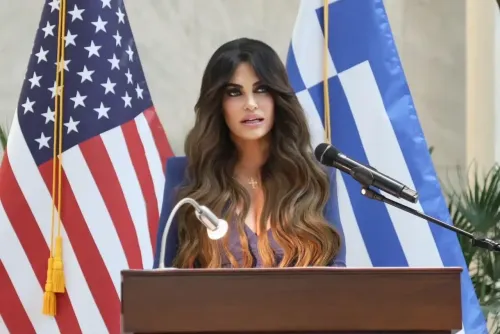
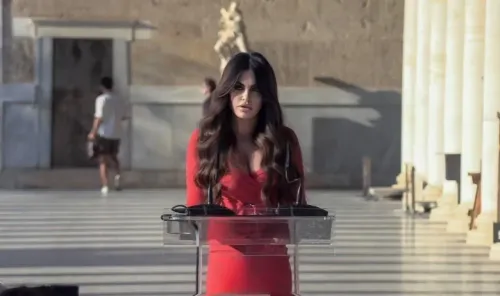
Kimberly Guilfoyle will not continue as US Ambassador to Greece ; the White House asked her to resign on 13 October .
Trump said he 'didn't like what I read' about Guilfoyle, without specifying the concerns; no replacement has been named.
Trump confirmed the US has not stopped sharing intelligence with Ukraine , contradicting earlier uncertainty from his own press secretary.
Twelve US senators , including Mitch McConnell and John Cornyn , urged Trump to rescind his Russian diesel deal , calling it a 'betrayal of our Allies'.
Trump expressed confidence that both Russia and Ukraine want the war to end, saying 'we're working with them and with Russia on getting the war to end.' With US midterm elections three weeks away , Trump rated Republican chances of holding the House and Senate as 'equal'.
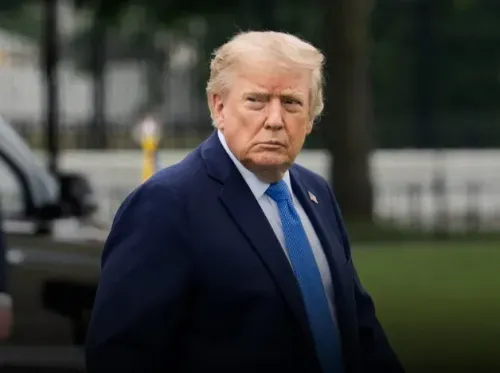
US President Donald Trump on Tuesday, 13 October confirmed that Kimberly Guilfoyle would not continue as US Ambassador to Greece, stating he 'didn't like what I read' — hours after the White House formally asked her to resign. The announcement came as Trump spoke to reporters on the South Lawn before boarding Marine One for a campaign trip to Alaska.
Trump's Remarks on Guilfoyle
'I didn't speak to her, no. But she will not be there. I didn't like what I read,' Trump told reporters. He followed up, saying, 'She went to Greece. She was doing a good job, but we didn't like what we were reading.'
When asked whether Guilfoyle was practically a member of his family, Trump distanced himself: 'She, I guess, dated my son a long time ago.' Guilfoyle, a former Fox News host, was once engaged to Donald Trump Jr. Trump did not name a replacement or give a timeline for her departure.
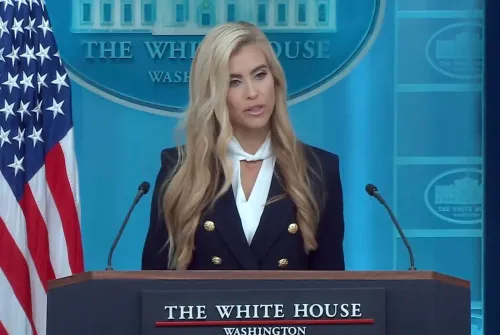
Earlier that day, new White House Press Secretary Zacharia, at her first official briefing, confirmed: 'We have asked Ambassador Guilfoyle to resign.'
US Intelligence Sharing With Ukraine
Trump also addressed growing questions about whether Washington had curtailed intelligence cooperation with Kyiv, offering a direct rebuttal. 'Have we stopped sharing intel with Ukraine? No, we haven't,' he said. Press Secretary Zacharia had earlier demurred on the same question, saying she would 'have to get back to you on' it.
'We help them, but we're really helping them get to a final answer. We want the war to end,' Trump said. 'We are helping them, and we are sharing intel. We want the war to end, so we're working with them and with Russia on getting the war to end.'
Notably, this is the clearest on-record confirmation from Trump himself that US intelligence flows to Ukraine remain active, even as his administration's posture toward Russia has drawn scrutiny.
Trump on Russia, Ukraine Strikes, and the Diesel Deal
Asked why he was confident that Russian President Vladimir Putin wanted peace, Trump cited his negotiating instincts: 'Only in dealing. That's what I've done my whole life is deals.' He said both sides wanted the conflict to end but 'don't know how to get to that point. There's a lot of hatred there between the two of them.'
On cross-border strikes, Trump declined to assign blame definitively. 'Ukraine hit many sites the day before. I'll let you know about that later. But they're hitting each other. But it'll all come to an end,' he said.
Trump also defended his Russian diesel deal, which is being closely monitored by India and other buyers of Russian oil. 'It's a deal for the world. It's not a deal for us. It's a way of getting a lot of oil out to the world,' he said, adding that it 'brought down prices.'
However, twelve US senators — including former Republican leader Mitch McConnell and Senate India Caucus co-chair John Cornyn — wrote to Trump on Tuesday urging him to rescind the arrangement, calling it 'a gift to our adversary and a betrayal of our Allies.'
Remarks on Iran, Saudi Arabia, and the Houthis
Trump made pointed remarks on several other geopolitical fronts. On Iran, he said: 'Iran is a failed country. They have no economy. They have 300 per cent inflation.' Asked what concessions he had offered Saudi Arabia, he declined: 'I can't tell you that.' On Yemen's Houthis, Trump said they 'have acted very badly' but stopped short of confirming any decision on military strikes.
Midterm Outlook and Campaign Trail
With US midterm elections three weeks away, Trump assessed Republican prospects for retaining both chambers as 'equal'. He said his Ohio Senate candidate had risen nine points following a recent rally. 'I'm right now going to Alaska to try and help Dan Sullivan,' Trump said, adding he was averaging 'a rally a day.'
As Trump departed, Press Secretary Zacharia did not take questions from reporters at the rope line before boarding the helicopter with White House staff. The day's developments — spanning a high-profile diplomatic exit, a war-zone intelligence assurance, and a contested energy deal — signal a busy foreign-policy stretch ahead for the administration.
Point of View
The deal's fate now hinges on a Senate-White House standoff that could reshape global energy pricing. Trump's 'equal' assessment of midterm odds, delivered en route to a Senate rally in Alaska, suggests the administration knows the legislative math is tighter than its public confidence implies.
NationPress
14 Oct 2026
Frequently Asked Questions
Why is Kimberly Guilfoyle leaving her role as US Ambassador to Greece?
The White House asked Guilfoyle to resign on 13 October 2026, and President Trump confirmed her departure, saying he 'didn't like what I read.' No specific reason was publicly stated, and no replacement has been named.
Is the US still sharing intelligence with Ukraine?
Yes. Trump stated clearly on 13 October that the US has not stopped sharing intelligence with Ukraine, saying 'Have we stopped sharing intel with Ukraine? No, we haven't.' He added that the US wants the war to end and is working with both Ukraine and Russia toward that goal.
What is the Russian diesel deal and why are US senators opposing it?
Trump's Russian diesel deal is an arrangement that, according to him, facilitates Russian oil reaching global markets and brings down prices. Twelve US senators, including Mitch McConnell and John Cornyn, wrote to Trump urging him to rescind it, calling it 'a gift to our adversary and a betrayal of our Allies.' India and other buyers of Russian oil are closely tracking its fate.
What did Trump say about ending the Russia-Ukraine war?
Trump said both Russia and Ukraine want the war to end but 'don't know how to get to that point.' He expressed confidence based on his deal-making experience that the US could broker a resolution, adding 'we're going to get them there.'
How did Trump assess Republican chances in the upcoming US midterm elections?
Trump rated the Republican Party's chances of retaining both the House and the Senate as 'equal', with midterm elections three weeks away. He was heading to Alaska to campaign for Senator Dan Sullivan and said he was averaging 'a rally a day.'