Trump promises $5,000 'dividend' per adult, sweeping agenda ahead of November midterms
Synopsis
Trump's Syracuse rally was less a policy rollout than a high-stakes pre-election gamble: a $5,000 cash payment to every adult American citizen, a $1 trillion price tag financed by tariffs, and a sweeping legislative wishlist — all riding on a Republican sweep on 3 November. Whether the arithmetic holds up matters less right now than whether the message lands.
Key Takeaways
Donald Trump proposed a $5,000 'Trump dividend' for every adult US citizen at a rally in Syracuse, New York on 10 October 2026 .
The payment is contingent on Republicans winning both the House of Representatives and the Senate in the 3 November midterms.
Trump estimated the total cost at approximately $1 trillion , to be funded through tariff revenues and economic growth.
He claimed the US had secured more than $21 trillion in investment commitments and cited Micron's planned $100 billion semiconductor investment in central New York.
Trump pledged immigration legislation including the proposed No Invasion of Our Country Act , voter ID requirements, and a ban on sanctuary jurisdictions.
On foreign policy, he defended a reported diesel supply arrangement with Russia and warned Iran against pursuing nuclear weapons.
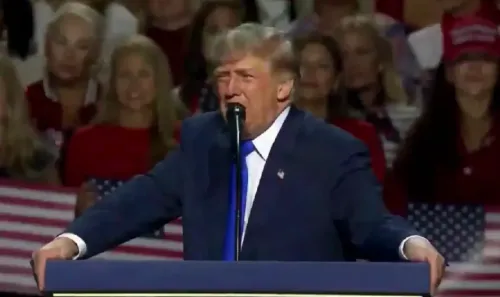
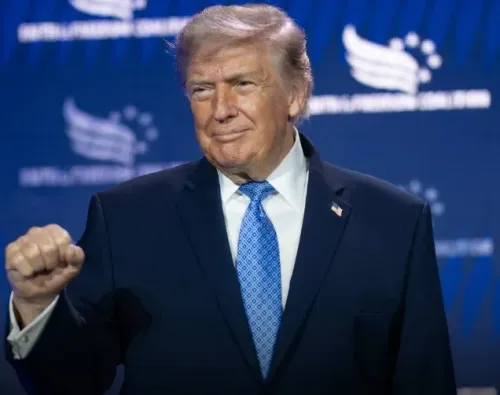
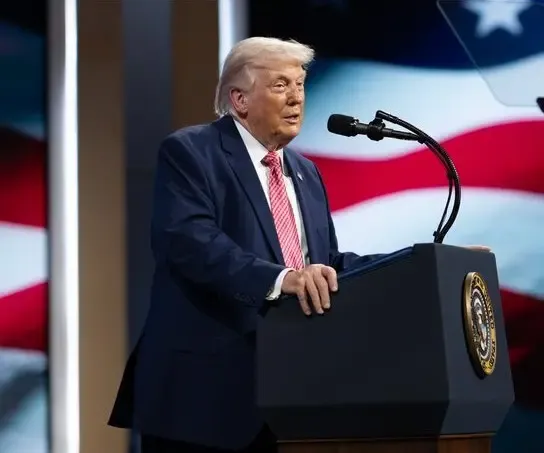
US President Donald Trump unveiled a sweeping economic and legislative agenda at a campaign rally in Syracuse, New York, on 10 October 2026, pledging a $5,000 cash payment to every adult American citizen, tougher immigration enforcement, expanded tariffs, and overhauls of healthcare and taxation — all contingent on Republicans retaining control of Congress in the 3 November midterm elections.
The 'Trump Dividend' Proposal
The headline announcement was what Trump called a 'Trump dividend' — a $5,000 payment to each qualifying adult US citizen if the Republican Party wins both the House of Representatives and the Senate. Trump told supporters at the rally: 'If Republicans win the House of Representatives and the Senate, I am going to give all adult citizens in the United States of America $5,000 each.'
He estimated the total cost at approximately $1 trillion and said it would be financed through tariff revenues and economic growth. The payment would come with one condition, according to Trump: 'The only caveat on the Trump dividend is that you must spend your money in the United States of America.' Non-citizens — including green-card holders and temporary visa workers — would be excluded.
Tariffs, Manufacturing and Investment Claims
Trump defended his administration's tariff strategy, asserting that the US had secured more than $21 trillion in investment commitments, which he attributed to import duties incentivising domestic manufacturing. 'Tariffs are making us rich as hell,' he told the crowd. He cited semiconductor maker Micron's planned investment in central New York as a case study, claiming: 'Micron is investing over $100 billion in creating 50,000 jobs in central New York.' Notably, the President did not distinguish between announced investment pledges and capital already deployed.
Trump also said more than one million federal government jobs had been eliminated under his administration, while private-sector employment had expanded.
Immigration, Elections and Healthcare
On immigration, Trump promised legislation — including the proposed No Invasion of Our Country Act — intended to prevent future administrations from reversing his border enforcement measures. He also called for banning sanctuary jurisdictions that limit cooperation with federal immigration authorities.
Renewing a long-standing demand, Trump called for voter identification requirements and proof of citizenship in federal elections, invoking a proposed Save America Act. He accused Democratic-led states of failing to enforce immigration laws.
On healthcare, Trump proposed redirecting federal payments currently going to insurance companies directly to individuals, enabling them to purchase their own coverage. He also promised to make permanent tax provisions on tips, overtime income, and Social Security benefits. Separately, he said more than 20 million senior citizens would receive payments of at least $100 each from funds his administration had identified within federal programmes.
Foreign Policy: Hormuz, Russia and Iran
Trump asserted that the United States had secured control of the Strait of Hormuz, claiming increased oil shipments through the strategic waterway would lower energy prices. He defended a reported agreement with Russian President Vladimir Putin to facilitate additional Russian diesel supplies — an arrangement that has drawn criticism from American lawmakers concerned it could weaken economic pressure on Moscow over the war in Ukraine.
Trump reiterated that Iran would not be permitted to acquire nuclear weapons, warning that further military action remained possible if Tehran failed to meet American demands.
Political Context and What Comes Next
The Syracuse rally underscored Trump's strategy of framing the 3 November midterms as a direct referendum on his presidency. He also launched sharp attacks on New York Governor Kathy Hochul, accusing her of mismanaging taxation, energy policy, and public safety. This comes amid a closely contested congressional landscape, with control of both chambers seen as pivotal to whether any of Trump's legislative proposals could advance. The feasibility and funding of several pledges — particularly the $1 trillion dividend — are expected to face intense scrutiny from economists and opposition lawmakers in the weeks ahead.
Point of View
000 payment to every American adult — funded, in Trump's telling, entirely by tariff revenues — is the kind of round-number promise that dominates a news cycle and is almost impossible to verify in the weeks before an election. The $1 trillion cost figure warrants scrutiny: tariff revenues in recent years have run in the hundreds of billions, not trillions, and the economic-growth financing mechanism is undefined. More revealing is the geopolitical framing: defending a diesel arrangement with Moscow while simultaneously warning Tehran suggests a foreign policy logic that critics will argue is strategically incoherent. The midterms will be decided before any of these proposals are stress-tested by legislation.
NationPress
10 Oct 2026
Frequently Asked Questions
What is the 'Trump dividend' announced at the Syracuse rally?
The 'Trump dividend' is a proposed $5,000 cash payment to every adult American citizen, announced by President Trump at a campaign rally in Syracuse, New York, on 10 October 2026. It is contingent on Republicans winning both chambers of Congress in the 3 November midterms, and Trump estimated its total cost at approximately $1 trillion.
Who would qualify for the $5,000 Trump dividend payment?
According to Trump, the payment would be limited to adult American citizens. Non-citizens — including green-card holders and temporary visa workers — would be excluded. Recipients would also be required to spend the money within the United States.
How does Trump plan to fund the $1 trillion dividend?
Trump said the payment would be financed through tariff revenues and economic growth, though he did not provide a detailed financing breakdown. Economists and opposition lawmakers are expected to scrutinise the feasibility of the figure in the weeks ahead.
What immigration measures did Trump promise at the rally?
Trump pledged legislation including the proposed No Invasion of Our Country Act, aimed at preventing future administrations from reversing his border enforcement policies. He also called for banning sanctuary jurisdictions and renewed his demand for voter ID requirements and proof of citizenship in federal elections under a proposed Save America Act.
What did Trump say about Russia and Iran at the Syracuse rally?
Trump defended a reported agreement with Russian President Vladimir Putin to facilitate additional Russian diesel supplies, an arrangement that has drawn criticism from US lawmakers concerned about weakening economic pressure on Moscow over the Ukraine war. He also warned that Iran would not be permitted to acquire nuclear weapons and suggested further military action remained possible if Tehran failed to meet American demands.