Trump seeks death penalty for firefighter killers, asks AG to examine expansion
Synopsis
President Trump took the death penalty debate a step further at a White House first responders event — proposing it cover not just police killers but firefighters deliberately murdered on duty. With Attorney General Todd Blanche tasked to find a legal path, the proposal signals an aggressive expansion of capital punishment policy that will face significant statutory and constitutional scrutiny.
Key Takeaways
President Donald Trump called for extending the death penalty to those who murder firefighters in the line of duty at a White House ceremony on 15 October 2026 .
Attorney General Todd Blanche was asked to examine whether such a punishment could be legally imposed under existing and new federal statutes.
Trump also reaffirmed plans to apply capital punishment to anyone who kills a police officer or law enforcement personnel .
The administration said it delivered $648 million to more than 1,600 fire departments and first responder organisations in the previous month.
Trump cited the Honoring Our Fallen Heroes Act as providing federal benefits to families of firefighters who died from work-related cancers.
Any expansion of the death penalty must comply with applicable US federal and state statutes and constitutional requirements .
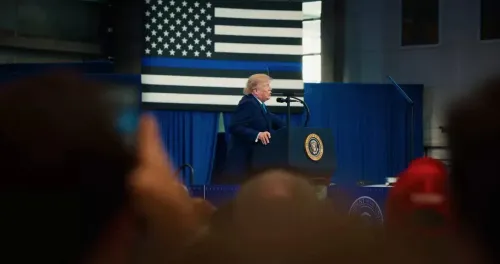
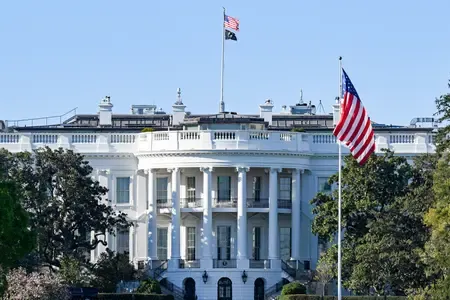
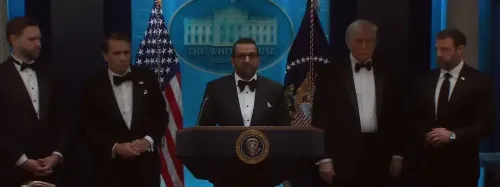
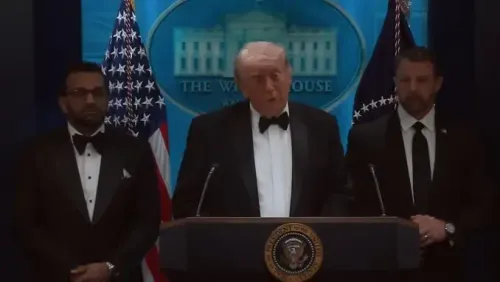
US President Donald Trump on Thursday, 15 October 2026, called for extending the death penalty to individuals who murder firefighters in the line of duty, asking Attorney General Todd Blanche to examine whether such punishment could be legally imposed. The remarks came during a White House ceremony honouring first responders, including police, firefighters, Border Patrol personnel, and other emergency services.
What Trump Said
Speaking before representatives of major first responder organisations, Trump argued that firefighters faced extraordinary dangers — including being shot at while climbing ladders to battle blazes — and that such attacks received insufficient public attention. He linked the firefighter proposal to a broader stance on capital punishment for crimes against law enforcement.
'And we're bringing the death penalty back for anybody that kills a police officer, by the way, or anybody in law enforcement,' Trump said. Later in his address, he extended that position to firefighters deliberately killed while on duty, directing Blanche to assess the legal pathway for such an expansion.
'That's a big deal,' the President added, expressing confidence that the threat of severe penalties would deter attacks on emergency personnel.
Financial Support and Legislative Highlights
Beyond the death penalty proposal, Trump outlined a series of administration measures supporting first responders. He said the administration had delivered $648 million to more than 1,600 fire departments and first responder organisations during the previous month, intended to fund personnel, equipment, and operational support.
He also cited changes in federal taxation that he said benefited police officers, firefighters, and other emergency workers who earn overtime pay. The President referenced the Honoring Our Fallen Heroes Act, describing it as providing federal recognition and survivor benefits to families of firefighters who died from cancers contracted through their work, with qualifying deaths recognised as occurring in the line of duty.
Crime Statistics and Broader Claims
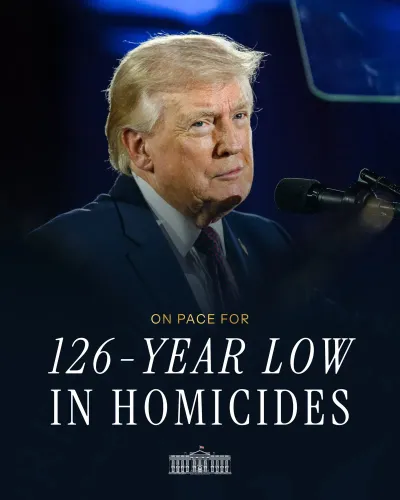
Trump used the occasion to credit his administration with what he described as significant public safety improvements, claiming violent crime had seen its largest-ever decline and that the murder rate had fallen to its lowest level in 125 years. Those figures were not independently substantiated in the available remarks.
'From day one, my administration has worked tirelessly to give our first responders the resources, support, and legal protection you so richly deserve,' he said.
Legal and Constitutional Context
In the United States, capital punishment is governed by a patchwork of federal and state laws, with jurisdictions maintaining differing rules on offences eligible for the death penalty. Any expansion to cover the killing of firefighters would need to comply with applicable statutes and constitutional requirements — a process that legal experts note can be lengthy and subject to judicial review. This is not the first time the Trump administration has signalled an intent to broaden the scope of capital punishment; similar rhetoric around law enforcement killings has been a recurring theme since the President's return to office.
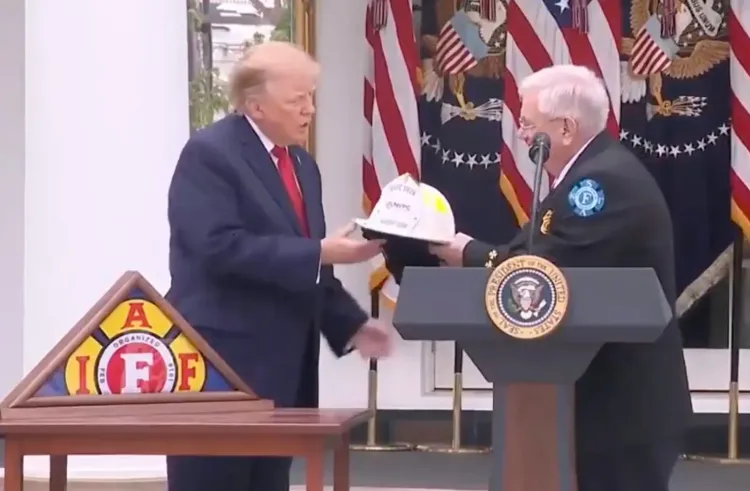
The ceremony concluded with a representative of the National Volunteer Fire Council presenting Trump with a firefighter's helmet in recognition of his support for emergency personnel.
Point of View
And broadening its scope to cover firefighter killings would require new federal legislation and likely face years of court challenges. The proposal dovetails with a consistent administration narrative that frames tougher penalties as deterrence, yet criminologists have long questioned whether the death penalty measurably reduces targeted violence against public safety workers. Notably, the crime statistics Trump cited — including a 125-year low in the murder rate — were not independently verified in the available remarks, a detail that mainstream coverage risk glossing over. The deeper story here is about the administration using ceremony as a policy platform, with Blanche's mandate effectively pre-delegitimising any pushback as anti-first-responder.
NationPress
16 Oct 2026
Frequently Asked Questions
What did Trump propose regarding the death penalty for firefighter killers?
President Trump called for extending the death penalty to individuals who deliberately murder firefighters while they are performing their duties. He made the proposal at a White House ceremony on 15 October 2026 and directed Attorney General Todd Blanche to assess the legal pathway for such an expansion.
Who is Attorney General Todd Blanche and what has he been asked to do?
Todd Blanche is the US Attorney General under the Trump administration. He was asked by President Trump to examine whether the death penalty could legally be extended to cover cases in which firefighters are deliberately killed in the line of duty, taking into account applicable federal statutes and constitutional requirements.
Does the US currently allow the death penalty for killing firefighters?
Capital punishment in the US is governed by federal and state laws, and eligibility varies by jurisdiction. Currently, the deliberate killing of a firefighter is not uniformly covered by federal death penalty statutes; any expansion would require new legislation and must withstand constitutional review.
What financial support did Trump announce for first responders?
Trump said his administration had delivered $648 million to more than 1,600 fire departments and first responder organisations during the previous month. The funds were described as intended to support personnel, equipment, and operations for organisations responsible for community protection.
What is the Honoring Our Fallen Heroes Act mentioned by Trump?
The Honoring Our Fallen Heroes Act, as described by Trump, provides federal recognition and benefits to the families of firefighters who die from cancers contracted through their work, with such deaths recognised as occurring in the line of duty so that surviving families can receive federal support.