Trump proclaims Captive Nations Week 2026, vows America will never turn communist
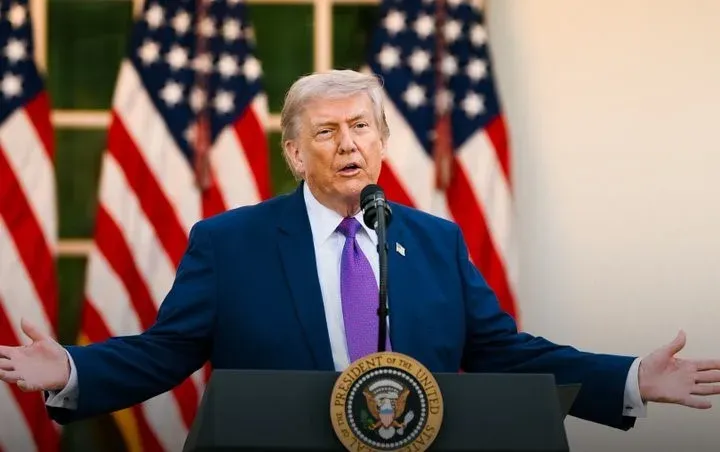
Synopsis
Trump’s Captive Nations Week proclamation goes further than the standard diplomatic ritual — calling communism ‘the gravest threat’ America faces, naming socialism explicitly, and tying the Cold War-era observance directly to domestic policy on religious liberty and free markets. It is a signal of both foreign posture and home-front politics.
Key Takeaways
President Donald Trump proclaimed 19–25 July 2026 as Captive Nations Week via a formal presidential proclamation.
Trump declared that America would “never be a communist country” and called communism “the gravest threat our Nation faces.” The proclamation explicitly named socialism , communism , and totalitarianism as ideologies that would never be allowed to take root in the US.
Trump cited the Religious Liberty Commission and the White House Faith Office as active domestic counterweights to authoritarian ideology.
Captive Nations Week is a Cold War-era tradition; every US president since Congress authorised the designation has issued an annual proclamation.
US President Donald Trump on 19 July 2026 issued a presidential proclamation designating 19–25 July 2026 as Captive Nations Week, reaffirming Washington's commitment to peoples living under communist and authoritarian rule and declaring that America would “never be a communist country.” The proclamation continues a Cold War-era tradition that every sitting US president has observed since Congress first authorised the annual designation.
What the Proclamation Says
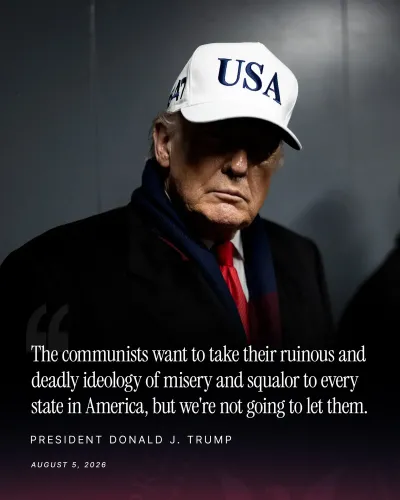
Trump described communism as “a doctrine of darkness, promising equality and prosperity while delivering misery and ruin,” adding that “centuries of bloodshed prove that communism has failed every society that has ever embraced it.” He characterised the ideology as one that “scorns the individual and treats human beings as property of the state,” contrasting it with what he called America’s founding belief that “our individual rights flow from our Creator, beyond the reach of any ruler or regime.”
The proclamation stated that “the evil ideologies of socialism, communism, and totalitarianism will never be allowed to take root” in the United States, and that America would remain “the fiercest guardian of freedom and democracy the world has ever known.”
Religious Liberty and Economic Freedom
Trump linked the anti-communism message directly to domestic policy, citing the work of the Religious Liberty Commission and the White House Faith Office as active efforts to counter anti-religious bias and support faith-based organisations. He framed free-market economics as inseparable from political freedom, saying his administration was working to “usherin a new Golden Age of prosperity, safeguarding the free market that fuels our greatness.”
The President said communism remained “the gravest threat our Nation faces” — language notably stronger than the standard diplomatic framing used in earlier administrations’ Captive Nations Week proclamations.
Historical Context
Captive Nations Week was established during the Cold War after Congress authorised the president to designate the third week of July each year to recognise peoples living under communist or other authoritarian governance. Every US president since has issued an annual proclamation, making it a bipartisan tradition spanning decades. Trump’s 2026 version is among the more pointed in recent memory, explicitly naming socialism alongside communism and tying the observance to active domestic policy initiatives.
Message to Captive Peoples
Trump used the proclamation to extend solidarity to those facing political and religious persecution abroad. “We stand with all who yearn to breathe free, are imprisoned for speaking truth, punished for their faith, and denied the abundance that liberty alone can bring,” he said. He called on Americans to mark the week with “appropriate ceremonies and activities” in support of “those around the world striving for liberty, justice, and the rule of law.”
The proclamation closes with a forward pledge: “As long as America stands, the cause of freedom will never be extinguished.”
Point of View
And pairing it with domestic policy machinery like the Religious Liberty Commission, transforms a Cold War ceremonial into a live political instrument. The explicit inclusion of ‘socialism’ alongside communism is a domestic electoral signal as much as a foreign-policy one. Whether it translates into concrete diplomatic pressure on authoritarian states — or remains rhetorical — is the question that will define its actual significance.
NationPress
20 Oct 2026
Frequently Asked Questions
What is Captive Nations Week?
Captive Nations Week is an annual observance established during the Cold War, in which Congress authorised the US president to designate the third week of July to recognise peoples living under communist or other authoritarian rule. Every US president since the designation was created has issued an annual proclamation marking the week.
What did Trump say in his 2026 Captive Nations Week proclamation?
Trump declared that America would never become a communist country and called communism ‘the gravest threat our Nation faces.’ He described it as ‘a doctrine of darkness’ that had failed every society that adopted it, and pledged that socialism, communism, and totalitarianism would never take root in the United States.
How does Trump’s 2026 proclamation differ from past ones?
Trump’s proclamation is notably stronger in tone than standard diplomatic versions, explicitly naming socialism alongside communism and directly linking the observance to domestic policy initiatives such as the Religious Liberty Commission and the White House Faith Office — a departure from the largely ceremonial framing used by many previous administrations.
What domestic policies did Trump link to the proclamation?
Trump cited the Religious Liberty Commission and the White House Faith Office as efforts to counter anti-religious bias and support faith-based organisations. He also tied free-market economic policy to the broader defence of freedom, framing both as bulwarks against authoritarian ideology.
Who does Captive Nations Week address?
The observance is directed at peoples living under communist or authoritarian governments worldwide. Trump used the 2026 proclamation to express solidarity with those ‘imprisoned for speaking truth, punished for their faith, and denied the abundance that liberty alone can bring,’ and called on Americans to mark the week with appropriate ceremonies.