Trump links Philippine trade deals to US defence role against China
Synopsis
Trump's Manila visit was not just a diplomatic handshake — it was a transactional ultimatum. By demanding that the Philippines redirect 100% of its farm imports and energy purchases to the US, Trump has formally linked the 1951 mutual defence treaty to commercial concessions, setting a precedent that could reshape how Washington manages its Asia-Pacific alliances.
Key Takeaways
President Trump demanded the Philippines source 100% of its agricultural imports from the US starting 1 January .
A framework trade deal was reached during Trump's state visit to Manila , covering tariff cuts and larger US goods orders.
Philippine purchases of more than $2 billion in US military equipment were announced, with more expected.
Philippine Airlines agreed to buy 20 Boeing 787 Dreamliners with GE engines, supporting an estimated 47,000 US jobs.
Trump and Secretary of State Marco Rubio explicitly linked security commitments to commercial benefits for American workers.
The backdrop is the South China Sea , where the 1951 US-Philippines mutual defence treaty covers attacks on Philippine forces, vessels, and coastguard assets.
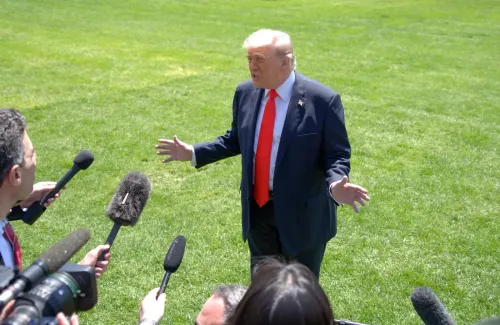
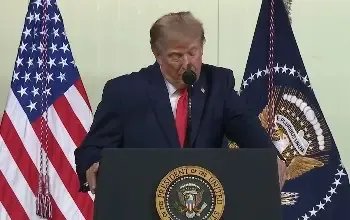
US President Donald Trump on 21 November 2026 said he had pressed Philippine President Ferdinand Marcos Jr. to redirect all of the Philippines' farm and energy imports to the United States, explicitly tying the demand to Washington's security commitments against a potential Chinese military confrontation. The remarks came at a White House news conference following Trump's return from Asia.
Framework Trade Deal and What It Covers
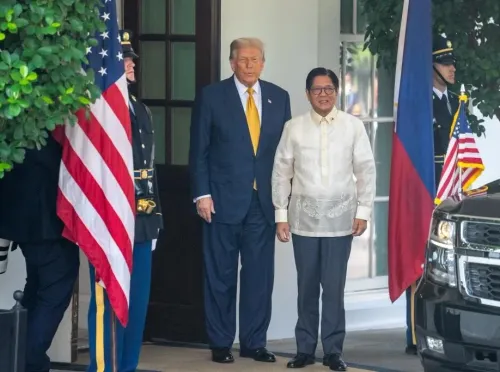
Trump said the two countries reached a framework trade deal during his state visit to Manila, which he described as providing for sharper tariff cuts on American goods — later adding that the Philippines would stop charging tariffs on US products altogether. He did not specify rates for individual products. The deal, according to Trump, is designed to help erase the US trade deficit with its long-standing treaty ally.
On agriculture, Trump said he had asked that US farmers supply 100 per cent of Philippine agricultural imports starting 1 January. He made a parallel demand on energy, noting that the United States currently accounts for roughly a fifth of Philippine energy purchases, and called on Manila to shift its procurement away from the Middle East.
The Brazil Comparison and Security Argument
Trump singled out Brazil as a pointed illustration of his argument, noting that the Philippines had been buying more farm products from Brasília than from Washington — even while relying on the United States for its national security. "Is Brazil going to help them in case they get into a little skirmish with China?" Trump said at the news conference. "I don't think so."
Secretary of State Marco Rubio, speaking alongside Trump, reinforced the argument. Rubio said the president had personally negotiated the reciprocal trade framework and argued that American workers deserved a commercial return from the security commitment the United States had made to Manila.
Defence Sales and the Boeing Order
Defence procurement was also central to the Manila talks. Trump said the two sides announced Philippine purchases of more than $2 billion in US-made military equipment, adding that he expected the figure to rise, though he did not identify the specific systems or give a timetable for additional orders.
Trump also highlighted a planned purchase by Philippine Airlines of 20 Boeing 787 Dreamliner aircraft fitted with General Electric engines — a deal he said came after the airline had initially been considering European alternatives. He put the number of US jobs supported by the order at 47,000. The aircraft were part of a broader basket of more than $17 billion in commercial deals Trump claimed to have secured during wider meetings with Southeast Asian leaders in Manila. The Philippines and Malaysia also agreed to use US technology and services for their cloud infrastructure, he added.
South China Sea Context and the 1951 Treaty
The trade linkage arrives against a charged geopolitical backdrop. The United States and the Philippines are bound by a mutual defence treaty signed in 1951, which commits each side to respond — through its constitutional processes — to an armed attack on the other in the Pacific. Washington has separately clarified that the treaty covers armed attacks on Philippine armed forces, public vessels, and coastguard assets in the South China Sea.
That commitment has taken on fresh urgency as Chinese and Philippine vessels have repeatedly confronted each other in disputed waters. Beijing and Manila hold overlapping maritime claims in the South China Sea, and the incidents have grown in frequency and intensity in recent years. Trump's explicit coupling of trade concessions with security guarantees marks a notable shift in how Washington frames the alliance — moving from a purely strategic posture toward one that demands measurable economic reciprocity.
Point of View
A shift away from Middle Eastern energy — the administration is effectively monetising deterrence. That logic may play well domestically, but it unsettles allies elsewhere in the Indo-Pacific who now have reason to wonder what price tag Washington would attach to their own defence guarantees. The Brazil reference is also telling: Trump is not just negotiating with Marcos, he is sending a message to every emerging-market supplier currently winning US-allied contracts. Whether Manila can actually deliver 100% agricultural sourcing from the US — given its existing supply chains and WTO commitments — is a question the framework deal conspicuously left unanswered.
NationPress
21 Nov 2026
Frequently Asked Questions
What trade deal did Trump announce with the Philippines?
Trump announced a framework trade deal with the Philippines during his state visit to Manila, under which Manila would reduce or eliminate tariffs on American goods and shift its farm and energy imports toward the US. Trump said the deal was personally negotiated and is designed to cut the US trade deficit with its treaty ally.
Why is Trump linking trade to US defence commitments?
Trump and Secretary of State Marco Rubio argued that American workers should see a commercial benefit from the security commitment the US has made to the Philippines. Trump made the case bluntly, saying countries like Brazil — which sells farm goods to Manila — would not defend the Philippines in a confrontation with China.
How much in military equipment did the Philippines agree to buy from the US?
The Philippines agreed to purchase more than $2 billion in US-made military equipment, according to Trump, who added that he expected the figure to rise. He did not identify the specific systems or provide a delivery timetable.
What is the significance of the 1951 US-Philippines mutual defence treaty?
The 1951 mutual defence treaty commits both countries to respond to an armed attack on the other in the Pacific. Washington has clarified it covers attacks on Philippine armed forces, vessels, and coastguard assets in the South China Sea — giving it direct relevance to the ongoing territorial standoff with China.
What is the Boeing deal Trump mentioned?
Philippine Airlines agreed to purchase 20 Boeing 787 Dreamliner aircraft fitted with General Electric engines, a contract Trump said supports 47,000 US jobs. The airline had reportedly been considering European aircraft before opting for the American order.