Trump, Marcos Jr. Hold Bilateral Meet, Reaffirm Pacific Alliance
Synopsis
President Donald Trump and Philippine President Ferdinand Marcos Jr. held a bilateral summit on 18 November 2026, with Trump publicly reaffirming the US-Philippines alliance as 'one of America's oldest and most important' in the Pacific, anchored by the 1951 Mutual Defense Treaty.
Key Takeaways
President Trump met Philippine President Marcos Jr. in a bilateral summit on 18 November 2026 .
Trump described the US-Philippines alliance as 'one of America's oldest and most important alliances in the Pacific.' The partnership is legally anchored by the US-Philippines Mutual Defense Treaty signed in 1951 .
Trump last visited the Philippines in November 2017 for the ASEAN Summit, where he met President Rodrigo Duterte.
Marcos Jr. has been Philippine president since June 2022 and has deepened security engagement with Washington.
Potential outcomes to watch include joint statements, new military access agreements, and any linked multilateral engagements such as ASEAN or APEC.
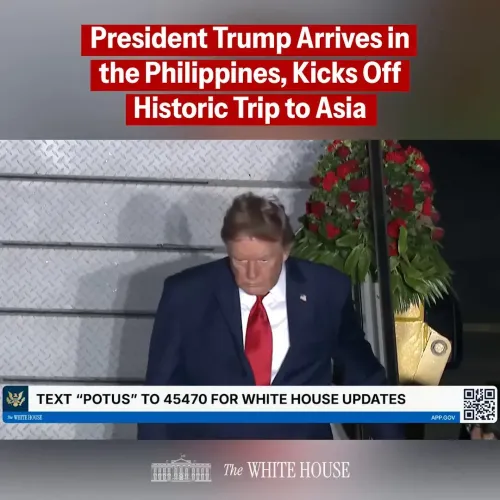
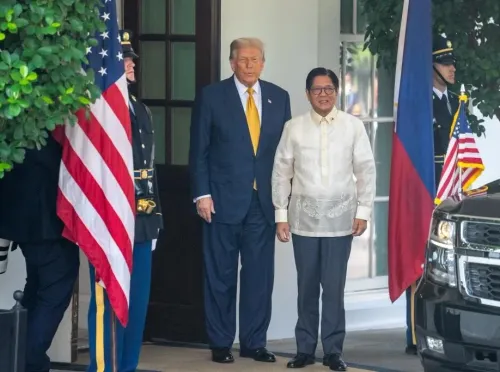
Invoking one of Washington's oldest partnerships in the Indo-Pacific, President Donald J. Trump met Philippine President Ferdinand 'Bongbong' Marcos Jr. in a bilateral summit on Wednesday, 18 November 2026, pledging to reinforce the bedrock US-Philippines alliance that has anchored regional security for over seven decades.
Trump's words at the table: welcoming and alliance-first
Opening the bilateral session, Trump struck a notably warm tone: 'I very much appreciate your welcoming me, and us, back to the Philippines as we reaffirm one of America's oldest and most important alliances in the Pacific.' The phrasing — 'back to the Philippines' — signals this as a return visit for Trump, who last travelled to Manila in November 2017 for the ASEAN Summit, where he met then-President Rodrigo Duterte. Nearly a decade later, the geography is the same but the strategic weight has grown considerably.
A 1951 treaty and why it still detonates into 2026 headlines
At the core of this meeting sits the US-Philippines Mutual Defense Treaty of 1951 — a compact that legally binds both nations to treat an armed attack on either as a threat to both. Successive US administrations, Republican and Democrat alike, have used bilateral engagements with Manila to reaffirm that commitment, particularly as maritime tensions in the South China Sea have made the Philippines one of the most geopolitically consequential US allies in the region.
Marcos Jr., who assumed the Philippine presidency in June 2022, has navigated a complex balancing act between deepening ties with Washington and managing an economically vital relationship with Beijing. A bilateral summit with Trump — framed explicitly around alliance reaffirmation — sends an unambiguous signal about which direction Manila is leaning on security questions.
What the Pacific alliance architecture looks like now
The broader Indo-Pacific security picture frames every handshake at this table. The Philippines sits at the intersection of some of the region's most contested waters, and US military access to Philippine bases has been a recurring point of negotiation. The meeting raises immediate questions: will a joint statement follow? Are new military access or basing agreements on the table? And how does this bilateral moment feed into any multilateral engagements, such as ASEAN or APEC, that may be scheduled in the coming days?
For India and the wider Indo-Pacific community watching from the sidelines, a reinvigorated US-Philippines axis is not a peripheral data point. It is another pillar being reinforced in the security architecture that stretches from the Indian Ocean through the South China Sea to the Western Pacific — an architecture in which New Delhi has its own deepening stakes.
The alliance just got a public reaffirmation at the highest level. The next question is what it looks like on paper.
Point of View
Whatever tactical shifts occur above it. For Manila, hosting Trump marks a continued pivot toward Washington on security, even as economic ties with Beijing remain indispensable. For the broader Indo-Pacific order, a high-profile US-Philippines summit reinforces the hub-and-spokes alliance model that Washington is deploying to counterbalance Chinese influence across the region. New Delhi, itself deepening Quad-linked security cooperation, will read this bilateral meeting as another brick in the same strategic wall.
NationPress
18 Nov 2026
Frequently Asked Questions
Why did Trump visit the Philippines in November 2026?
President Trump visited the Philippines to hold a bilateral summit with President Marcos Jr. and publicly reaffirm the US-Philippines alliance, calling it 'one of America's oldest and most important alliances in the Pacific.'
What is the US-Philippines Mutual Defense Treaty?
The US-Philippines Mutual Defense Treaty, signed in 1951 , is the legal foundation of the security alliance between the two countries, committing each to treat an armed attack on the other as a threat to its own security.
Who is Bongbong Marcos?
Ferdinand 'Bongbong' Marcos Jr. is the President of the Philippines, in office since June 2022 . He is the son of former Philippine dictator Ferdinand Marcos Sr.
Has Trump visited the Philippines before?
Yes. Trump visited Manila in November 2017 during his first term to attend the ASEAN Summit, where he met then-President Rodrigo Duterte .
What could come out of the Trump-Marcos bilateral meeting?
Analysts are watching for joint statements, potential new military access or basing agreements, and signals about cooperation in upcoming multilateral forums such as ASEAN or APEC .