Trump at Faith & Freedom Coalition: Religion is back, communism is the threat
Synopsis
At the Faith & Freedom Coalition's annual conference, Trump did more than rally his base — he framed the 2025 political moment as an existential civilisational contest, branding left-wing opponents 'hardcore, Godless communists' and declaring religion restored. With a new Iran agreement claimed and sweeping domestic policy moves cited, the speech was as much a reelection-era manifesto as a policy address.
Key Takeaways
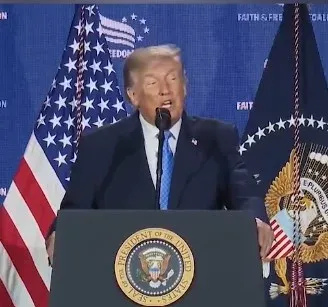
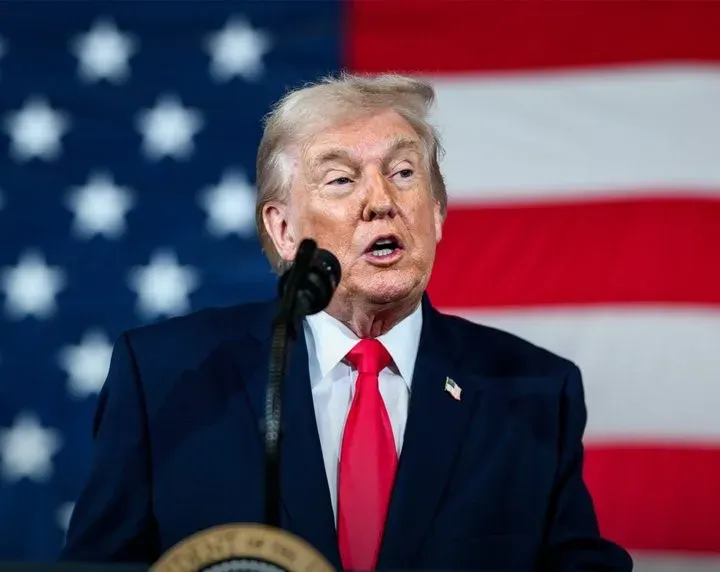
President Trump addressed the Faith & Freedom Coalition's Road to Majority conference in Washington on 27 June .
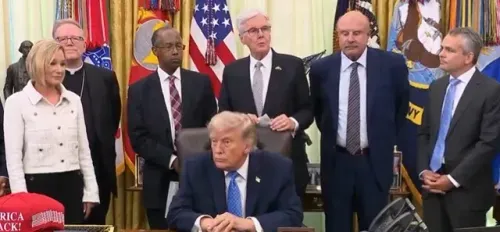
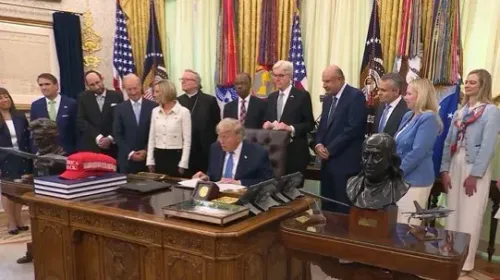
He declared religion 'back' in the US and pledged to defend Christians and all people of faith ' 100 per cent .' Trump announced a Presidential Commission on Religious Liberty , a White House Faith Office , and a Justice Department task force on anti-Christian bias.
He labelled certain left-wing politicians 'hardcore, Godless communists,' calling them the biggest domestic threat in the country's 250-year history.
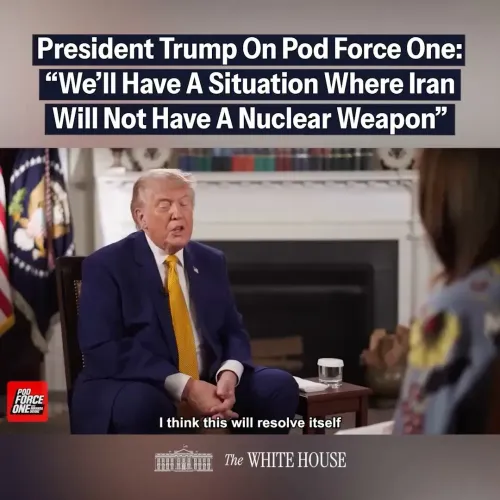
On foreign policy, Trump claimed a historic agreement ensuring Iran will never develop a nuclear weapon and said Iran's military has been significantly degraded.
He urged Congress to pass the SAVE America Act , requiring photo ID and proof of citizenship to vote.
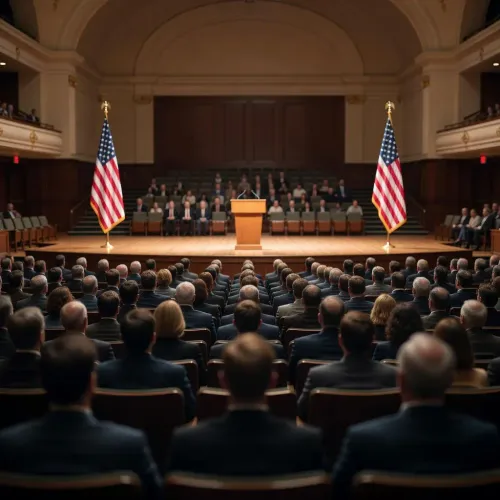
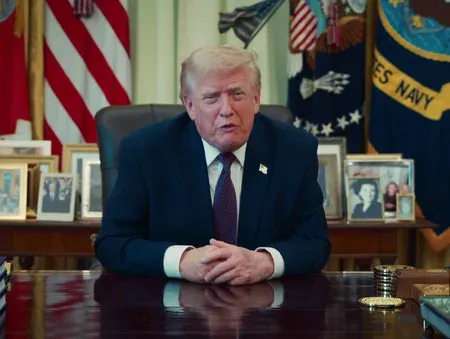
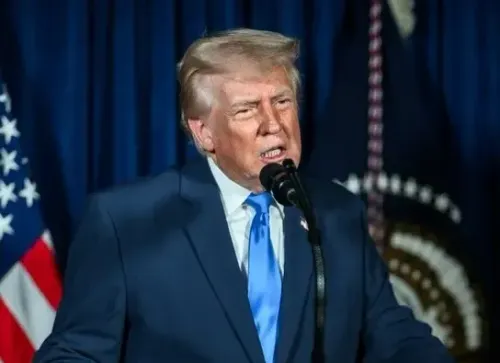
President Donald Trump addressed the annual Faith & Freedom Coalition's Road to Majority conference in Washington on 27 June, declaring that religion is 'back' in the United States and warning that what he characterised as rising 'communism' among left-wing politicians represents the gravest domestic threat the country has faced in its 250-year history. The speech, delivered to one of the most influential conservative Christian organisations in America, served as a sweeping defence of his administration's record on religious liberty, immigration, foreign policy, and social issues.
Religious Liberty at the Centre
Trump told the audience that his administration had moved quickly to reverse the policies of his predecessor and shield people of faith from what he described as institutional bias. 'While I am in the White House, I will defend Christians and all Americans of faith 100 per cent,' he said. 'You have it 100 per cent, and you've seen it already.'
He credited faith-based voters and conservative organisations with helping secure his election victory, telling the crowd they had 'saved our country and we saved religious freedom in America.' Among the institutional steps he cited: the creation of the first Presidential Commission on Religious Liberty, the establishment of a White House Faith Office, and the launch of a Justice Department task force described as aimed at eradicating anti-Christian bias.
Education, Abortion, and Gender Policy
Trump pointed to a series of executive actions on social issues. He said his administration had expanded school choice, issued guidance protecting prayer in public schools, and halted federal funding for schools that, in his words, 'push transgender insanity on our youth.' He also reiterated his administration's position that only two genders — male and female — are recognised as official government policy.
On voting, Trump urged Congress to pass the SAVE America Act, which would require voters to present photo identification and proof of citizenship, and called for tighter restrictions on mail-in voting. 'All voters must show photo ID,' he said. 'All voters must provide proof of citizenship.'
The 'Communism' Warning
A significant portion of the speech was devoted to domestic political opponents. Trump repeatedly described certain recently elected left-wing politicians as 'communists,' arguing they posed the most serious danger in the nation's history. 'This is the most serious threat to our country since its existence, in my opinion, 250 years ago,' he said. 'These are not social Dumocrats, these are hardcore, Godless communists.' He also criticised rent control proposals in New York, contending such policies would damage cities and ultimately the broader country.
Iran, Immigration, and the 'Golden Age'
Turning to foreign policy, Trump defended recent US military action against Iran and repeated his assertion that Tehran would never be permitted to develop a nuclear weapon. 'Last week, we signed a historic agreement to accomplish what no president has ever been able to accomplish before — that Iran will never have a nuclear weapon,' he said. He claimed Iran's military capabilities had been substantially degraded, asserting the country now had 'no Navy, no Air Force, no anti-aircraft capability, no radar, virtually no manufacturing.' He also referenced the 2020 killing of Iranian General Qassem Soleimani, calling it 'one of the biggest things ever to happen in the Middle East.'
On immigration, Trump claimed his administration had restored border security, saying that for the past 13 months, 'zero illegal aliens have been admitted into the United States, zero.' He also highlighted what he described as record military recruitment, economic growth, and stock market gains, arguing that tariffs were drawing manufacturers back to the country. He characterised the current moment as a 'Golden Age of America.'
The Coalition's Political Weight
The Faith & Freedom Coalition has long been a pivotal force in mobilising evangelical voters for Republican election campaigns. Trump has addressed the group's conference multiple times and continues to command strong support among evangelical Christians — a core constituency within the Republican Party. His appearance underscored the ongoing centrality of faith-based politics to his electoral coalition ahead of future cycles.
Point of View
The characterisation of Iran's military as effectively dismantled, and the framing of a new Iran nuclear agreement whose terms remain publicly unconfirmed. Mainstream coverage has largely reported the speech as a political rally; the harder journalistic question is which of these claims hold up to scrutiny, and whether the Faith & Freedom Coalition audience — and the broader evangelical bloc — will demand that accounting.
NationPress
27 Jun 2026
Frequently Asked Questions
What did Trump say at the Faith & Freedom Coalition conference?
Trump declared that religion is 'back' in the United States and pledged to defend Christians and all people of faith '100 per cent.' He also warned that left-wing politicians he described as 'communists' represent the gravest threat to the country in its 250-year history, and outlined his administration's record on religious liberty, immigration, and foreign policy.
What new religious liberty institutions did Trump announce?
Trump cited three institutional steps: the creation of the first Presidential Commission on Religious Liberty, the establishment of a White House Faith Office, and the launch of a Justice Department task force aimed at eradicating what he described as anti-Christian bias.
What did Trump claim about Iran at the conference?
Trump said his administration had signed a 'historic agreement' ensuring Iran would never develop a nuclear weapon — something he claimed no previous president had achieved. He also asserted that Iran's military capabilities had been significantly degraded, leaving it with 'no Navy, no Air Force, no anti-aircraft capability, no radar, virtually no manufacturing.'
What is the SAVE America Act that Trump mentioned?
The SAVE America Act is legislation Trump urged Congress to pass that would require voters to present photo identification and proof of citizenship, and would impose tighter restrictions on mail-in voting. Trump framed it as essential to electoral integrity.
Why is the Faith & Freedom Coalition significant for Trump?
The Faith & Freedom Coalition is one of the most influential conservative Christian organisations in the US and has historically played a key role in mobilising evangelical voters for Republican campaigns. Evangelical Christians remain a core constituency for Trump, making the group's annual conference a politically important platform for him.