Trump White House Pushes to Replace Undocumented Truckers With Veterans
Synopsis
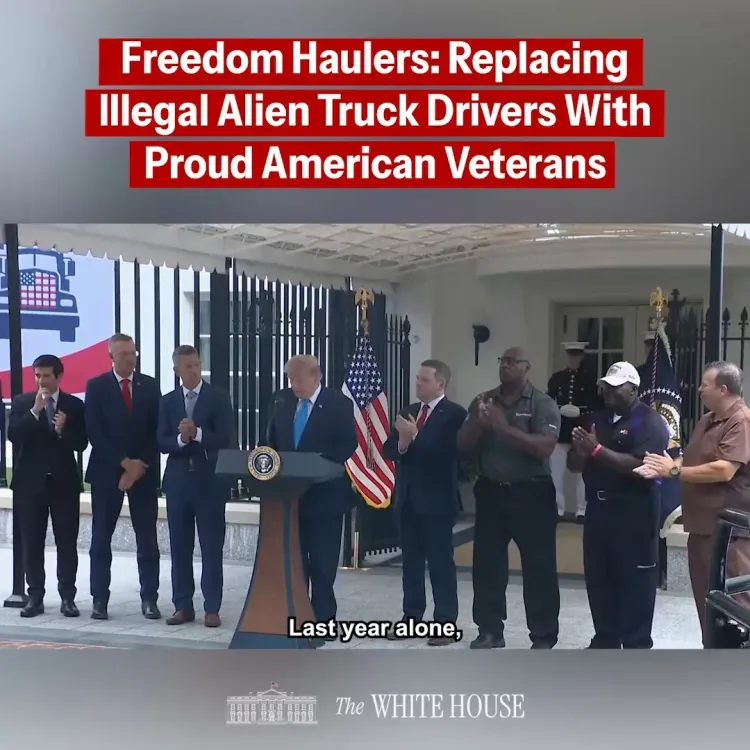
The White House declared on July 31, 2026 that President Trump and his administration are committed to replacing undocumented truck drivers with U.S. military veterans, signalling a convergence of immigration enforcement and veteran workforce policy in the American trucking sector.
Key Takeaways
The White House posted on July 31, 2026 that President Trump and his administration intend to replace undocumented truck drivers with U.S. military veterans .
The American trucking sector moves roughly 70 percent of all U.S. freight and has faced a chronic driver shortage for over a decade.
Executive Order 13788 (2017) — 'Buy American and Hire American' — established the regulatory foundation for prioritising American workers in sectors like trucking.
The VA MISSION Act of 2018 expanded civilian job-placement pipelines for veterans, including in transportation and logistics.
Potential next steps include tighter E-Verify mandates for motor carriers, updated CDL eligibility rules, and new veteran recruitment funding in transportation legislation.
Any rapid reduction in the driver pool risks compounding freight bottlenecks unless veteran recruitment scales fast enough to compensate.
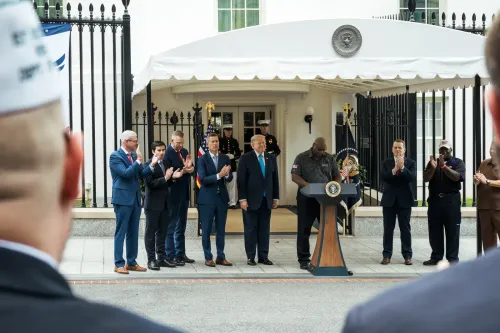
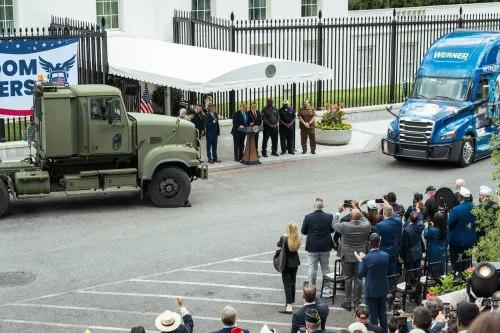
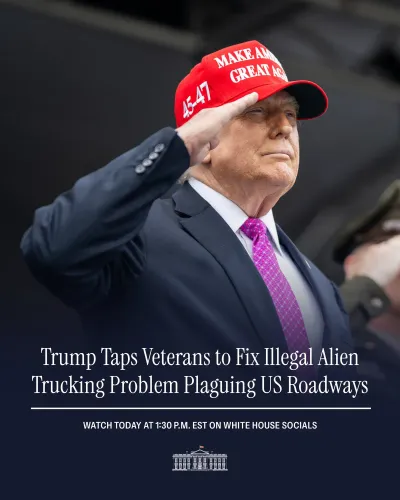
A direct challenge to the trucking industry's labor status quo landed from the White House on Thursday, July 31, 2026 — with President Donald Trump and his administration declaring their intent to replace undocumented truck drivers with U.S. military veterans, framing it as both an immigration enforcement priority and a workforce justice cause.
The post, shared by the official White House account, stated that President Trump, Transportation Secretary Secretary Duffy, and 'the entire Trump Administration are committed to revolutionizing the American trucking industry, fighting to replace illegal aliens truck drivers with highly qualified veterans.'
A Labor Market Flashpoint Years in the Making
The American trucking sector has grappled with a chronic driver shortage for over a decade, creating a structural gap that critics and enforcement advocates have long argued was filled — in part — by unauthorized workers holding commercial licenses. The industry moves roughly 70 percent of all freight in the United States, making driver eligibility rules a pressure point with real supply-chain consequences. The Trump administration's posture draws directly from a policy lineage it established in its first term. Executive Order 13788, signed in 2017, directed federal agencies to prioritize American workers and tighten employment verification across sectors. That order, combined with expanded E-Verify mandates pushed on federal contractors, set the regulatory groundwork for what the White House is now signaling as a sector-specific push.Veterans as the Intended Beneficiaries
The deliberate pairing of immigration enforcement with veteran employment is not accidental — it is a political and policy frame the administration has used consistently. The VA MISSION Act of 2018 and a suite of veteran job-placement programs that followed expanded civilian workforce pipelines for former service members, including in transportation and logistics. Veterans, the argument goes, bring discipline, safety records, and existing familiarity with large-vehicle operation — qualities that align with commercial driver's license (CDL) requirements. Advocates for veteran employment in trucking have pushed for streamlined CDL pathways that credit military driving experience, a reform that has seen bipartisan support in Congress at various points.What the Administration Could Move Next
The White House statement signals intent, not yet a signed order. Analysts watching the space will track whether the administration moves on tightening E-Verify mandates for motor carriers specifically, updates CDL eligibility rules to screen for immigration status more aggressively, or channels new federal funding into veteran recruitment programs tied to transportation legislation. The trucking industry itself — dominated by small operators and large logistics firms alike — will be watching closely. Any sharp reduction in the available driver pool, however achieved, risks compounding existing freight bottlenecks unless veteran recruitment scales fast enough to fill the gap. The flag emoji at the end of the post is a rhetorical signature, but the policy machinery behind it is real — and the trucking lanes of America may be where the next chapter of the immigration-labor debate is driven.Point of View
The administration picks a fight on terrain where supply-chain disruption fears give it leverage over industry and where the veteran-replacement frame is hardest to oppose politically. The move fits a broader second-term pattern of using executive signalling to reshape labour markets before formal rulemaking catches up. Whether it produces structural change or remains a messaging posture depends entirely on whether CDL reform, E-Verify enforcement, and veteran recruitment funding follow in legislation or executive orders.
NationPress
31 Jul 2026
Frequently Asked Questions
Why is Trump targeting the trucking industry for immigration enforcement?
The trucking industry employs a large share of the U.S. freight workforce and has faced a chronic driver shortage, making it a visible pressure point for immigration-labour enforcement. The White House argues that undocumented workers have filled roles that should go to American citizens and veterans.
How does the plan to hire veterans in trucking actually work?
The administration has not yet announced a specific programme, but the policy lineage points to streamlined CDL pathways that credit military driving experience, E-Verify mandates for motor carriers, and expanded veteran job-placement funding — all tools used in earlier Trump-era workforce initiatives.
What is E-Verify and how does it affect truck drivers?
E-Verify is a federal electronic system that lets employers confirm a worker's legal right to work in the United States. If mandated for motor carriers, it would require trucking companies to verify the immigration status of every driver they hire, potentially disqualifying undocumented workers.
Who is Secretary Duffy mentioned in the White House post?
The post refers to Secretary Duffy in the context of the Transportation Department's role in this initiative. Specific details about the secretary's policy actions in this area could not be independently verified from available information.
Could replacing undocumented truckers with veterans cause supply-chain problems?
Potentially, yes. The U.S. trucking sector already faces a significant driver shortage, and a rapid reduction in the available driver pool — without an equally rapid influx of trained veterans — risks worsening freight bottlenecks and raising logistics costs across the economy.