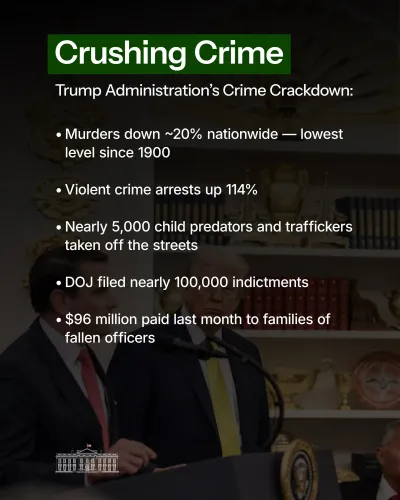
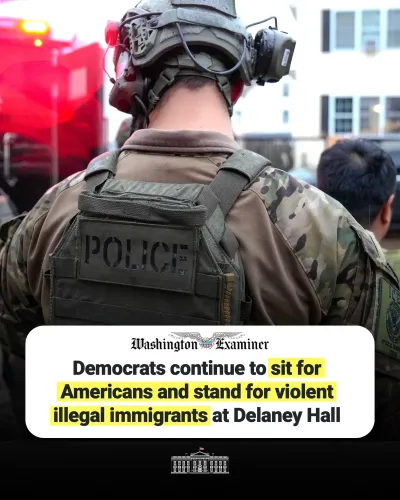
Trump White House Vows to Remove Criminal Noncitizens from US Streets
Synopsis
The White House on 16 July 2026 declared the Trump administration is removing criminal noncitizens from American streets, reaffirming President Trump's 'Make America Safe Again' pledge. The statement underscores the second term's intensified focus on interior immigration enforcement, building on executive orders and ICE operations that have targeted convicted offenders since 2017.
Key Takeaways
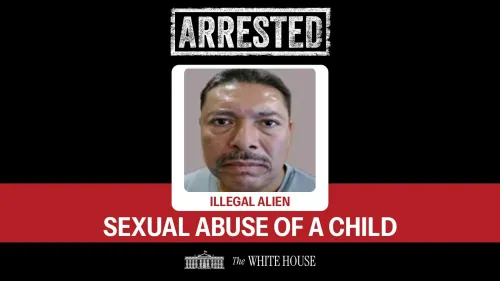
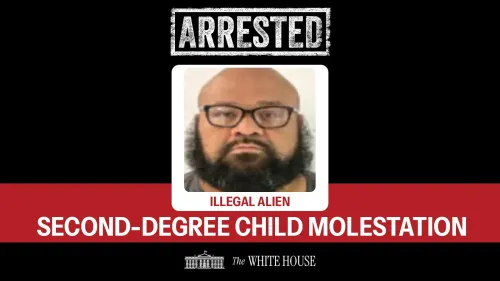
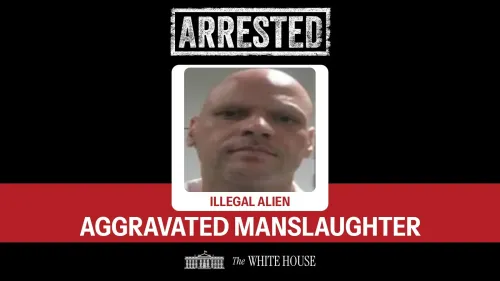
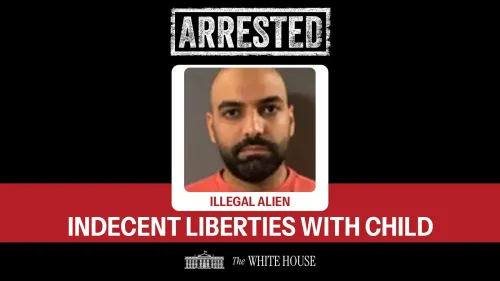
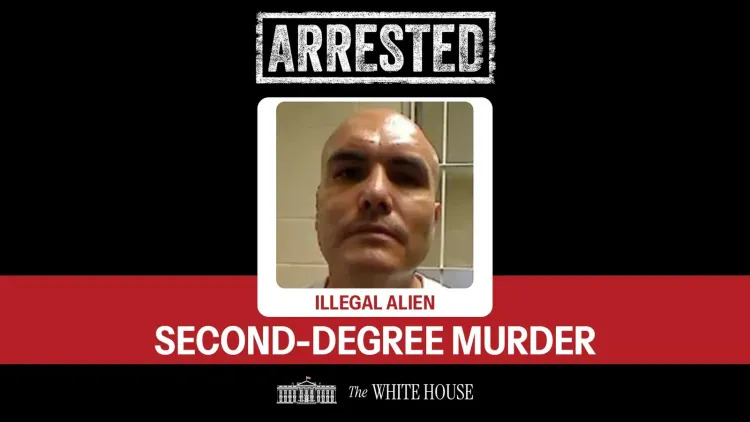
The White House posted on 16 July 2026 that the Trump administration is removing 'the worst of the worst' from US streets.
President Trump has pledged he will 'never waver' in his duty to protect the homeland under the 'Make America Safe Again' agenda.
The policy builds on Executive Order 13768 , signed in January 2017 , which made noncitizens with criminal convictions the top removal priority.
ICE , a component of the Department of Homeland Security , is the lead agency executing interior enforcement and removal operations.
287(g) agreements with state and local law enforcement allow jails to identify and flag removable offenders for federal action.
Congressional action on FY2027 DHS appropriations will determine the resources available for future removal operations.
The White House on Thursday, 16 July 2026, declared that the Trump administration is actively removing what it called 'the worst of the worst' from American streets, reaffirming President Donald Trump's commitment to interior immigration enforcement and his pledge to 'Make America Safe Again.'
Context
The official White House post stated that the administration is 'removing the worst of the worst from our streets' and that President Trump will 'never waver in his duty to protect our homeland.' The language signals a continued and deliberate emphasis on criminal noncitizens as the central target of federal immigration enforcement operations.
The statement comes as the second Trump administration sustains its focus on interior enforcement — the removal of individuals already living inside the United States who hold criminal convictions — as a cornerstone of its homeland security posture.
Policy Backdrop
The policy lineage stretches back to January 2017, when President Trump signed Executive Order 13768, directing federal agencies to prioritise the removal of noncitizens convicted of crimes. That order reoriented the entire federal enforcement apparatus toward criminal aliens as the top removal priority.
During the first term, the administration also expanded so-called 287(g) agreements — partnerships between Immigration and Customs Enforcement (ICE) and state and local law enforcement — enabling jails and police departments to identify and flag removable offenders. The Department of Homeland Security (DHS), established by Congress in 2002, remains the lead agency coordinating these efforts.
The second term has carried forward and intensified these mechanisms, with ICE conducting targeted operations against individuals with criminal records who are present in the country without legal status.
Stakeholders and Impact
The primary targets of these enforcement actions are noncitizens with criminal convictions, whom the administration characterises as posing a direct threat to public safety. Border communities and local law enforcement agencies are key stakeholders, with many local jurisdictions cooperating with ICE through formal agreements while others have maintained sanctuary policies that limit such cooperation.
Advocacy groups representing immigrant communities have consistently argued that broad enforcement sweeps can ensnare individuals with minor offences or those with deep community ties. The administration, however, maintains that its operations are targeted and prioritise individuals convicted of serious crimes.
The messaging also arrives against a backdrop of ongoing legislative stalemate in Washington DC over comprehensive immigration reform, leaving the executive branch as the primary driver of enforcement policy through orders, agency directives, and funding allocations.
What's Next
ICE quarterly enforcement reports are expected to provide data on the scale and scope of removal operations in the coming months. Observers will also watch for any new executive orders that could expand expedited removal categories, potentially accelerating the pace of deportations.
Congressional negotiations over FY2027 DHS appropriations will be a critical battleground, as funding levels for detention capacity and removal operations directly determine how aggressively enforcement priorities can be executed. The administration's public messaging strategy suggests it will continue to frame interior enforcement as a public safety — rather than purely immigration — issue heading into that debate.
Point of View
Positioning immigration enforcement as crime control rather than migration management — a rhetorical shift that has proven politically effective for the Trump coalition. By invoking 'the worst of the worst,' the administration draws a sharp line intended to neutralise critics who argue enforcement sweeps are indiscriminate. The statement also serves an internal government function: it signals continued executive commitment to ICE and DHS personnel at a moment when FY2027 appropriations remain unsettled. Taken alongside the first-term policy lineage, this represents a sustained, institutionalised enforcement doctrine rather than a one-off announcement.
NationPress
17 Jul 2026
Frequently Asked Questions
Who are the 'worst of the worst' the White House is referring to?
The White House is referring to noncitizens present in the United States who have criminal convictions. The Trump administration has consistently defined this group as its top removal priority under interior immigration enforcement policy.
What is ICE and what role does it play in Trump's immigration enforcement?
Immigration and Customs Enforcement (ICE) is a component of the Department of Homeland Security established in 2003. It conducts arrests and removals of individuals deemed priorities under federal immigration law, including noncitizens with criminal records.
What is 'Make America Safe Again' and how does it relate to immigration?
'Make America Safe Again' is a campaign and governance slogan used by the Trump administration that links immigration enforcement to public safety. Under this framework, removing criminal noncitizens is presented as a direct public safety measure rather than purely an immigration policy.
What was Executive Order 13768 and why does it matter?
Executive Order 13768, signed by President Trump in January 2017, directed all federal agencies to prioritise the removal of noncitizens convicted of crimes. It established the policy foundation that both Trump terms have built their interior enforcement strategies upon.
How does Congress affect Trump's immigration enforcement plans?
Congressional appropriations for the Department of Homeland Security directly fund ICE operations, detention facilities, and removal logistics. Negotiations over FY2027 DHS funding will determine the scale at which the administration can execute its enforcement priorities.