Trump-Xi Washington meet to put AI guardrails on the agenda, says Bessent
Synopsis
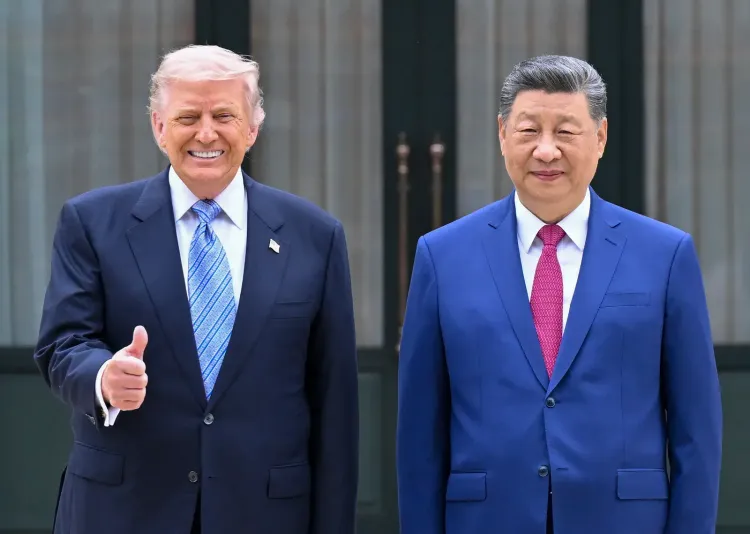
For the first time, AI governance is reportedly set to be addressed directly between Trump and Xi at a heads-of-state level in Washington this September. Treasury Secretary Bessent's framing — that the US and China are the world's top two AI powers 'by a lot' — signals Washington is moving to lock Beijing into a bilateral safety framework before frontier models outpace any multilateral consensus.
Key Takeaways
Treasury Secretary Scott Bessent confirmed AI will be on the agenda when Trump and Xi Jinping meet in Washington in September .
Bessent described the US and China as the 'number one and number two superpowers in AI, by a lot' , citing a shared responsibility to establish guardrails.
A key concern raised was preventing non-state actors from accessing powerful large language models .
Substantive US-China AI talks at the G20 in Asheville were limited because China's designated AI official, Vice Mayor He Lifeng , was not present.
The G20 chair's statement recognised AI as a general-purpose technology that could reshape the global economy, backing regulatory frameworks for financial stability and cyber resilience.
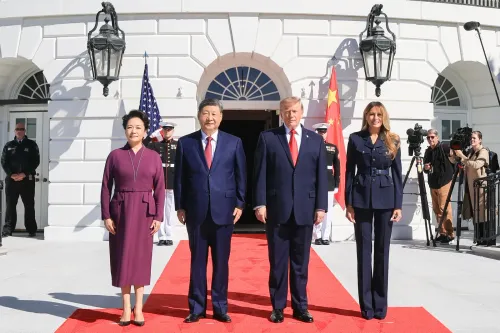
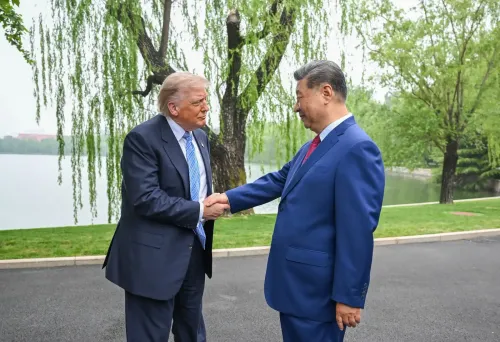
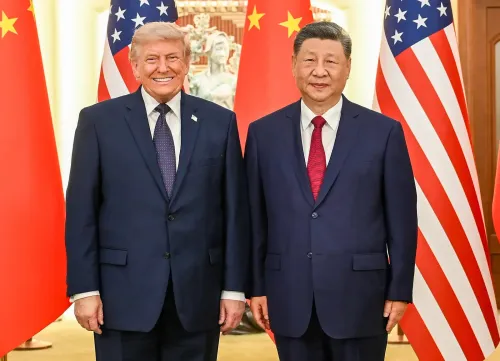
US Treasury Secretary Scott Bessent has confirmed that artificial intelligence is set to feature prominently when President Donald Trump and Chinese President Xi Jinping meet in Washington this September, framing the two nations as the world's dominant AI powers with a shared obligation to establish safeguards around the technology.
What Bessent Said
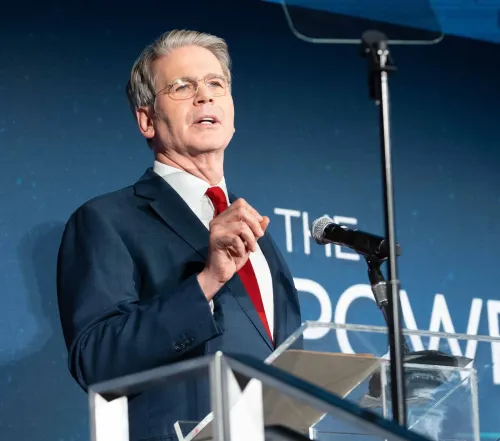
Speaking to reporters on the sidelines of the G20 finance ministers' meeting in Asheville on 2 September, Bessent explained that substantive AI discussions with the Chinese delegation were limited at the summit because Beijing's designated AI interlocutor — Vice Mayor He Lifeng, Bessent's direct counterpart — was not present.
'We had limited discussions with the Chinese on AI because the designate for their AI discussions is my counterpart, Vice Mayor He Lifeng. So he was not here,' Bessent said. He indicated the planned Trump-Xi summit would serve as the primary venue for more consequential dialogue on the subject.
'I expect that when President Trump and Xi Jinping meet in Washington in September, that AI will be on the agenda,' he said.
The Case for Guardrails
Bessent argued that as the 'number one and number two superpowers in AI, by a lot', both countries bore a special responsibility to manage the technology's risks. A key concern he raised was the prospect of advanced AI systems — specifically large language models — falling into the hands of non-state actors.
'It behoves all of us to put up guardrails, to have close communication,' he said, adding that the two nations needed 'to prevent the non-state actors from achieving any of these powerful, large language models.'
Bessent did not specify what form those guardrails might take — whether the discussions would encompass export controls, computing infrastructure standards, AI safety benchmarks, or access restrictions on frontier models.
Broader G20 Conversations
Beyond the US-China dynamic, Bessent said Washington held more extensive AI discussions with other G20 member nations, who he described as keenly interested in the United States' approach given its leading position in the sector.
Those conversations covered how financial institutions are preparing for AI-related risks and opportunities, including the resilience frameworks and industry working groups that US regulators have established. 'We are happy to show them how we have structured industry working groups on this,' he said.
The G20 chair's statement described AI as a general-purpose technology capable of reshaping the global economy, noting that countries that responsibly develop and spread the technology would likely lead global growth in coming years. The document also acknowledged financial and sector-specific risks, backing regulatory frameworks aimed at preserving financial stability and strengthening cyber resilience.
Context and What Comes Next
Trump and Xi have engaged repeatedly on trade, technology, and security across Trump's two terms. The forthcoming Washington meeting would mark the first occasion where AI governance is reportedly expected to be addressed directly at the heads-of-state level between the two powers.
With AI models advancing rapidly and their integration into financial systems deepening, the outcome of the Trump-Xi AI discussions — and whether any concrete framework emerges — will be closely watched by governments and industry bodies worldwide.
Point of View
The announcement risks becoming a diplomatic gesture rather than a structural check — particularly on the non-state-actor risk Bessent flagged, which remains the least-defined part of his proposal.
NationPress
17 Oct 2026
Frequently Asked Questions
What AI issues are Trump and Xi expected to discuss in Washington?
According to Treasury Secretary Scott Bessent, the two leaders are expected to discuss guardrails around advanced AI systems and closer bilateral communication on AI risks. A specific concern raised is preventing non-state actors from accessing powerful large language models, though the precise scope — whether covering export controls, safety standards, or model access — has not been detailed.
Why were US-China AI talks limited at the G20 in Asheville?
Bessent explained that China's designated official for AI discussions, Vice Mayor He Lifeng, was not present at the G20 finance ministers' meeting in Asheville on 2 September, restricting substantive dialogue to only a few limited exchanges.
What did the G20 chair's statement say about AI?
The G20 chair's statement described AI as a general-purpose technology with the potential to reshape the global economy. It stated that countries responsibly developing and spreading AI would likely lead global growth, while also recognising financial and sector-specific risks and backing regulatory frameworks for financial stability and cyber resilience.
What guardrails is the US proposing for AI?
Bessent did not specify the exact form of guardrails Washington might propose. He did not clarify whether discussions would cover export controls, computing infrastructure, safety standards, or access restrictions on frontier AI models, leaving the specifics to be worked out through the Trump-Xi summit and subsequent negotiations.
How does this fit into the broader US-China relationship?
Trump and Xi have held repeated discussions on trade, technology, and security across Trump's two terms. The planned Washington meeting would be the first occasion where AI governance is reportedly expected to be addressed directly at the heads-of-state level, reflecting the growing strategic importance of the technology to both nations.