US Lawmakers Challenge Trump's Military Strategy Towards Iran
Synopsis
In a critical examination of President Trump's military strategy against Iran, US lawmakers are demanding clarity on its objectives and duration. Prominent senators raise concerns about the potential consequences of an extended conflict, urging a return to diplomatic solutions.
Key Takeaways
Lawmakers demand clarity on military objectives against Iran.
Senator Tillis emphasizes the need for Congressional support.
Senator Murphy warns of potential long-term consequences.
Military strikes alone cannot eliminate Iran's nuclear knowledge.
Diplomatic solutions are urged as a means to ensure stability.
Washington, March 8 (NationPress) On Sunday, US lawmakers expressed serious concerns regarding the aims and potential length of President Donald Trump's escalating military efforts against Iran. They cautioned that the administration must provide a clear outline of its strategy to both the American public and Congress.
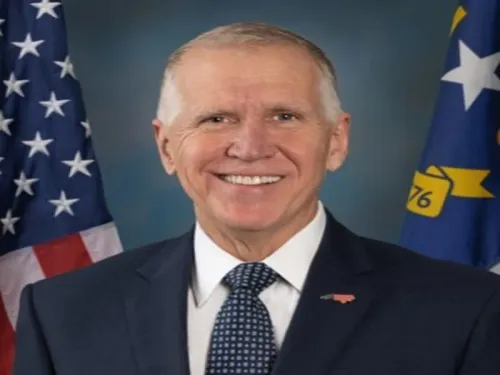
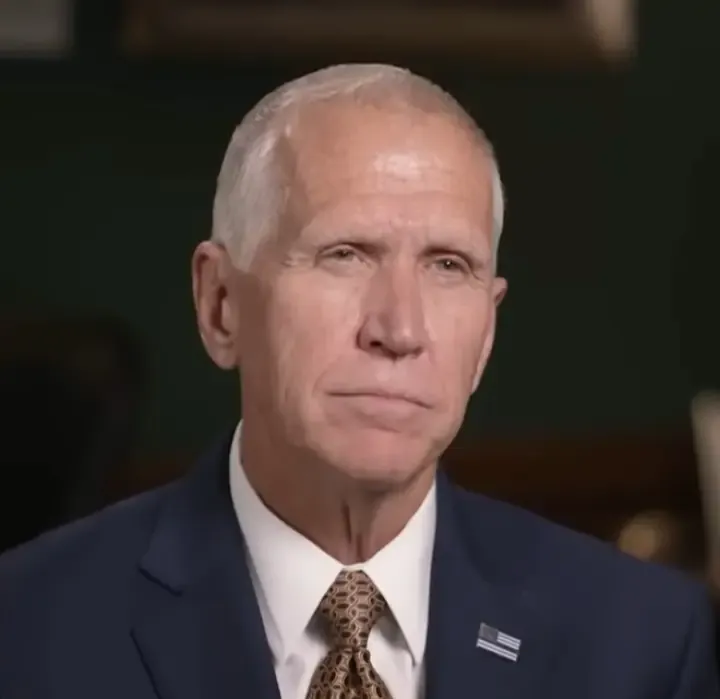
In a CNN interview, Republican Senator Thom Tillis emphasized the need for the White House to articulate its objectives as the conflict heads into its second week.
"I believe that the administration must clarify what the goal is," Tillis remarked.
"If our ultimate aim is regime change, it could extend beyond the 60 days mandated by the war powers resolution, necessitating the President to consult Congress for authorization," he continued.
Tillis indicated that Congressional support would bolster the legitimacy of a sustained military operation.
"Wouldn’t it be prudent to legitimize this by seeking a Congressional vote in support of the President if it’s intended to be a long-term engagement?" he asked.
The Senator from North Carolina also noted that deploying ground forces could lead to an extended campaign.
"When you start placing boots on the ground, and those boots may require reinforcement, that increasingly resembles a longer-term conflict," Tillis stated.
In contrast, Democratic Senator Chris Murphy provided a more critical viewpoint on the war, warning it might devolve into yet another expensive Middle Eastern conflict.
"This is already a war that is spiraling into an ongoing catastrophe," Murphy declared during the same CNN discussion.
"The situation worsens if the President is considering deploying ground troops," he added, cautioning that such a decision could result in considerable American casualties.
"At that juncture, we are talking about dozens, if not hundreds, of potential new American fatalities," Murphy noted.
He also stressed that military actions alone cannot effectively eradicate Iran's nuclear capabilities.
"You cannot bomb knowledge out of existence," he remarked.
"Even if you were to undertake a perilous endeavor, such as deploying American ground forces to extract some of their enriched uranium, the knowledge will still exist in Iran."
The Senator advocated for a return to diplomatic efforts, referring to the nuclear accord established during the Obama administration.
"A diplomatic resolution," Murphy stated, calling it the "only genuine path" to ensure that Iran does not acquire nuclear weapons.
Murphy further criticized the proposal to allocate additional funding for the conflict, asserting that the American populace does not wish for another protracted war in the region.
"The American public is opposed to this war," he asserted.
"They have witnessed the consequences of sending American troops into Iraq and Afghanistan."
Meanwhile, in an interview with ABC News, US Ambassador to the United Nations, Mike Waltz, defended the Trump administration’s approach, asserting that Washington is meeting its military targets.
"Regarding our military objectives, the President is correct; we are not only ahead of schedule but also achieving success," Waltz stated.
He elaborated that the campaign aims to neutralize Iran's capacity to threaten the United States and its allies.
"Ultimately, the President's focus is on ensuring that Iran poses no threat to Americans," the US envoy to the UN explained, further asserting that the objective is to prevent Tehran from threatening "our allies in the region."
Waltz claimed that the campaign has already significantly diminished Iran's military capabilities.
"We have observed a marked reduction in ballistic missile launches from Iran," he noted, indicating that such activities have dramatically decreased since the conflict's initiation.
The discourse in Washington unfolds as the conflict expands throughout the region and oil prices soar due to disruptions in shipping through the Strait of Hormuz.
Point of View
The discussion surrounding President Trump’s military strategy against Iran highlights a critical juncture in US foreign policy. Lawmakers from both parties are expressing valid concerns over the implications of prolonged military engagement, emphasizing the necessity for clear objectives and the importance of Congressional oversight.
NationPress
26 Oct 2026
Frequently Asked Questions
What are US lawmakers saying about Trump's strategy against Iran?
US lawmakers are demanding clarity on the objectives and potential duration of President Trump's military campaign against Iran, emphasizing the need for Congressional support.
What concerns did Senator Thom Tillis raise?
Senator Tillis expressed that the administration must clarify its goals and highlighted the importance of Congressional backing for a prolonged military effort.
What did Senator Chris Murphy warn about the conflict?
Senator Murphy warned that the conflict risks becoming another costly Middle East campaign, potentially leading to significant American casualties.
What alternative did Senator Murphy suggest?
Senator Murphy urged a return to diplomacy, referencing the nuclear agreement negotiated during the Obama administration as the 'only true path' to prevent Iran from obtaining nuclear weapons.
How did US Ambassador Mike Waltz defend the strategy?
Ambassador Waltz defended the strategy by stating that the US is meeting its military objectives and significantly degrading Iran's military capabilities.