Does Trump's 'Morality' Limit His Power?
Synopsis
In a bold statement, President Trump claims that the only thing restraining his global power is his own morality. He argues that international law holds little weight against his responsibility to protect US interests, emphasizing military strength over legal frameworks.
Key Takeaways
Trump's morality is cited as the main check on his power.
He dismisses international law as a constraint.
Claims to have ended eight wars .
Emphasizes military strength as key to US influence.
Highlights the importance of personal judgment in leadership.
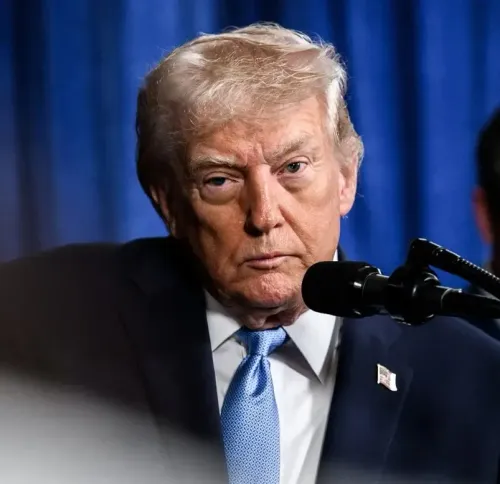
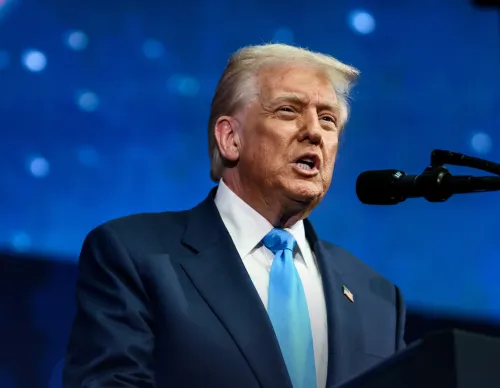
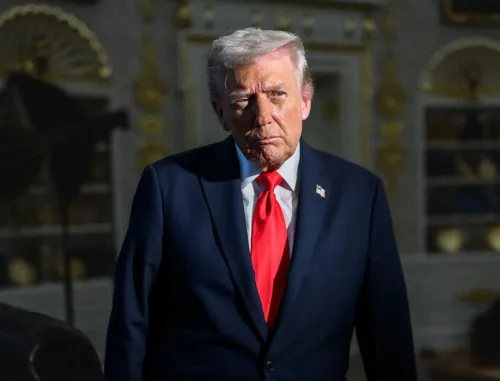
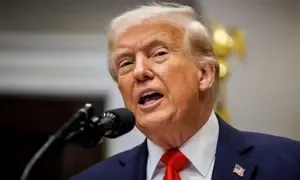
Washington, Jan 12 (NationPress) US President Donald Trump has stated that the primary limitation on his authority in global affairs is his own morality, disregarding international law as a significant restriction on his actions.
In an interview with The New York Times last week, the transcript of which was released on Sunday, Trump was asked if anything could hold him back if he believed national security was at risk.
“There is one thing,” he responded when questioned about constraints on his power. “My own morality. My own mind. It’s the only thing that can stop me, and that’s very good.”
When a reporter inquired whether international law acted as a limitation, Trump stated, “I don’t need international law,” asserting that he was not intent on causing harm but would take action to safeguard US interests.
Trump claimed that global behavior is primarily influenced by power and military strength rather than institutional frameworks. He suggested that NATO is not feared by Russia or China “other than us,” crediting US military expenditure during his tenure for revitalizing American influence.
“We’re tremendously feared because of the fact that I built the military,” he remarked. “If I didn’t rebuild the military, we’d be just like them.”
The president emphasized that the United States must act decisively when it identifies threats, claiming that nations have the right to intervene in such situations. He connected US authority abroad to deterrence and strength rather than compliance with what he termed flexible interpretations of international law.
In response to inquiries, Trump reiterated his achievements while in office to bolster his claims, stating he had “ended eight wars,” including long-standing conflicts. He expressed disappointment that these accomplishments did not secure him a Nobel Peace Prize, contrasting his record with that of former president Barack Obama.
“I’ve ended eight wars and didn’t get the Nobel Peace Prize,” Trump remarked. “Pretty amazing.”
When asked about potential military actions in Venezuela or other decisions, Trump refrained from detailing specific triggers but confirmed that such options remain on the table.
Trump highlighted the importance of personal judgment in leadership, suggesting that decisions at the highest echelons cannot be entirely confined by legal frameworks or multilateral institutions.
While acknowledging the significance of international law in principle, he asserted that it should align with US security interests. “We have to keep the United States safe,” Trump concluded, noting that Washington also has a responsibility towards regions it deems strategically important.
Point of View
It’s crucial to recognize Trump's perspective on morality as a guiding principle for leadership. While it raises questions about adherence to international norms, it also reflects his focus on national security. The debate around such assertions is pivotal in understanding contemporary political dynamics.
NationPress
27 Sept 2026
Frequently Asked Questions
What did Trump say about international law?
Trump stated that he does not need international law and emphasized that his morality is the primary constraint on his power.
How many wars did Trump claim to have ended?
Trump claimed to have ended eight wars during his presidency.
Did Trump express disappointment over not receiving the Nobel Peace Prize?
Yes, Trump expressed disappointment that his efforts to end wars did not earn him a Nobel Peace Prize.