Trump's 'calm before storm' post signals possible Iran strikes amid talks
Synopsis
Trump's 'calm before storm' social media post — featuring AI-generated imagery of US naval forces facing Iranian ships — is more than a provocation. With aides reportedly drafting air-strike contingency plans and Iran's foreign minister flagging deep distrust, the gap between a new deal and a new conflict may be narrowing faster than either side is publicly admitting.
Key Takeaways
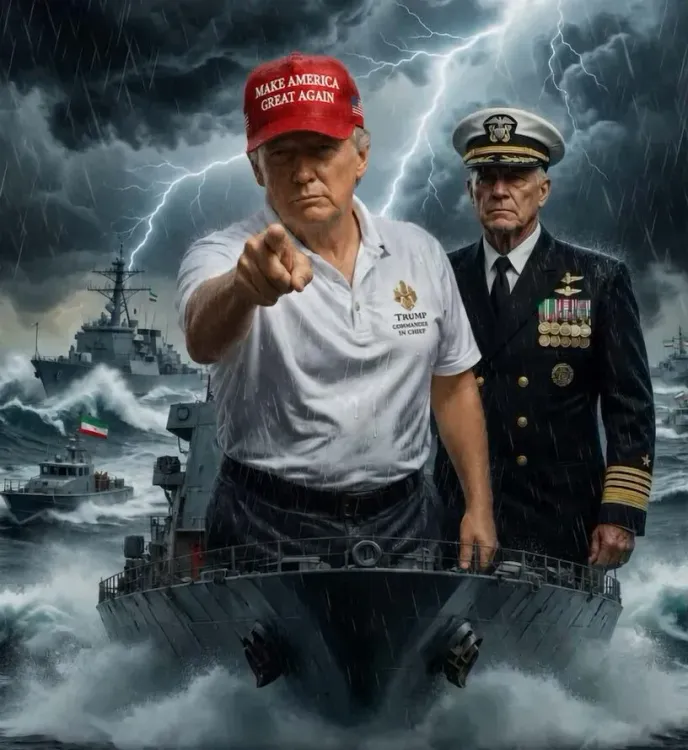
Trump posted an AI-generated image captioned 'It was the calm before the storm' on 17 May , widely read as a threat directed at Iran .
Aides are reportedly discussing contingency plans for renewed US air strikes on Iran if diplomacy fails, according to The New York Times .
Iran's Foreign Minister Abbas Araghchi acknowledged back-channel US messages but cited deep 'distrust' toward Washington.
Parliament Speaker Mohammad Bagher Ghalibaf reportedly called alternatives to Iran's 14-point peace plan 'completely inconclusive.' Iran has proposed a new shipping mechanism for the Strait of Hormuz , through which nearly 20 per cent of global oil trade flows.
Ford , the US's largest carrier, recently concluded an extended deployment in the Gulf .
US President Donald Trump has issued a veiled warning to Iran, posting an AI-generated image on social media captioned 'It was the calm before the storm', as reports emerged that his administration is actively discussing the possibility of renewed air strikes on Tehran if ongoing diplomatic efforts collapse. The post, shared on 17 May, has been widely interpreted as a direct signal to the Iranian government at a moment of fragile regional stability.
The Post and Its Symbolism
The AI-generated image depicts Trump wearing a Make America Great Again hat, standing alongside a US Navy Admiral on a naval vessel amid rough seas and lightning. Iranian ships are visible in the background — a composition that analysts and observers have read as a deliberate visual threat. The post has drawn significant attention globally for its confrontational framing at a sensitive diplomatic juncture.
What the Administration Is Reportedly Weighing
According to The New York Times, Trump is preparing to make a major decision on Iran policy, with senior aides reportedly drawing up contingency plans for resumed air operations should diplomacy fail. In a separate telephone interview with French broadcaster BFMTV, Trump warned of a 'very bad time' for Iran if a peace agreement is not reached soon, adding: 'They have an interest in reaching an agreement.'
Iran's Position and the Diplomatic Back-Channel
Iran's Foreign Minister Abbas Araghchi acknowledged receiving messages indicating willingness from the Trump administration to engage in new talks, but cautioned that deep 'distrust' toward Washington's intentions persists within Tehran. Parliament Speaker Mohammad Bagher Ghalibaf reportedly warned that any alternatives to Iran's 14-point peace plan would be 'completely inconclusive.'
Separately, parliament committee chair Ebrahim Azizi stated on X that Iran has proposed a new mechanism to regulate shipping in the Strait of Hormuz, under which certain routes would remain closed to operators of the so-called 'Project Freedom', while commercial vessels cooperating with Iran would be allowed passage under regulated conditions.
The Strait of Hormuz and Regional Stakes
The Strait of Hormuz remains the critical flashpoint — a maritime chokepoint through which nearly 20 per cent of global oil trade flows. The United States continues to maintain a strong naval presence in the Gulf, even as its largest carrier, USS Gerald R. Ford, recently concluded an extended deployment. A ceasefire was reached last month, but regional tensions have persisted, with both sides trading warnings through official channels and symbolic gestures.
What Comes Next
The coming days are likely to be decisive. If diplomatic back-channels fail to produce a framework acceptable to both Washington and Tehran, the risk of military escalation — particularly around the Strait of Hormuz — rises sharply. This is the Nth such escalation cycle since Trump's return to office, and the pattern of public posturing followed by back-channel signalling has become a defining feature of his administration's Iran strategy. How Tehran responds to the latest pressure will set the tone for the next phase of negotiations.
Point of View
Pressure Tehran, and signal resolve to domestic audiences simultaneously. But the tactic carries real risk: Iran's 14-point plan and its Hormuz shipping proposal suggest Tehran is entrenching, not retreating. The back-channel acknowledgement by Foreign Minister Araghchi that messages have been exchanged is the only thin diplomatic thread visible — and public theatrics from Washington make that thread harder to hold. The world's oil supply running through a 33-kilometre chokepoint means any miscalculation here has consequences far beyond the two countries directly involved.
NationPress
5 Oct 2026
Frequently Asked Questions
What did Trump post that sparked alarm over Iran?
Trump posted an AI-generated image on social media on 17 May captioned 'It was the calm before the storm,' showing him alongside a US Navy Admiral on a naval vessel with Iranian ships visible in the background. The post was widely interpreted as a veiled military threat directed at Tehran.
Is the US planning air strikes on Iran?
According to reports citing The New York Times, Trump's aides are reportedly discussing contingency plans for renewed air operations against Iran if diplomatic efforts fail. No strikes have been ordered, and the administration has not officially confirmed such plans.
What is Iran's response to US pressure?
Iran's Foreign Minister Abbas Araghchi acknowledged receiving signals of US willingness for new talks but stressed that deep distrust toward Washington remains. Parliament Speaker Mohammad Bagher Ghalibaf reportedly warned that alternatives to Iran's 14-point peace plan would be 'completely inconclusive.'
Why is the Strait of Hormuz significant in this crisis?
The Strait of Hormuz is a critical maritime chokepoint through which nearly 20 per cent of global oil trade flows. Iran has proposed a new mechanism to regulate shipping there, and any military escalation in the region could disrupt global energy markets significantly.
What did Trump say about a peace deal with Iran?
In a telephone interview with French broadcaster BFMTV, Trump warned of a 'very bad time' for Iran if a peace deal is not reached soon, and said, 'They have an interest in reaching an agreement.' The remarks signal that Washington is maintaining pressure while keeping the door to negotiations open.