TTP clash in Khyber Pakhtunkhwa signals shifting Af-Pak security order
Synopsis
A routine-looking firefight in Khyber Pakhtunkhwa may be anything but. The TTP's claim that it killed a former Afghan Local Police commander, Haji Bari Mama, hints at how the collapsed Afghan Republic's security networks are dispersing into Pakistan's insurgency — a realignment neither Islamabad nor Kabul has openly confronted.
Key Takeaways
TTP claimed it killed Haji Bari Mama , a former Afghan border forces and ALP commander, in Khyber Pakhtunkhwa .
Pakistan's military said two TTP fighters — Topail and Haidar Waziri — were killed in the same clash.
Analysts argue the incident signals dispersed Afghan-Republic security networks merging into borderland militancy.
In 2025, a PAF airstrike on Matre Dara in the Tirah Valley reportedly killed at least 30 civilians , including children.
Khyber Pakhtunkhwa police logged 605 terror incidents from January–August 2025, with 138 civilians and 79 police killed.
Amnesty International flagged an “alarming disregard for civilian life” in 2025 drone strikes in the province.
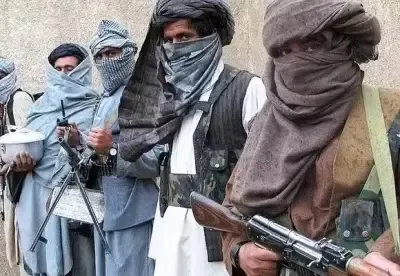
The recent firefight between Tehreek-e-Taliban Pakistan (TTP) and Pakistani security forces in Khyber Pakhtunkhwa may appear routine, but analysts argue it is an early marker of a deeper realignment in the Afghanistan–Pakistan borderland security order — one neither Islamabad nor Kabul is prepared to confront, according to a report in Eurasia Review.
The competing statements that followed the clash, the report noted, expose how cross-border militant networks are absorbing remnants of the collapsed Afghan Republic's security apparatus.
Conflicting claims from the clash
The TTP, blamed for extensive civilian and military casualties across Pakistan, claimed it had killed Haji Bari Mama, a former commander of Afghanistan's border forces and the Afghan Local Police (ALP). According to analyst Ajmal Sohail writing in Eurasia Review, Bari Mama had earlier served as police chief of Machili district in Helmand — a region historically scarred by Taliban insurgency, narcotics trafficking, and US-backed counterinsurgency.
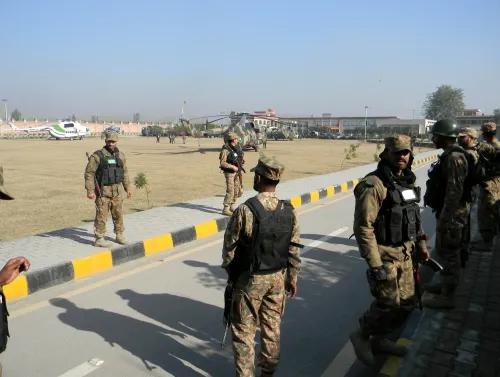
The Pakistani military, meanwhile, said two TTP fighters — Topail and Haidar Waziri — were killed in the same encounter. The mismatch in narratives, the report argued, is itself revealing.
Why a former Afghan commander's death matters
If the TTP's claim holds, Bari Mama's presence in Khyber Pakhtunkhwa points to a troubling drift. Many former Afghan security officials — displaced, unemployed or hunted after the Taliban's 2021 takeover — have scattered across the region. Some have sought refuge, others have reportedly turned to work as security contractors, fixers or intermediaries in the borderlands, and a smaller number are believed to have drifted into militant networks.
“Whether Bari Mama was present as a civilian, a broker, or an active participant remains uncertain. What his death does illustrate, however, is that the collapse of the Afghan Republic did not end its security networks, it dispersed them,” Sohail wrote. “These remnants are now interacting with Pakistan's own landscape of insurgency.”
Messaging on both sides
By publicising the killing of a former Afghan state official, the TTP signalled its reach into Afghan-origin networks, warned ex-Republic personnel that they remain targets, and boosted internal morale by claiming a “high-value” scalp. Pakistan's military, by announcing the killing of two TTP cadres, sought to project continued state control over a restive frontier.
Civilian toll in counter-terror operations
The clash unfolds against a wider backdrop of contested counter-terrorism operations. A report in Greece-based Directus flagged that Pakistani forces have been repeatedly accused of using lethal force in ways that killed civilians, including women and children, in tribal districts such as North Waziristan and Khyber.
In 2025, at least 30 people, including women and children, were reportedly killed when Pakistan Air Force JF-17 jets dropped eight LS-6 precision-guided bombs on Matre Dara village in the Tirah Valley of Khyber Pakhtunkhwa around 2 am. Local residents said no militants were present at the time of the strike. Rights activists argued the scale of civilian harm pointed to a failure to apply the principles of distinction and proportionality under international humanitarian law.
Amnesty International in 2025 condemned what it called an “alarming disregard for civilian life” in drone strikes in the province, documenting several incidents and demanding a transparent probe, disclosure of targeting protocols, and compensation for victims' families.
The numbers behind the violence
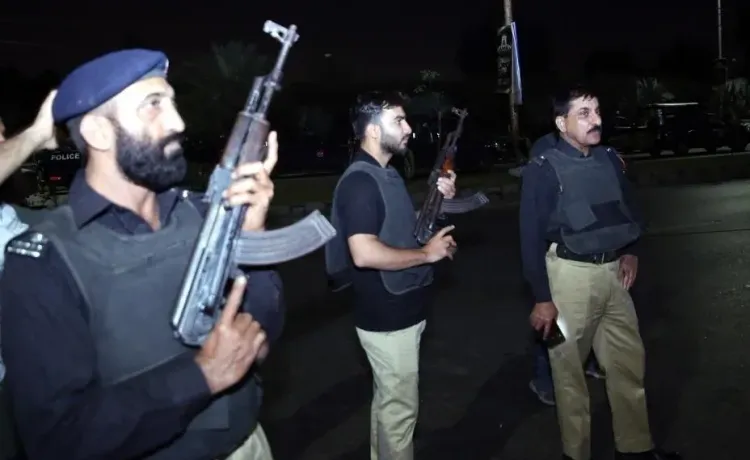
According to Khyber Pakhtunkhwa police statistics, the province recorded 605 terror incidents between January and August 2025, claiming 138 civilian and 79 police lives. The figures do not disaggregate deaths caused by militants from those linked to state operations — a gap analysts say routinely undercounts civilian casualties, with victims occasionally mislabelled as combatants.
Unless Islamabad and Kabul acknowledge how dispersed Afghan-Republic networks are bleeding into Pakistan's insurgency, the Eurasia Review report warned, such clashes will keep being dismissed as routine — even as the borderland's security architecture quietly reshapes itself.
Point of View
The post-2021 assumption that the Afghan Republic's security apparatus simply evaporated needs revisiting. What appears to be happening is dispersion, not dissolution: trained personnel rebranding as brokers, contractors, or in some cases combatants across a porous frontier. Islamabad's preferred frame — that this is purely a TTP problem solvable by airpower — is convenient but incomplete, and the mounting civilian toll in Tirah and Waziristan is the cost of that convenience.
NationPress
17 Oct 2026
Frequently Asked Questions
Who was Haji Bari Mama and why is his reported death significant?
Haji Bari Mama was a former commander of Afghanistan's border forces and the Afghan Local Police, who earlier served as police chief of Machili district in Helmand. His reported killing during a TTP-Pakistan army clash in Khyber Pakhtunkhwa suggests former Afghan Republic security personnel may be operating within Pakistan's militant landscape — a shift with cross-border implications.
What did the TTP and Pakistan military each claim about the clash?
The TTP claimed it killed Haji Bari Mama in the encounter, while the Pakistani military said two TTP fighters, Topail and Haidar Waziri, were killed. The competing narratives reflect each side's effort to shape the story — the TTP signalling reach into Afghan networks, and Pakistan projecting state control.
What is the civilian toll of counter-terror operations in Khyber Pakhtunkhwa?
Khyber Pakhtunkhwa police recorded 605 terror incidents between January and August 2025, with 138 civilians and 79 police personnel killed. A 2025 PAF airstrike on Matre Dara village in the Tirah Valley reportedly killed at least 30 people, including women and children, with locals saying no militants were present at the site.
What has Amnesty International said about Pakistan's drone strikes in the region?
Amnesty International in 2025 condemned what it described as an alarming disregard for civilian life in drone strikes in Khyber Pakhtunkhwa. It demanded a transparent probe, public disclosure of the targeting process, and compensation for the families of civilian victims.
Why do analysts call this a shifting security order?
Analysts argue the collapse of the Afghan Republic in 2021 did not eliminate its security networks but dispersed them across the region. Some former officials have turned to work as contractors or intermediaries, and a few have drifted into militant ranks — a realignment that is reshaping the Afghanistan-Pakistan borderland in ways neither government has openly addressed.