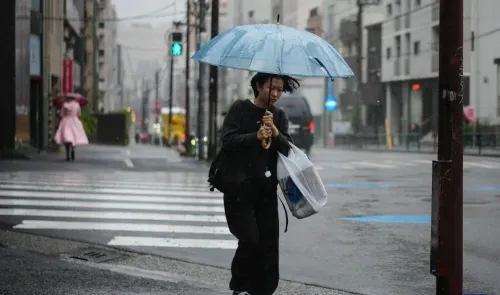
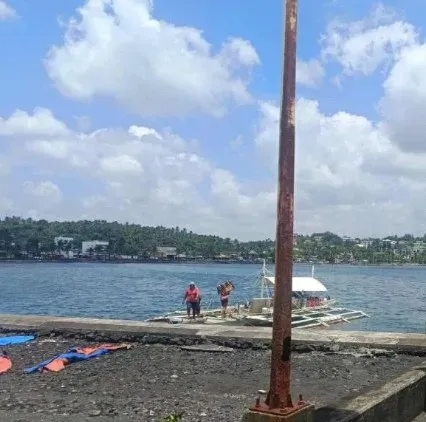
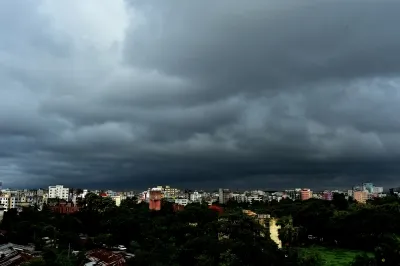
Typhoon Jangmi bears down on Kyushu after injuring 10+ in Okinawa
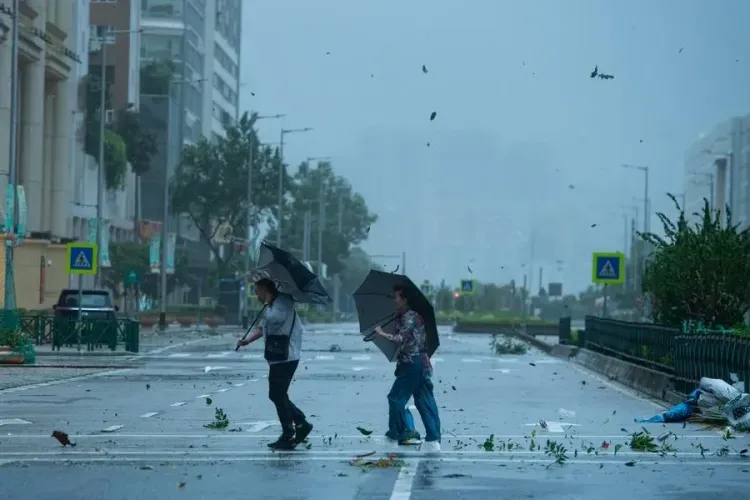
Synopsis
Typhoon Jangmi — the season's sixth — is tracking toward Kyushu after leaving more than 10 people injured in Okinawa. With over 320 flights scrapped and Shinkansen services under threat, Japan is bracing for a second consecutive day of typhoon-force disruption as the JMA warns of landslides and flooding across western Japan.
Key Takeaways
Typhoon Jangmi , the season's sixth typhoon, was moving toward Kyushu at 25 km per hour as of 7 am on 2 June .
More than 10 people were injured in Okinawa Prefecture as the storm passed through.
Airlines cancelled over 320 flights in and out of Kyushu; Tokaido Shinkansen services face possible disruption from Tuesday night.
The JMA has warned of landslides, river flooding, and strong winds across the Amami region and western Japan through Wednesday.
Last year, Tropical Storm Peipah injured 24 people and damaged 40 houses in Shizuoka Prefecture , offering a benchmark for potential impact.
Typhoon Jangmi, the sixth typhoon of the season, was moving north-northeast toward Japan's southwestern island of Kyushu on Tuesday, 2 June, after battering Okinawa Prefecture the previous day. The Japan Meteorological Agency (JMA) confirmed the storm's trajectory, warning of severe weather across western Japan through Wednesday.
Storm Position and Movement
As of 7 am local time, Typhoon Jangmi was located west-northwest of Amami-Oshima Island — situated between Kagoshima and Okinawa prefectures — and advancing north-northeast at approximately 25 km per hour, according to the JMA. The storm's path places Kyushu, one of Japan's most populous southwestern islands, directly in its approach corridor.
Injuries and Disruptions Reported
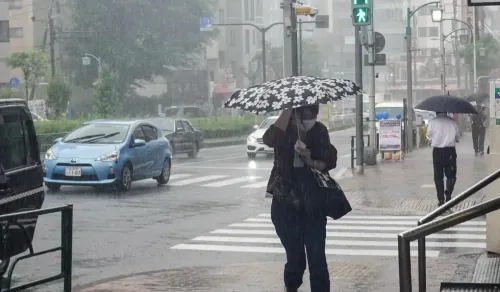
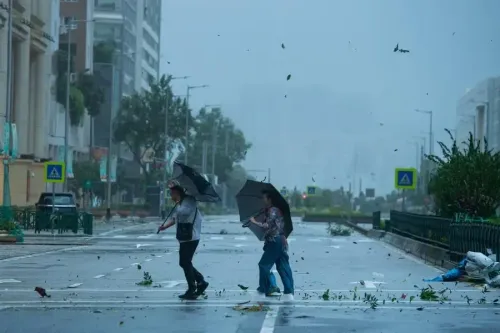
More than 10 people were injured in Okinawa Prefecture amid powerful winds, according to reports citing public broadcaster NHK. Airlines cancelled over 320 flights in and out of Kyushu and other affected regions on Tuesday. Shinkansen bullet train services also face disruption, with the Tokaido line potentially affected from Tuesday night into Wednesday.
JMA Hazard Warnings
The JMA has issued cautions for strong winds, heavy rainfall, landslides, flooding in low-lying areas, and overflowing rivers — particularly across the Amami region on Tuesday and across western Japan from Tuesday into Wednesday. Authorities have urged residents to remain vigilant and avoid unnecessary travel.
Context: Japan's Recurring Typhoon Risk
This comes amid Japan's annual typhoon season, which historically intensifies between June and October. Notably, in September last year, Tropical Storm Peipah left 24 people wounded and 40 houses damaged across four municipalities in Shizuoka Prefecture. The city of Makinohara bore the worst of that storm, with 3 people severely injured and 20 others sustaining lighter injuries. Strong winds also demolished an agricultural greenhouse in Yaizu City, leaving a farmer in his 40s with a severe facial fracture. At its peak, Chubu Electric Power Grid Co. reported approximately 17,000 homes losing power in Makinohara and surrounding areas due to tornado activity and wind damage.
What to Watch
As Jangmi continues north, authorities and disaster management agencies will monitor its intensity and landfall timing. Residents across Kyushu and the Amami region have been advised to prepare for potential evacuations. The JMA is expected to issue updated advisories through Wednesday as the storm progresses.
Point of View
While among the world's most advanced, is stress-tested every season. The cancellation of over 320 flights and potential Shinkansen disruptions signal that economic costs are mounting before the storm even makes landfall. What mainstream coverage often underweights is the cumulative toll on smaller municipalities — Amami-region towns with limited evacuation resources face disproportionate risk compared to major urban centres. With climate patterns intensifying typhoon frequency, the JMA's repeated warnings are becoming a seasonal norm rather than an exception — and Japan's preparedness frameworks will need to scale accordingly.
NationPress
15 Oct 2026
Frequently Asked Questions
Where is Typhoon Jangmi now and where is it headed?
As of 7 am on 2 June, Typhoon Jangmi was located west-northwest of Amami-Oshima Island and moving north-northeast at about 25 km per hour toward Japan's southwestern island of Kyushu. The Japan Meteorological Agency is tracking its progress and issuing updated hazard warnings.
How many people were injured by Typhoon Jangmi in Okinawa?
More than 10 people were injured in Okinawa Prefecture as Typhoon Jangmi passed through on Monday, according to reports citing public broadcaster NHK. The full extent of damage is still being assessed.
Which flights and trains are affected by Typhoon Jangmi?
Airlines have cancelled over 320 flights in and out of Kyushu and surrounding areas on Tuesday. The Tokaido Shinkansen line also faces potential service disruptions from Tuesday night into Wednesday due to the storm's impact.
What hazards has the JMA warned about?
The Japan Meteorological Agency has cautioned against strong winds, heavy rainfall, landslides, flooding in low-lying areas, and overflowing rivers — particularly in the Amami region on Tuesday and across western Japan from Tuesday into Wednesday.
How does Typhoon Jangmi compare to past storms that hit Japan?
In September last year, Tropical Storm Peipah injured 24 people and damaged 40 houses across four municipalities in Shizuoka Prefecture, with about 17,000 homes losing power at peak. Typhoon Jangmi has already injured more than 10 people in Okinawa alone, with Kyushu yet to be fully impacted.