UK Armed Forces Minister Al Carns resigns over defence funding row

Synopsis
Two senior defence ministers gone in quick succession — Al Carns' resignation lays bare a deepening rift inside Starmer's government over military funding. His charge that Britain is 'purchasing capability for the last war' while adversaries prepare for the next is a damning indictment from a former Royal Marine who sat at the Cabinet table.
Key Takeaways
Al Carns resigned as UK Armed Forces Minister on 12 June , citing inadequate defence funding and blocked reform efforts.
He criticised the government's Defence Investment Plan (DIP) as 'neither transformative enough nor sufficiently funded.' His departure follows that of former Defence Secretary John Healey , who also resigned over defence budget disagreements.
Carns, a former Royal Marine , warned that UK procurement remains geared toward 'the last war' while adversaries prepare for future conflicts.
He also attacked the Northern Ireland Legacy Bill as 'unfit for purpose,' saying it risks failing veterans.
No replacement has been named; pressure on the Starmer government over defence policy is expected to intensify.
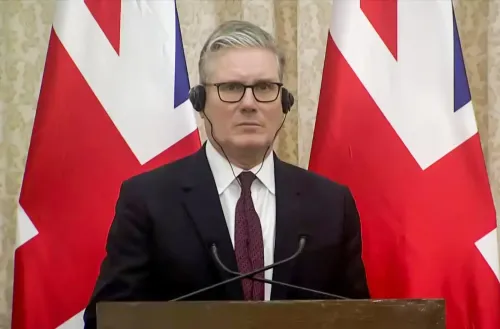
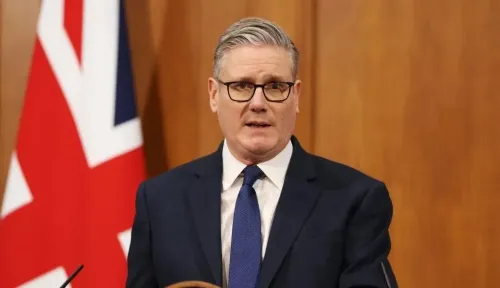
Al Carns, the UK Armed Forces Minister, resigned from Prime Minister Sir Keir Starmer's government on 12 June, citing what he described as a fundamental failure to adequately fund and equip Britain's military. The departure deepens a visible rift within the administration over national security spending and defence preparedness.
The Resignation and What Triggered It
Carns announced his exit in a post on X, stating that Number 10 had repeatedly refused to heed his warnings about military underfunding. 'We owe those who serve the UK the kit to do the job and the loyalty to stand by them when it's done. We are failing on both,' he wrote. In a formal resignation letter to the Prime Minister, he added: 'It has become clear to me that the change I had pushed for is not going to come.'
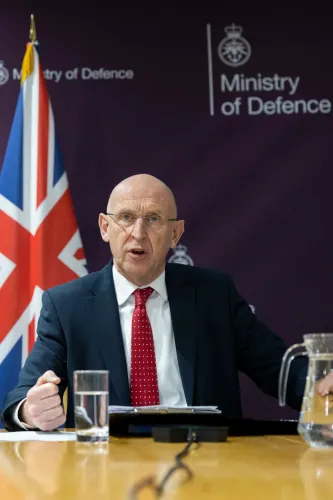
His resignation follows that of former Defence Secretary John Healey, who similarly clashed with Starmer over the defence budget, arguing the proposed spending levels 'fall well short' of what is required to protect the country. Two high-profile defence departures in close succession signal a pattern of internal dissent that the government can no longer easily contain.
Carns' Core Criticisms
A former Royal Marine, Carns drew on his military background to argue that Britain's procurement policies are dangerously out of step with modern warfare. Citing the conflict in Ukraine as a reference point, he warned: 'The character of conflict is changing faster than our procurement can keep up with. We are still purchasing capability suitable for the last war while our adversaries arm for the next one.'
He was particularly pointed in his assessment of the government's Defence Investment Plan (DIP), from which he distanced himself: 'While I had no hand in the Defence Investment Plan, that distance does allow me to say plainly that it is not built for the threat we face. It is neither transformative enough nor sufficiently funded.' He added that Britain was 'asking our Armed Forces to operate in a more dangerous world on a budget written for a calmer one.'
On Veterans and the Northern Ireland Legacy Bill
Carns also used his resignation letter to criticise the Northern Ireland Legacy Bill, calling it 'unfit for purpose' and warning that it risks failing the very veterans it was designed to protect. The criticism adds another dimension to his departure, framing it not merely as a budget dispute but as a broader concern about the government's treatment of serving and former military personnel.
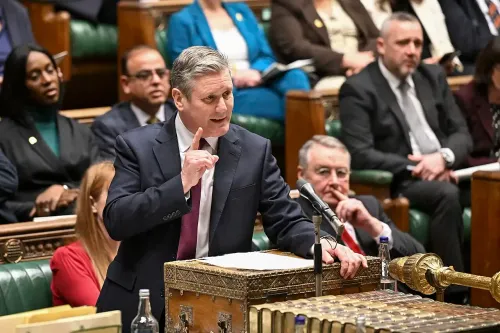
'I cannot in good conscience stand at the dispatch box and defend a level of investment I know to be inadequate to the task,' he stated. 'A serious country funds its defence to meet the threat it actually faces, not the threat it wishes it faced.'
Political Fallout and What Comes Next
The back-to-back resignations of Healey and Carns are expected to intensify parliamentary and public pressure on the Starmer government over its defence posture, particularly as NATO allies push member states toward higher military spending and security concerns across Europe continue to mount. The government has not yet named a replacement for Carns, and the Ministry of Defence faces a period of uncertainty at a moment of heightened global tensions.
Point of View
And their exits suggest the Treasury's grip on defence budgets is overriding operational judgement. The critique of the Defence Investment Plan from someone who served inside the ministry carries more weight than opposition attacks from the backbenches. With NATO spending benchmarks rising and the Ukraine war rewriting doctrine in real time, a UK government seen as underinvesting faces not just domestic political risk but reputational damage with allies. Starmer's response — or lack of one — to these resignations will define how seriously the security establishment takes his administration.
NationPress
26 Oct 2026
Frequently Asked Questions
Why did Al Carns resign as UK Armed Forces Minister?
Al Carns resigned on 12 June, stating that the government was failing to adequately fund and equip Britain's armed forces and that Number 10 had refused to act on his repeated warnings. He said he could not 'in good conscience' defend the current level of defence investment from the dispatch box.
What is the Defence Investment Plan and why did Carns criticise it?
The Defence Investment Plan (DIP) is the UK government's framework for military spending and procurement. Carns described it as 'not built for the threat we face,' arguing it is neither sufficiently funded nor transformative enough to address modern security challenges.
Who else resigned from the UK government over defence spending?
Former Defence Secretary John Healey also resigned, having argued that the government's proposed military spending 'falls well short' of what is needed to protect the country. The two departures in close succession have exposed deep divisions within the Starmer administration on defence.
What did Carns say about the Northern Ireland Legacy Bill?
Carns called the Northern Ireland Legacy Bill 'unfit for purpose,' warning that it risks failing the veterans it was designed to protect. The criticism formed part of a broader argument that the government is not standing by those who serve in the armed forces.
What happens next after Carns' resignation?
The government has not yet announced a replacement for Carns. The back-to-back defence resignations are expected to increase parliamentary pressure on Prime Minister Starmer over military funding, particularly as NATO allies push for higher defence spending amid ongoing security concerns in Europe.