Did British PM's China Visit Avoid Key Issues Like Nuclear Build-Up?
Synopsis
UK Prime Minister Keir Starmer's recent visit to China has raised eyebrows as critical discussions on Beijing's nuclear arsenal and related issues were notably absent. This article delves into the implications of such diplomatic oversights and why they matter for global security.
Key Takeaways
Starmer's talks with Xi excluded critical nuclear issues.
China's nuclear arsenal is rapidly expanding.
No clear rationale from China for its military buildup.
US expresses concerns over its national security.
Global implications of nuclear proliferation are serious.
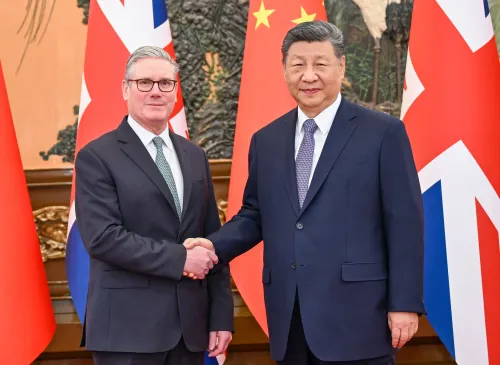
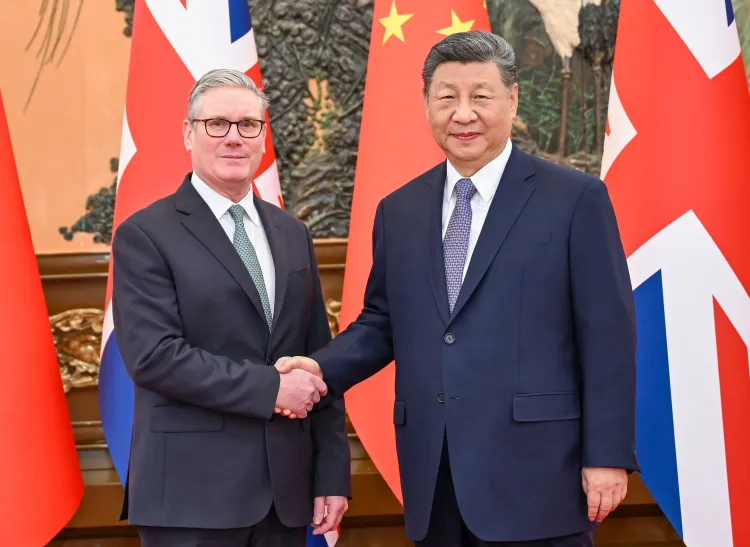
London, Feb 3 (NationPress) During the recent visit of UK Prime Minister Keir Starmer to China, talks with Chinese President Xi Jinping notably omitted discussions about Beijing's rapid and secretive nuclear weapons buildup. Issues like human rights violations, espionage, and Taiwan were also left unaddressed, according to a report released on Tuesday.
Citing the 2025 findings from the Stockholm International Peace Research Institute (Sipri), the UK’s prominent newspaper, The Guardian, reported that while China currently has around 600 warheads, it is swiftly advancing to match other nuclear nations.
According to Sipri, “China’s nuclear stockpile is expanding at an unprecedented rate, estimated at about 100 new warheads annually since 2023. By the end of this decade, it could possess as many ICBMs [intercontinental ballistic missiles] as Russia or the USA.”
The report highlights that Beijing has provided no clear justification for this substantial increase and has refused to engage in multilateral arms control discussions.
In a white paper released last November, China reiterated its stance that nations with the largest nuclear arsenals should take the first step by making significant unilateral reductions. Until that occurs, it asserts that it will maintain its nuclear capabilities at the minimum level necessary for national security, although the paper did not specify what that level entails.
Despite its current advantages, the report indicated that the US remains wary, with the Pentagon issuing a warning in December that “China’s historic military expansion has increased vulnerability to the US homeland.”
The Pentagon also noted a more aggressive nuclear stance, claiming that around 100 ICBMs were recently deployed in silos across northern China, and that Beijing is enhancing its capacity “to target US forces in the Pacific,” which could jeopardize future US military support for Taiwan.
“China aims to be prepared to engage in and prevail in a conflict over Taiwan by the close of 2027,” The Guardian quoted the Pentagon.
The report concluded with a sobering note: “Regardless of President Xi’s intentions, these are troubling times for anyone concerned about the threat of global thermonuclear conflict - a concern we all should share. Prime Minister Starmer’s conversation with Xi allegedly included matters related to threats against UK national security. What could be a more pressing threat than the proliferation of nuclear arms? Yet, to date, it appears he did not address this critical issue.”
Point of View
I believe that while diplomacy is crucial, overlooking critical security concerns like nuclear proliferation during high-level talks poses a significant risk. The international community must remain vigilant and hold leaders accountable for addressing these pressing issues.
NationPress
6 Oct 2026
Frequently Asked Questions
What was discussed during Starmer's visit to China?
While Prime Minister Starmer met with President Xi Jinping, key issues such as China's nuclear arsenal buildup, human rights abuses, and Taiwan were not addressed.
How many nuclear warheads does China currently have?
China is estimated to have around 600 nuclear warheads as of now.
What is the projected growth of China's nuclear arsenal?
China's nuclear arsenal is growing at a rate of approximately 100 new warheads per year since 2023.
What stance has China taken regarding nuclear arms control?
China has rejected multilateral arms control negotiations and stated that countries with larger arsenals must make the first move towards disarmament.
What are the implications of China's military expansion?
Experts warn that China's military buildup poses a growing vulnerability to the US and could impact future military support for Taiwan.