1971 Bangladesh genocide: UN silence undermines justice, says report
Synopsis
More than five decades after Pakistani military forces killed hundreds of thousands to potentially three million people in East Pakistan, a new report warns that the United Nations' refusal to formally name the 1971 Bangladesh genocide is not just a historical oversight — it is an active corrosion of international law and the 'never again' principle that the UN itself champions.
Key Takeaways
A report in The European Times warns that the international community's failure to recognise the 1971 Bangladesh genocide undermines global human rights law.
The Pakistani military's Operation Searchlight began on 25 March 1971 in Dhaka , targeting Bengali students, professors, and activists.
Estimates suggest between hundreds of thousands and three million people were killed; around 10 million fled to India .
Between 200,000 and 400,000 women were reportedly raped by Pakistani soldiers and allied militias in a deliberate campaign of sexual violence.
Hindus were disproportionately targeted and reportedly constituted a majority of those who fled to India despite being a minority of the population.
The report calls the UN 's continued silence a 'profound moral and institutional contradiction' given its invocation of Holocaust lessons.
The 1971 genocide carried out by the Pakistani military in what was then East Pakistan — now Bangladesh — is not merely a bilateral dispute between Dhaka and Islamabad, but a fundamental test of the credibility of the international human rights and humanitarian law framework, according to a report published on Saturday, 16 May. The report, carried by The European Times, argues that the international community's continued refusal to formally name the atrocity as genocide constitutes an injustice to both past and future generations.
Scale of the Atrocities
According to the report, the violence began on the night of 25 March 1971 with Operation Searchlight in Dhaka, when the Pakistani military regime stormed student dormitories, university departments, and residential neighbourhoods, shooting professors and activists and subjecting entire areas to indiscriminate fire. The report stresses that this was not a chaotic outbreak but a coordinated extermination campaign targeting the Bengali population seeking independence.
In the months that followed — from March to December 1971 — the violence spread across the country on a massive scale. Estimates cited in the report suggest that those killed range from hundreds of thousands to as many as three million. Around 10 million people fled to India, while over 10 million were internally displaced. Mass graves found around Dhaka, Chittagong, Khulna, and Comilla testify to the scale of the killings. University campuses reportedly became execution sites, and rural areas suspected of sympathising with the independence movement were subjected to scorched-earth tactics — villages burnt, crops destroyed, and homes razed.
Systematic Sexual Violence
The report highlights the deliberate and strategic use of sexual violence during the 1971 atrocities. Between 200,000 and 400,000 women were reportedly raped by Pakistani soldiers and allied militias. Many survivors, according to the report, were held for weeks or months in what they described as 'rape camps'.
'Sexual violence was deployed strategically — to terrorise communities, to stigmatise women for life, and to signal that the emerging Bengali nation itself was something to be violated and humiliated,' the report stated.
Targeting of Religious Minorities
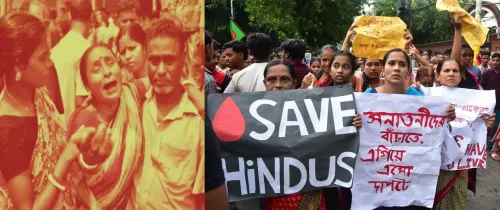
The report notes that religious minorities, particularly Hindus, were targeted with extreme brutality. The labels 'Bengali', 'Hindu', and 'Indian' were reportedly treated as interchangeable by perpetrators. Hindus were branded 'Indian agents', and the report states that in some instances, written orders instructed soldiers to kill them on sight. Although Hindus were a minority of the overall population, they reportedly constituted a clear majority of those who fled into India — a stark indicator, the report argues, of targeted persecution.
The UN's Continued Silence
'The 1971 genocide in Bangladesh is one of the most brutal, and yet most underrecognised, mass atrocities of the twentieth century. More than five decades on, the international community — and the United Nations in particular — has still not found the political courage to name it for what it was. That silence undermines international law, corrodes the credibility of 'never again', and denies justice and dignity to millions of victims and survivors,' the report stated.
The report criticises the UN for invoking the lessons of the Holocaust while failing to formally recognise the Bangladesh genocide, calling this a 'profound moral and institutional contradiction.' This comes amid renewed global scrutiny of how international bodies respond to historical atrocities, and growing calls from civil society organisations for formal recognition. How the international community responds to this pressure will determine whether the principle of 'never again' retains any meaningful force.
Point of View
Documented military orders, survivor testimony — is not in dispute. The gap is not factual but political, driven by geopolitical calculations that have consistently outweighed accountability. Until formal recognition is pursued, the international human rights framework will carry a credibility deficit it cannot afford.
NationPress
25 Sept 2026
Frequently Asked Questions
What happened during the 1971 Bangladesh genocide?
Between March and December 1971, the Pakistani military launched a coordinated campaign of mass killings, sexual violence, and destruction in what was then East Pakistan, now Bangladesh. Estimates of those killed range from hundreds of thousands to as many as three million, with around 10 million people fleeing to India and over 10 million displaced internally.
Has the United Nations formally recognised the 1971 Bangladesh genocide?
No. Despite more than five decades passing since the atrocities, the United Nations has not formally recognised the 1971 events as genocide. A recent report in The European Times calls this a 'profound moral and institutional contradiction' given the UN's stated commitment to preventing future genocides.
What was Operation Searchlight?
Operation Searchlight was the Pakistani military's coordinated crackdown launched on the night of 25 March 1971 in Dhaka. It involved storming university dormitories and departments, shooting professors and activists, and subjecting entire neighbourhoods to indiscriminate fire — marking the beginning of the broader campaign of atrocities across East Pakistan.
How were religious minorities affected during the 1971 atrocities?
Hindus were reportedly targeted with extreme brutality during the 1971 violence. According to the report, the labels 'Bengali', 'Hindu', and 'Indian' were treated as interchangeable by perpetrators, and in some cases written orders reportedly instructed soldiers to kill Hindus on sight. Despite being a minority of the population, Hindus reportedly constituted a majority of those who fled to India.
Why does the recognition of the 1971 Bangladesh genocide matter today?
Formal recognition matters because it upholds the credibility of international humanitarian law and the principle of 'never again'. The report argues that the international community's silence denies justice to millions of victims and survivors, and sets a damaging precedent for how future atrocities are — or are not — named and addressed.