US unveils $44 million Pacific security package with Palau training centre
Synopsis
Washington has pledged over $44 million to reshape Pacific security — from a $7 million maritime training hub in Palau to FBI-led cybercrime and cryptocurrency units. Announced after the first-ever US-Pacific Islands Police Ministers Conference, the package is Washington's most detailed security investment in the region in years and signals a clear counter to transnational crime networks — and, by implication, rival geopolitical influence — across the Pacific.
Key Takeaways
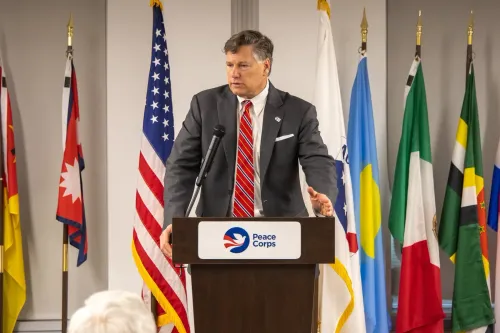
The United States announced more than $44 million in Pacific security programmes following the inaugural US-Pacific Islands Conference of Police Ministers in Los Angeles on 21–22 October 2026 .
A $7 million allocation would establish the proposed Aumoana Regional Center in Palau as a maritime law-enforcement training hub. $4 million would launch RIPTIDE , a regional trafficking interdiction initiative working with Interpol and the World Customs Organization .
The FBI receives $5 million for Pacific police investigations into drug trafficking, bribery, money laundering and cybercrime.
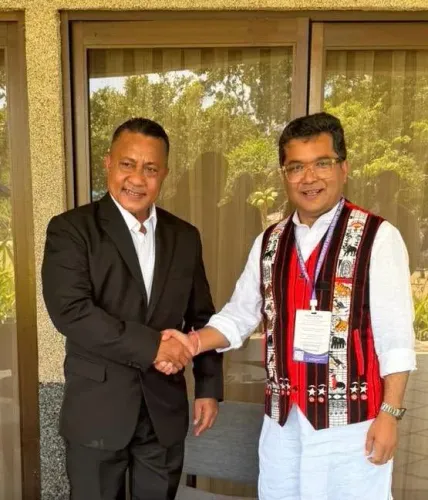
The US and Palau signed a bilateral letter of agreement on law-enforcement training on the sidelines of the conference.
The State Department clarified the figures are programming commitments; full disbursement and project completion are not yet confirmed.
The United States announced more than $44 million in new Pacific security programmes on 23 October 2026, encompassing a maritime training centre in Palau, regional policing initiatives, border surveillance upgrades and investigations into illicit finance. The commitments were unveiled following the inaugural US-Pacific Islands Conference of Police Ministers, held in Los Angeles on 21–22 October.
Key Programmes in the Package
The centrepiece is a $7 million allocation to support the proposed Aumoana Regional Center in Palau — a maritime law-enforcement training and coordination facility. The centre would train personnel in vessel boarding, evidence handling and maritime situational awareness, and would also house American and regional liaison officers providing intelligence support.
A further $4 million would launch the Regional Interdiction Partnership for Trafficking Intelligence, Disruption, and Enforcement (RIPTIDE), working alongside Interpol and the World Customs Organization to connect border seizures with investigations into trafficking networks and their financial infrastructure. Customs training under RIPTIDE would specifically target routes exploited via private aviation and international mail.
Maritime Surveillance and Coast Guard Role
Nearly $5.5 million would fund a regional maritime awareness network, with planned investments in surveillance tools, secure communications and equipment for four Papua New Guinea fisheries patrol boats. An additional $4.5 million would support Project Kanaloa through the US Coast Guard, covering small-boat operations, boarding procedures, fisheries enforcement and maritime prosecutions.
The Coast Guard would also expand bilateral Shiprider operations, an arrangement under which officers from Pacific partner nations travel aboard American cutters and exercise their own countries' enforcement authority — a mechanism that has been a cornerstone of US Pacific maritime strategy for over a decade.
Law Enforcement and Financial Crime Initiatives
The FBI would receive $5 million for a programme strengthening Pacific police investigations into drug trafficking, bribery, money laundering and cybercrime. Homeland Security Investigations would administer a separate $2.5 million initiative focused on border and port security, including screening equipment, liaison officers and cooperation on active cases.
An additional $5 million would support financial-intelligence and cybercrime units, with training in cryptocurrency tracing, beneficial ownership investigations and digital forensics. Another $5 million would fund Pacific police academies through the Federal Law Enforcement Training Centers.
Conference Participation and Bilateral Agreements
Ministers and senior officials from Pacific island countries attended the Los Angeles conference alongside representatives from Australia, New Zealand, France, regional organisations and US law-enforcement agencies. On the sidelines, the United States and Palau signed a letter of agreement to advance law-enforcement training and capabilities. The State Department noted that some regional programming could extend benefits to the Marshall Islands and the Federated States of Micronesia.
Notably, the announcements build on a US commitment made at the Pacific Islands Forum in Palau on 1 September to convene police ministers around shared security challenges. The State Department's fact sheet clarified that the figures represent programming commitments and did not confirm that all funds had been disbursed or projects completed.
What Comes Next
The scale and breadth of the package signals a sustained US push to counter transnational criminal organisations — spanning drug trafficking, money laundering and cybercrime — operating across the Pacific. As competition for influence in the region intensifies, Washington's security-focused engagement is expected to deepen, with implementation timelines for individual programmes yet to be formally announced.
Point of View
Agencies, and partner nations, suggesting genuine institutional follow-through rather than a diplomatic gesture. The timing, following the first-ever US-Pacific Islands Police Ministers Conference, indicates Washington is institutionalising its Pacific security architecture at speed. What mainstream coverage underplays is the cryptocurrency-tracing and digital forensics thread: the inclusion of financial-intelligence units signals that the US sees illicit finance — not just physical trafficking — as the durable vulnerability in Pacific criminal networks. The open question is implementation: the State Department's own caveat that funds have not necessarily been disbursed yet is a reminder that announced programming and delivered capability are very different things.
NationPress
23 Oct 2026
Frequently Asked Questions
What is the US $44 million Pacific security programme announced in October 2026?
It is a package of more than $44 million in security commitments announced by the United States on 23 October 2026, following the inaugural US-Pacific Islands Conference of Police Ministers in Los Angeles. The package spans maritime training, anti-trafficking operations, border security, cybercrime units and police academy support across the Pacific region.
What is the Aumoana Regional Center in Palau?
The Aumoana Regional Center is a proposed maritime law-enforcement training and coordination facility in Palau, backed by a $7 million US allocation. It would train Pacific personnel in vessel boarding, evidence handling and maritime awareness, and would host American and regional liaison officers for intelligence support.
What is RIPTIDE and how does it work?
RIPTIDE stands for Regional Interdiction Partnership for Trafficking Intelligence, Disruption, and Enforcement, a $4 million initiative working with Interpol and the World Customs Organization. It aims to link border seizures to deeper investigations into trafficking networks and their financial backers, with specific training targeting private aviation and international mail routes.
Which US agencies are involved in the Pacific security package?
The package involves multiple US federal agencies including the State Department, the FBI, the US Coast Guard, Homeland Security Investigations, and the Federal Law Enforcement Training Centers. Each agency leads specific components covering maritime operations, cybercrime, border security and police academy training.
Has all the $44 million funding already been spent?
Not necessarily. The State Department's fact sheet clarified that the figures represent announced programming commitments and did not confirm that all money had been disbursed or that all projects had been completed. Implementation timelines for individual programmes have not been formally announced.