How are the US and Philippines Strengthening Their Defence Pact?
Synopsis
In a significant move, the US and Philippines have fortified their treaty alliance, emphasizing deeper military and economic ties in the Indo-Pacific. This collaboration comes amidst rising regional tensions, with both nations reaffirming their commitment to mutual defense and stability in the area.
Key Takeaways
Strengthened military and economic cooperation between the US and Philippines.
Commitment to a free and secure Indo-Pacific .
Focus on collaboration against cybercrime and illicit drugs.
Plans for the Luzon Economic Corridor Investment Forum in 2026.
Reaffirmation of the 1951 Mutual Defense Treaty .
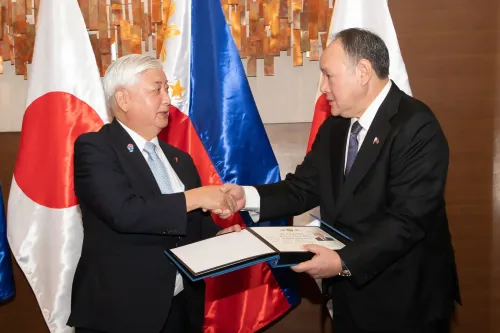
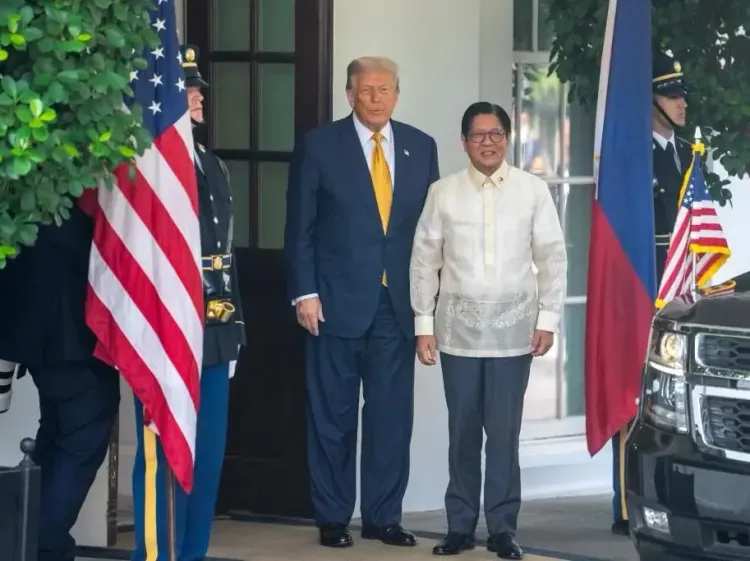
Washington, Feb 17 (NationPress) The United States and the Philippines have reaffirmed their treaty alliance, committing to enhanced military and economic collaboration in the Indo-Pacific. Senior officials convened in Manila for the 12th Philippines-United States Bilateral Strategic Dialogue, celebrating 80 years of diplomatic relations and the 75th anniversary of their Alliance. Notably, the Philippines will also serve as ASEAN Chair in 2026.
First initiated in 2011, this dialogue acts as an annual forum to cover a wide array of political, security, and economic cooperation between the United States and the Philippines. It facilitates the exchange of perspectives on contemporary challenges and strategic bilateral priorities while identifying new collaborative initiatives as allies.
In a unified statement, both parties emphasized their steadfast commitment to maintain a free, open, prosperous, and secure Indo-Pacific, rooted in mutual respect for sovereignty, territorial integrity, international law, and peaceful dispute resolution.
They pledged to keep a “vigilant posture in the Indo-Pacific to avert conflict” and to create “robust measures alongside deterrence to ensure the sea lanes remain open and free from arbitrary control by any single nation.” The statement highlighted that “collective defense is vital for denying and deterring aggression throughout the First Island Chain.”
Officials renewed their commitment to the 1951 United States-Philippines Mutual Defense Treaty, reaffirming that it “covers armed attacks against either nation’s military forces, aircraft, and public vessels – including coast guard assets – throughout the Pacific, including the South China Sea.”
The two nations underscored their support for “upholding freedom of navigation and overflight, unimpeded lawful commerce, and other legitimate uses of the sea for all countries.”
They also condemned “China’s illegal, coercive, aggressive, and deceptive actions in the South China Sea,” asserting that such behaviors jeopardize regional peace and stability.
The governments agreed to convene the fifth “2+2” Ministerial Dialogue in 2026, committing to enhance joint capabilities and interoperability. They stated they will “continue and strive to increase deployments of advanced US missile and unmanned systems to the Philippines.”
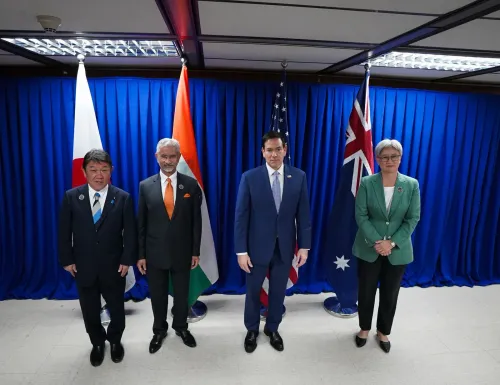
Furthermore, they pledged to expand cyber defense cooperation and to hold the fourth bilateral maritime dialogue. Plans for a foreign minister-level trilateral policy dialogue with Japan are also in place.
Economic security was a pivotal topic, with both sides acknowledging that “economic security and resilience” are essential to national security. They reiterated the importance of fostering “mutually beneficial economic engagement,” especially through commercial diplomacy.
Agreements were made to promote private sector development in transportation, logistics, energy, and semiconductors, with the inaugural Luzon Economic Corridor Investment Forum set for Manila in 2026.
The two countries also vowed to “broaden bilateral collaboration to create secure and standards-compliant critical minerals supply chains.”
In the realm of civil nuclear cooperation, the United States will allocate $1.5 million via the State Department’s FIRST program “to establish an SMR control room simulator in the Philippines, ensuring nuclear advancement in the region adheres to the highest standards of nuclear safety, security, and nonproliferation.”
Washington also underlined a $250 million commitment to bolster health security in the Philippines.
Discussions included cooperation against cybercrime, online scam operations, and illicit synthetic drugs, along with a commitment to ongoing counterterrorism collaboration and exchanges on combatting transnational repression.
The statement reaffirmed “the significance of peace and stability across the Taiwan Strait” and opposed “any threat or use of force against the territorial integrity or political independence of any nation.”
The 1951 Mutual Defense Treaty has garnered renewed attention amidst escalating tensions in the South China Sea. The United States has increased access to Philippine military sites through the Enhanced Defense Cooperation Agreement in recent years.
For India and other partners in the Indo-Pacific, developments in the US-Philippines alliance are being closely monitored. Maritime stability, supply chain security, and ASEAN coordination remain crucial to the region’s strategic equilibrium.
Point of View
It is essential to recognize the significance of the renewed US-Philippines alliance in maintaining regional stability. This partnership not only reinforces military collaboration but also emphasizes economic security, which is vital for both nations and their allies in the Indo-Pacific.
NationPress
2 Oct 2026
Frequently Asked Questions
What is the significance of the US-Philippines alliance?
The US-Philippines alliance is crucial for regional stability in the Indo-Pacific, offering mutual defense against potential aggressors and fostering economic cooperation.
What economic initiatives are included in the partnership?
The partnership focuses on enhancing economic security through cooperation in sectors such as transport, logistics, energy, and critical minerals supply chains.
How does this alliance impact regional tensions?
By reaffirming their commitment, the US and Philippines aim to deter aggression in the region, particularly concerning China's activities in the South China Sea.