US bill proposes 50% equity transfer from AI firms to sovereign wealth fund

Synopsis
A proposed US law would strip AI giants of half their equity — handing it to a government fund that pays dividends directly to the public. With AI investment projected to top USD 1 trillion in 2026 and eight tech firms already controlling over 40% of the S&P 500, the bill reframes the AI debate from innovation policy to wealth redistribution — and could face a constitutional fight if it ever reaches the President's desk.
Key Takeaways
The American AI Sovereign Wealth Fund Act would require covered AI companies to transfer 50% of their equity to a government-managed fund overseen by a seven-member commission .
The fund would make direct payments to the public as the value of its holdings grew, and would carry voting rights and board representation in affected companies.
A Congressional Research Service report warns the measure could face constitutional challenges from affected companies and shareholders.
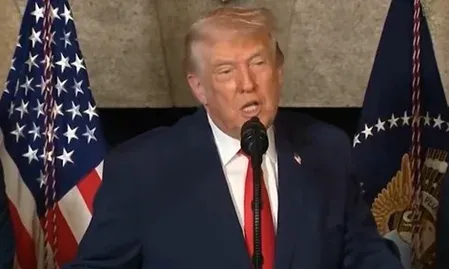
President Donald Trump has reportedly discussed government equity stakes in AI firms with industry representatives; no details were public as of July 2025 .
AI-related investment is projected to exceed USD 1 trillion globally in 2026 , with Amazon, Google, Meta, and Microsoft having spent an estimated USD 420 billion on AI infrastructure in 2025 .
AI-linked firms including Nvidia, Alphabet, Apple, and Microsoft now account for more than 40% of S&P 500 market capitalisation .
Proposed US legislation would compel certain Artificial Intelligence (AI) companies to transfer a 50 per cent equity stake to a government-managed sovereign wealth fund, according to a new Congressional Research Service (CRS) report released in August 2025. The non-partisan agency cautioned that the measure could face significant constitutional challenges if enacted.
What the Proposed Legislation Says
The American AI Sovereign Wealth Fund Act would require covered companies to make a one-time transfer of half their equity to the fund, which would be overseen by a seven-member commission. As the value of those holdings grew, the fund would distribute direct payments to the American public. The arrangement would also grant the federal government voting rights, board representation, and other corporate governance powers over affected companies.
Constitutional and Legal Concerns
The CRS report noted that companies or shareholders subjected to the compulsory transfer could challenge its constitutionality if the bill became law. The agency, which provides non-partisan research to Congress, did not endorse or oppose the legislation but flagged the legal uncertainty as a material risk. The report comes amid broader discussions in Washington about whether the public should receive a share of the wealth being generated by AI and the infrastructure supporting it.
Trump's Reported Discussions and Scale of AI Investment
President Donald Trump has reportedly discussed possible government equity stakes in private AI companies with industry representatives, according to the report. No details of those discussions had been publicly released as of July 2025. The scale of investment at stake is substantial: AI-related spending is projected to exceed USD 1 trillion globally during 2026, with nearly USD 600 billion concentrated in the United States. Amazon, Google, Meta, and Microsoft alone spent an estimated USD 420 billion on AI infrastructure during 2025. One investment manager cited in the report estimated that additional global AI capital expenditure between 2026 and 2030 could reach approximately USD 7.5 trillion.
Market Concentration and Systemic Risk
Several AI-linked technology companies now account for more than 40 per cent of the total market capitalisation of the S&P 500. These include Nvidia, Alphabet, Apple, Microsoft, Amazon, Broadcom, Meta, and Micron. The report warned that a major fall in their share prices could reduce household and investor wealth and potentially spread stress across the broader financial system. It also examined concerns that large-scale AI-driven job losses could reduce household consumption and increase defaults on mortgages and other financial instruments — though it noted there was no evidence as of July of widespread labour-market disruption attributable to AI.
Precedents and Alternative Models
The CRS report cited historical parallels, including the canal investment boom of the 1830s, British railway expansion in the 1840s, the speculative surge of the 1920s, and the dot-com boom of the late 1990s — each followed by sharp market corrections with broader economic consequences. Possible mechanisms for distributing AI-generated wealth, beyond sovereign equity funds, include universal basic income, tax reforms, and direct public ownership. The report noted that OpenAI and Anthropic have released policy frameworks supporting broader prosperity-sharing from AI. The federal government already holds equity stakes in strategically important industries: the report cited an USD 8.9 billion government equity investment in Intel, investments in quantum-computing and semiconductor firms, and a 'golden share' with special governance rights obtained as a condition for approving Nippon Steel's acquisition of US Steel.
Whether the American AI Sovereign Wealth Fund Act advances through Congress remains to be seen, but the CRS report signals that the debate over who benefits from the AI boom has moved well beyond think tanks and into formal legislative scrutiny.
Frequently Asked Questions
What is the American AI Sovereign Wealth Fund Act?
It is proposed US legislation that would require certain AI companies to transfer 50% of their equity to a government-managed sovereign wealth fund overseen by a seven-member commission. The fund would distribute direct payments to the American public as its holdings grew in value.
Why could the bill face constitutional challenges?
A Congressional Research Service report noted that companies or shareholders subjected to the compulsory equity transfer could challenge it under the US Constitution, particularly on grounds related to takings without fair compensation. The CRS flagged this as a material legal risk but did not take a position on the bill's merits.
Has President Trump supported the idea of government stakes in AI companies?
According to the CRS report, President Donald Trump has discussed possible government equity stakes in private AI companies with industry representatives. However, no details of those discussions had been publicly released as of July 2025.
How large is the AI investment boom the bill is responding to?
AI-related investment is projected to exceed USD 1 trillion globally in 2026, with nearly USD 600 billion in the United States alone. Amazon, Google, Meta, and Microsoft spent an estimated USD 420 billion on AI infrastructure in 2025, and one investment manager estimated total global AI capital expenditure between 2026 and 2030 could reach USD 7.5 trillion.
Does the US government already hold equity stakes in private companies?
Yes. The CRS report cited an USD 8.9 billion government equity investment in Intel, investments in quantum-computing and semiconductor firms, and a 'golden share' with special governance rights secured as a condition of approving Nippon Steel's acquisition of US Steel — establishing precedent for the kind of arrangement the bill proposes.