Did the US Fed Just Cut Interest Rates Amid a Government Shutdown?

Synopsis
In a bold move, the US Federal Reserve has cut its benchmark lending rate amid a federal government shutdown, raising concerns and questions about the economic outlook. This decision marks the second reduction this year and signals the Fed's ongoing efforts to manage monetary policy in uncertain times. What does this mean for the economy?
Key Takeaways
Rate cut brings borrowing costs below 4 percent .
Decision made amidst a government shutdown .
Policymakers face challenges due to limited economic data .
Investors are watching closely for signs of economic direction.
The Fed remains willing to adjust rates as conditions evolve.
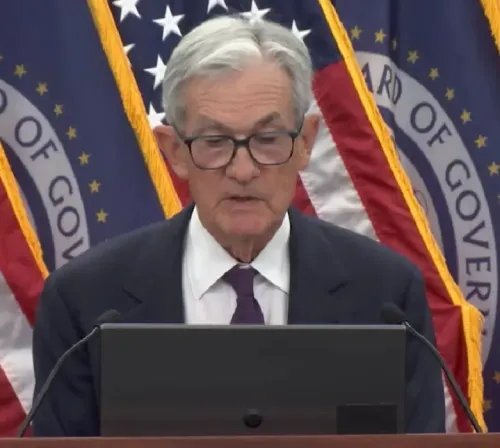
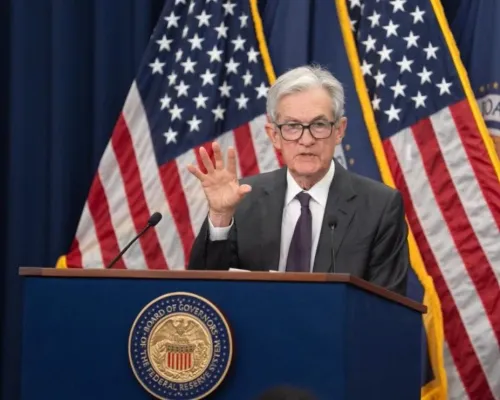
Washington, Oct 30 (NationPress) The US Federal Reserve has announced a decrease in its benchmark lending rate by a quarter percentage point, adjusting the target range to 3.75 percent to 4 percent. This decision was made as policymakers navigate through limited economic data resulting from a federal government shutdown.
This rate reduction is the second cut in borrowing costs this year.
Approved by a 10-2 vote, this decision comes as the federal government’s funding lapse enters its fifth week.
The ongoing shutdown has compelled various agencies, including the Bureau of Labour Statistics, to halt the collection and dissemination of crucial economic indicators, leaving the central bank with an incomplete picture of the economy’s health.
The recent cut has lowered borrowing costs to below 4 percent for the first time since late 2022. Policymakers indicated that uncertainty in the economic outlook, exacerbated by the absence of data on employment, inflation, and consumer spending, influenced their decision to lower rates.
The Fed’s action occurs amid mixed economic signals, including consistent job growth reported prior to the shutdown and inflation rates that have eased from last year’s highs.
With government data delayed, economists note that the central bank is now depending on alternative sources such as private sector surveys and financial market indicators to assess the economy's strength.
Investors are keenly observing the Fed’s policy direction for hints about how it plans to balance economic growth with inflationary pressures.
This action follows a quarter-point rate reduction in July, aimed at supporting the economy amidst slowing growth and financial market instability.
Since 2022, the central bank has implemented several rate hikes to fight inflation.
Wednesday’s decisions highlight the Fed’s ongoing efforts to adjust monetary policy in the face of uncertainty while demonstrating a readiness to modify rates as circumstances change, even without complete economic data.
Point of View
I believe the Federal Reserve's decision to lower interest rates amidst a government shutdown underscores the necessity for adaptive monetary policy. The uncertainty surrounding economic indicators highlights the challenges faced by policymakers, and it is essential for the Fed to remain responsive to changing conditions. Our commitment is to keep our audience informed with clear, unbiased insights into these vital economic developments.
NationPress
4 Oct 2026
Frequently Asked Questions
Why did the US Fed cut interest rates?
The US Fed cut interest rates due to limited economic data caused by the federal government shutdown, alongside uncertainty in the economic outlook.
What is the new interest rate range?
The new benchmark lending rate target range is 3.75 percent to 4 percent .
How many times has the Fed cut rates this year?
This is the second rate cut by the Fed in 2023.
What factors influenced the Fed's decision?
The decision was influenced by uncertainty regarding employment, inflation, and consumer spending due to limited economic data.
How does a rate cut affect consumers?
A rate cut typically lowers borrowing costs for consumers, making loans cheaper and potentially stimulating spending.