Is the US Forming a Global Coalition on Strategic Minerals?
Synopsis
In a bold move, the US has gathered 54 countries to tackle the geopolitical challenges posed by critical mineral supply chains. With new agreements and initiatives, this strategic alliance aims to secure and diversify essential resources for emerging technologies. Discover how this global coalition is reshaping the future of strategic minerals!
Key Takeaways
The US is forming a global coalition to address critical mineral supply chain issues.
New agreements have been signed with several countries to enhance cooperation.
The role of the private sector is emphasized in securing investments.
Project Vault aims to create a domestic reserve for critical minerals.
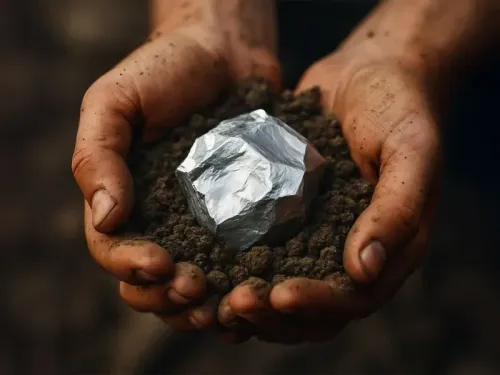
Critical minerals are essential for advanced technologies.
On February 5, 2023, Washington (NationPress) issued a caution that the supply chains for critical minerals have turned into instruments of political manipulation. The United States (US) gathered representatives from 54 nations along with the European Commission to reform the international market for strategic minerals and rare earth elements.
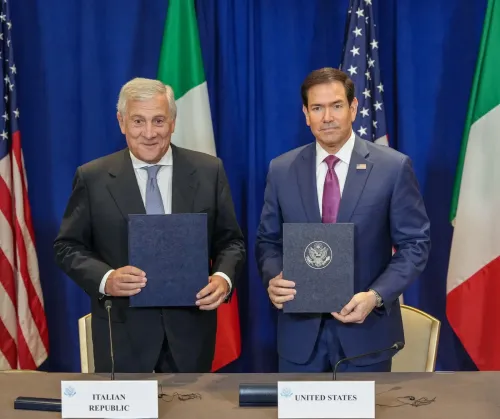
During the ministerial meeting, the US unveiled the establishment of 11 new bilateral frameworks for critical minerals or memoranda of understanding. These agreements involve key nations such as Argentina, Ecuador, Guinea, Morocco, Paraguay, Peru, the Philippines, the United Arab Emirates, and Uzbekistan.
Over the last five months, the US has formalized ten similar agreements and wrapped up negotiations with 17 additional countries. These frameworks are designed to assist partners in overcoming pricing obstacles, stimulate development, create equitable markets, address supply chain gaps, and enhance financing access.
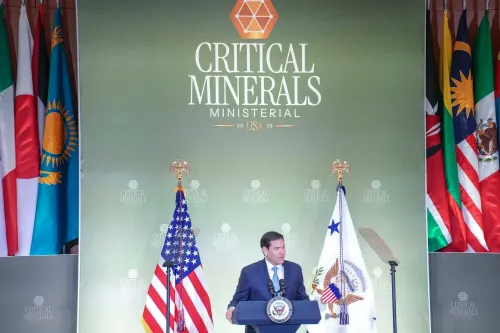
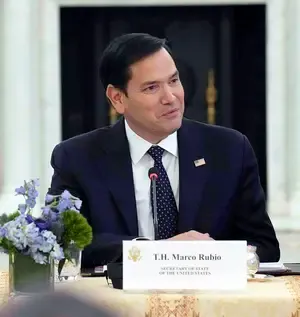
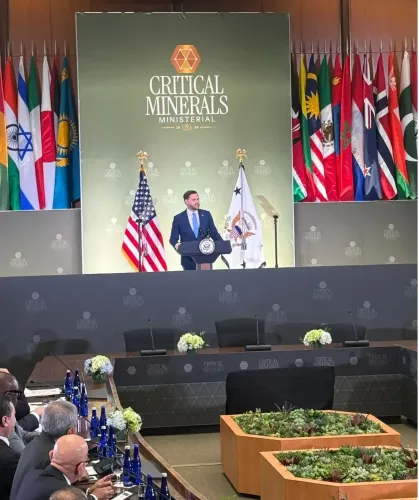
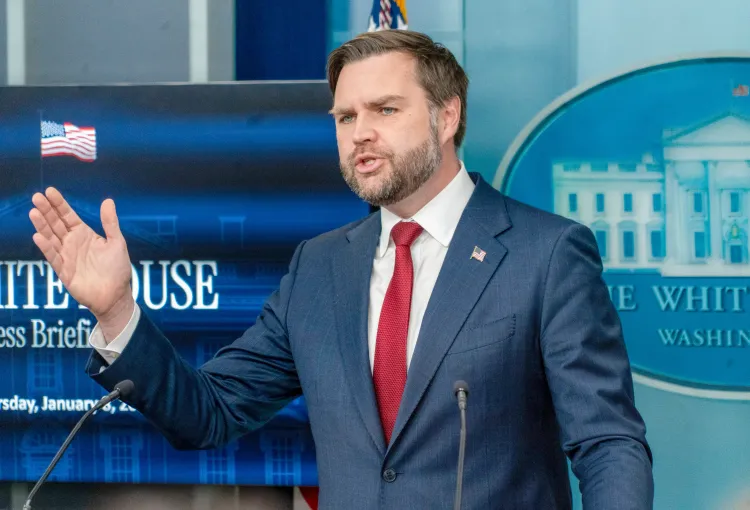
The 2026 Critical Minerals Ministerial was hosted in Washington by Secretary of State Marco Rubio, alongside Vice President J.D. Vance, Treasury Secretary Scott Bessent, Interior Secretary Doug Burgum, Energy Secretary Chris Wright, and U.S. Trade Representative Jamieson Greer.
The event gathered 43 ministers and officials from various regions including Africa, Latin America, Europe, the Indo-Pacific, and the Middle East.
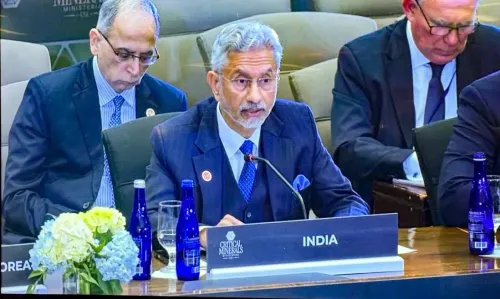
India participated alongside influential producers and consumers such as Australia, Brazil, Canada, France, Germany, Japan, Saudi Arabia, South Korea, the United Kingdom, and the United Arab Emirates.
The U.S. fact sheet emphasized, "Critical minerals and rare earths are vital for our most advanced technologies and their significance will only increase as AI, robotics, batteries, and autonomous devices reshape our economies." It also cautioned that the market is "highly concentrated", making it susceptible to "political coercion and supply chain disruptions."
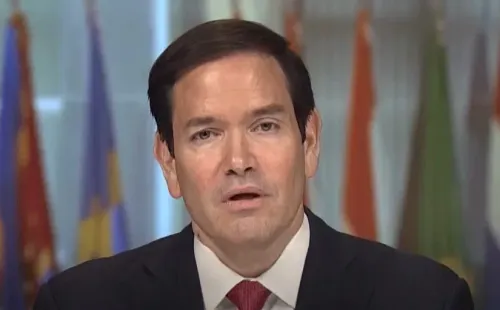
Rubio revealed the formation of the Forum on Resource Geostrategic Engagement, or FORGE, which will replace the Minerals Security Partnership. South Korea will chair FORGE until June, coordinating policy and project collaboration to bolster diversified, resilient, and secure critical mineral supply chains, as outlined in a media release.
After the ministerial, the Trump administration reiterated that governmental efforts alone are insufficient to mitigate supply chain vulnerabilities. It underscored the role of the private sector through initiatives like Pax Silica, focusing on investments in mining, refining, processing, recycling, and end-use applications.
On February 3, just prior to the ministerial, U.S. officials convened governments and private enterprises to address supply chain issues and investment prospects. During this meeting, Deputy Secretary Landau oversaw the signing of a memorandum of understanding between Glencore and the U.S.-backed Orion Critical Mineral Consortium concerning a potential asset acquisition in the Democratic Republic of the Congo.
This agreement aims to foster increased U.S. investment in the DRC's mining sector and ensure secure, reliable, and mutually beneficial copper and cobalt flows to the U.S.
The U.S. government reported that it has mobilized over $30 billion in letters of interest, investments, loans, and other support for critical mineral projects in the last six months. These initiatives have generated a multiplier effect, attracting private capital significantly exceeding government contributions.
A significant aspect of this initiative is Project Vault, introduced by President Donald Trump on February 2. The Export-Import Bank of the U.S. has approved a direct loan of up to $10 billion to create a domestic strategic reserve for critical minerals.
Point of View
I believe this gathering represents a pivotal moment in global resource management. The U.S. initiative to form a coalition with 54 countries highlights the growing significance of strategic minerals in a technologically driven world. Collaboration between governments and the private sector is essential to safeguard supply chains and promote economic resilience. This approach not only strengthens international relations but also ensures the sustainability of critical resources for future advancements.
NationPress
29 Sept 2026
Frequently Asked Questions
What are critical minerals?
Critical minerals are essential materials that are crucial for the production of advanced technologies like smartphones, batteries, and renewable energy systems.
Why are strategic minerals important?
Strategic minerals are vital for national security and economic stability, especially as the world transitions to more advanced technological solutions.
How is the US addressing supply chain vulnerabilities?
The US is signing bilateral agreements with multiple countries and creating coalitions to enhance cooperation and ensure stable supply chains for critical minerals.
What role does the private sector play in this initiative?
The private sector is crucial in investing in mining and processing, as well as developing innovative solutions to address supply chain challenges.
What is Project Vault?
Project Vault is an initiative announced by President Trump to establish a domestic strategic reserve for critical minerals, supported by a substantial loan from the Export-Import Bank.