Can US Vice President Vance and Secretary Rubio Reset the Global Minerals Market?
Synopsis
US Vice President J D Vance and Secretary Rubio emphasize the urgent need for global collaboration to reform the critical minerals market, warning of the risks posed by fragile supply chains that threaten both economic growth and national security. This call to action is aimed at fortifying alliances and ensuring a stable supply of essential resources.
Key Takeaways
Critical minerals are essential for modern economies.
Current supply chains are fragile and concentrated.
International cooperation is crucial for stability.
Proposed initiatives include preferential trade zones and stockpiling.
Efforts are being made to enhance domestic mining and investment.
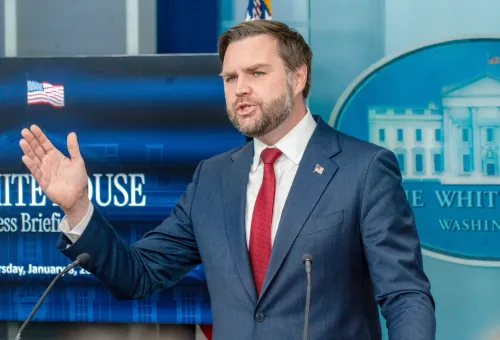
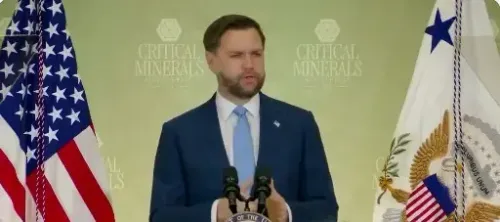
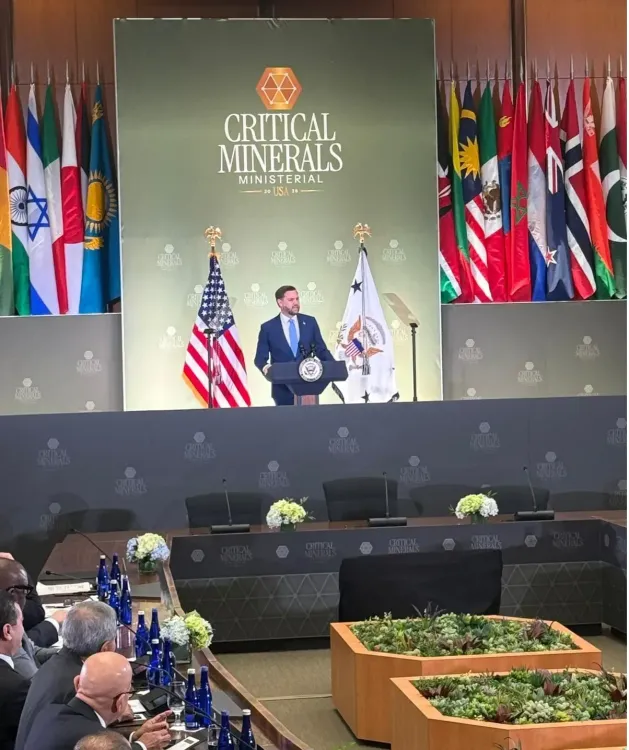
Washington, Feb 4 (NationPress) US Vice President J D Vance on Tuesday called on US allies and partners to unite in reforming what he termed a malfunctioning global market for critical minerals, cautioning that fragile and overly concentrated supply chains jeopardize both economic stability and national security.
In his opening remarks at the Critical Minerals Ministerial, Vance emphasized that modern economies remain reliant on real resources, highlighting that critical minerals are as vital as oil and gas for economic productivity, advanced manufacturing, and defense capabilities.
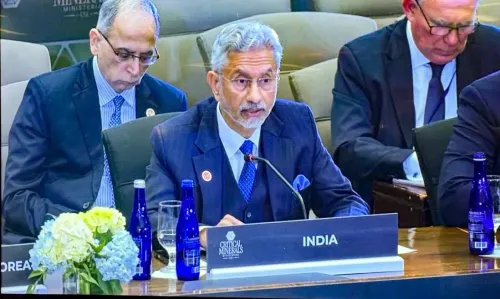
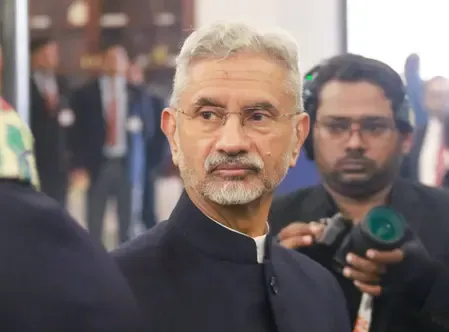
This ministerial meeting, one of the largest events organized by the United States, includes representatives from over 50 nations, with India represented by External Affairs Minister S Jaishankar.
“There is no more tangible asset than critical minerals,” Vance stated, pointing out that governments have discovered “the hard way” just how much their economies rely on consistent access to these resources.
He mentioned that the nations present at the meeting collectively represent nearly two-thirds of the global GDP and have the potential to enhance their independence and self-sufficiency through collaboration.
Vance criticized the current international market for failing to bolster domestic supply chains or facilitate long-term investments. He noted numerous occasions when mining and processing ventures failed after sudden market surges led to price drops, causing investors to withdraw.
“Supply chains are still fragile and exceedingly concentrated,” he remarked, adding that unpredictable price fluctuations have made sustained investment nearly unfeasible.
He outlined the previous administration’s comprehensive strategy to address these vulnerabilities, mentioning actions taken over the past year, such as domestic and international agreements, enhanced public financing options, and initiatives to stockpile minerals.
Vance also introduced a plan for a preferential trade zone for critical minerals, designed around reference prices to stabilize markets and safeguard supply chains from external disruptions. This initiative aims to create diverse production centers and resilient supply chains while reinforcing partnerships among nations.
“Our alliances and friendships can truly support one another,” Vance remarked.
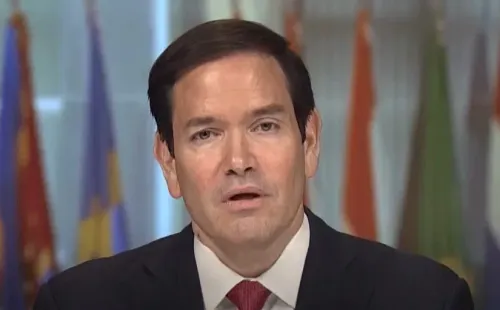
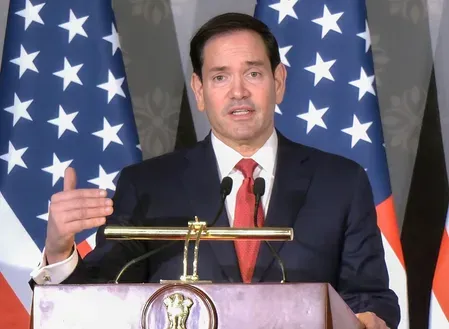
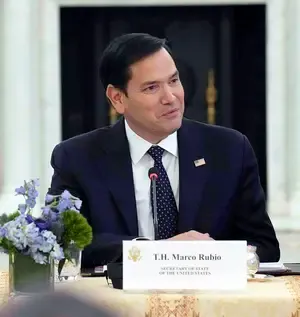
Secretary of State Marco Rubio, who followed Vance's address, reiterated the necessity for coordinated global action, asserting that the administration prioritizes critical minerals as fundamental to both economic and national security.
“Critical minerals are essential for the devices we utilize every day,” Rubio stated, emphasizing their role in powering infrastructure, industries, and national defense.
Rubio highlighted that US President Donald Trump prioritized this issue from his first day in office, referencing an executive order from March aimed at expediting permitting reforms, boosting domestic mining, and constructing dependable supply chains “both domestically and internationally.”
“In just October, the United States secured over $10 billion in critical mineral agreements with five countries,” Rubio noted, showcasing ongoing efforts to strengthen collaboration with allies.
He also mentioned the Pax Silica Summit held in December, which initiated a partnership focused on developing a robust silicon supply chain to support “a new era of global prosperity.” Rubio cautioned that emerging technologies like artificial intelligence would be unattainable unless countries revitalized factories and reopened mines.
Reflecting on US history, Rubio recalled how rare earth discoveries at Mountain Pass, California, facilitated advancements in the jet age, space age, and computer age, before mining was neglected and supply chains were externalized.
“We came to realize that we had outsourced our economic security and our very future,” he stated.
Rubio compared the current initiative to the Washington Energy Conference held in the same venue nearly 50 years ago, which resulted in the establishment of the International Energy Agency during a time of concentrated global oil supplies. He indicated that the current discussions aim to advance Critical Minerals Framework Agreements to safeguard every stage of production, from mining to refining and manufacturing.
“This is not merely an American initiative,” Rubio emphasized. “It needs to be a global initiative with like-minded nations.”
The ministerial gathered high-ranking officials from various countries as governments aim to decrease reliance on concentrated mineral supply chains amidst escalating geopolitical tensions and increasing demand from clean energy, defense, and advanced technology sectors.
Point of View
I believe that the urgent call for reforming the global minerals market reflects the critical intersection of economic, environmental, and national security concerns. The collaborative efforts among nations are essential in securing a stable future, and it is crucial that we prioritize these discussions to safeguard our collective interests.
NationPress
23 Sept 2026
Frequently Asked Questions
What is the significance of critical minerals?
Critical minerals are vital for various sectors including advanced manufacturing, clean energy, and national defense, making them essential for economic stability.
How does the current market for critical minerals affect national security?
Fragile and concentrated supply chains can lead to vulnerabilities that threaten national security, particularly during geopolitical tensions.
What initiatives have been proposed to address the issues in the minerals market?
Proposals include creating preferential trade zones, enhancing domestic supply chains, and fostering international agreements to stabilize the market.
Why is international cooperation necessary for critical minerals?
Countries can achieve greater self-reliance and independence by collaborating, reducing reliance on concentrated supply chains and ensuring stable access to resources.
What role does the US government play in the critical minerals market?
The US government is actively pursuing policies to boost domestic mining, expedite permitting, and secure international agreements to stabilize critical mineral supply chains.