Could the US Form a Critical Minerals Bloc with Allies?
Synopsis
The US is urging its allies to collaborate in forming a critical minerals trading bloc aimed at stabilizing markets and ensuring secure supply chains. Vice President J.D. Vance highlights the importance of critical minerals for modern economies and national security, calling for unified efforts to reshape the market and enhance resilience.
Key Takeaways
The US is advocating for a critical minerals trading bloc with allies.
This initiative aims to stabilize markets and secure supply chains.
Critical minerals are essential for modern economies and national defense.
Vance proposes a preferential trade zone to protect against external disruptions.
Stable pricing is crucial for attracting private investment and long-term planning.
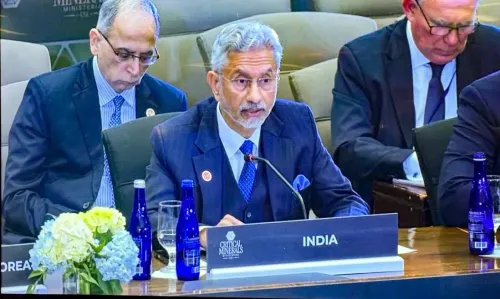
On February 4, Washington (NationPress) announced an initiative where the US is calling upon its allies and partners to collaborate in establishing a proposed trading bloc for critical minerals. This initiative comes as the Trump administration aims for a unified approach to stabilize markets and secure essential supply chains.
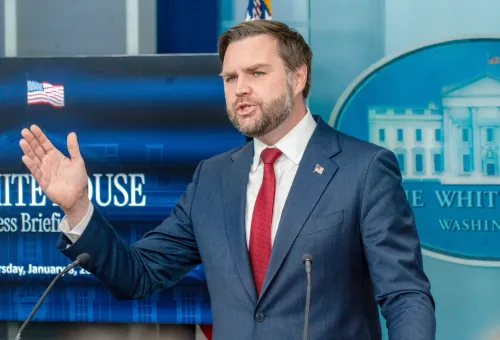
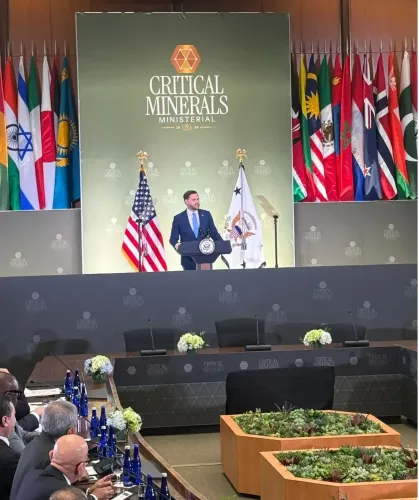
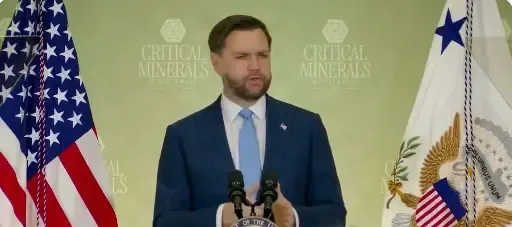
Vice President J.D. Vance introduced this concept at the opening of the Critical Minerals Ministerial held in Washington.
He emphasized that the current global market for critical minerals is struggling, leaving various economies vulnerable.
According to Vance, "Critical minerals are indispensable to today's economies, national defense, and advanced technology. There is no more pressing issue than this."
He pointed out that the fragility and concentration of supply chains have led to inconsistent pricing and unreliable investments.
"Prices have been volatile, and projects frequently fail due to unexpected market floods that crash prices," he noted.
Countries present at the meeting represented nearly two-thirds of the global GDP, giving them the power to potentially reshape the market.
"We are united in this effort," the Vice President stated.
Vance proposed the creation of a preferential trade zone for critical minerals, designed to be insulated from external disruptions and governed by reference prices established at each production stage.
These prices would serve as a safety net, enforced through adjustable tariffs. This approach aims to prevent market dumping that undermines domestic producers and deters long-term investment.
"We want allied nations to unite in forming a trading bloc," he said, emphasizing that consistent pricing would encourage private investment and long-term planning. The bloc would also ensure mineral access during crises.
Vance concluded: "The initiative is about fostering diverse production centers, thereby enhancing the resilience of supply chains and predictability of markets."
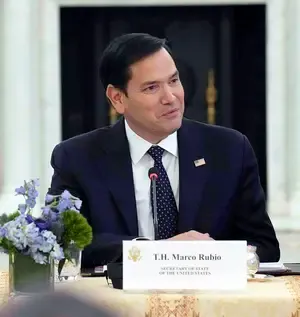
Secretary of State Marco Rubio echoed Vance's sentiments, stating that this issue is central to national security.
"Critical minerals power the devices we use daily," Rubio remarked. He highlighted their role in infrastructure, industry, and national defense.
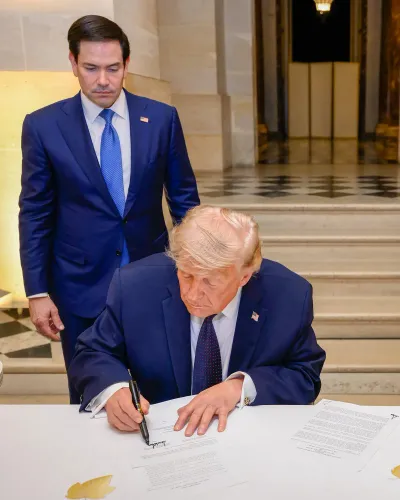
Rubio recalled that President Donald Trump prioritized this issue from day one in office, referencing an executive order from March 2025 aimed at expediting permits, boosting domestic mining, and fortifying supply chains both domestically and internationally.
He pointed out that the US secured over $10 billion in critical mineral agreements across five nations in October.
Rubio also noted the Pax Silica Summit in December, which initiated a partnership to establish a robust silicon supply chain.
He cautioned that advancements in technologies like artificial intelligence hinge on reopening mines and revitalizing manufacturing.
Drawing from history, Rubio reminisced about the discovery of rare earth minerals at Mountain Pass in California in 1949, which fueled progress through the jet, space, and computer ages.
However, he lamented that mining was overlooked, manufacturing was outsourced, and supply chains deteriorated.
"We woke up to the reality that we had compromised our economic security and future," Rubio stated.
He likened the current moment to the Washington Energy Conference from approximately 50 years ago, which led to the formation of the International Energy Agency in response to oil being weaponized politically.
Rubio asserted that the current push for critical minerals is driven by similar threats.
"This is not just an American endeavor; it requires a global initiative involving like-minded nations," he concluded.
Point of View
I believe this initiative by the US represents a crucial step towards securing our economic and national interests. The collaboration among allies to form a critical minerals bloc can enhance resilience in supply chains and address vulnerabilities in global markets. In a world where resources are increasingly politicized, this effort is essential for safeguarding our technological and defense capabilities.
NationPress
30 Sept 2026
Frequently Asked Questions
What is the purpose of the critical minerals trading bloc?
The critical minerals trading bloc aims to stabilize markets, secure supply chains, and ensure consistent access to essential minerals for modern economies and national defense.
Who proposed the idea of the trading bloc?
The idea was proposed by Vice President J.D. Vance during the Critical Minerals Ministerial in Washington.
Why are critical minerals important?
Critical minerals are vital for various sectors, including technology, infrastructure, and national defense. They are essential for the production of many everyday devices.
How does the US plan to enforce pricing in the bloc?
The proposed bloc would utilize reference prices at each production stage, with adjustable tariffs to prevent market dumping and support domestic producers.
What are the implications for national security?
Securing critical minerals is directly tied to national security as they are necessary for defense technologies and infrastructure.