How is EAM Jaishankar Supporting the Minerals Bloc at the US Meeting?
Synopsis
Amid rising concerns over critical mineral supply chains, India's External Affairs Minister Dr. S. Jaishankar champions international cooperation at the Critical Minerals Ministerial in Washington, urging allies to unite for a coordinated trading framework. This pivotal meeting emphasizes the significance of minerals in modern economies and the need for resilient supply chains.
Key Takeaways
India advocates for international collaboration in critical mineral supply chains.
Structured cooperation is essential to mitigate supply chain risks.
The US aims to establish a preferential trading zone for critical minerals.
Critical minerals are vital for national security and modern economies.
The importance of resilience and stability in supply chains is underscored.
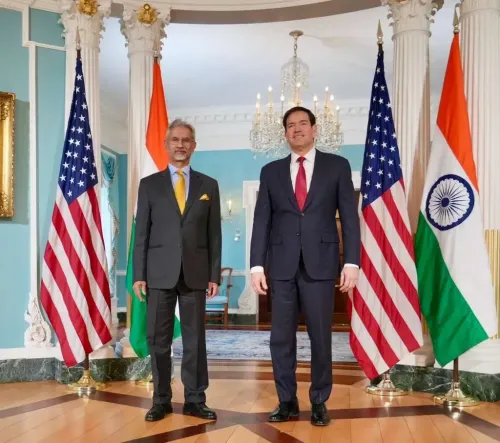
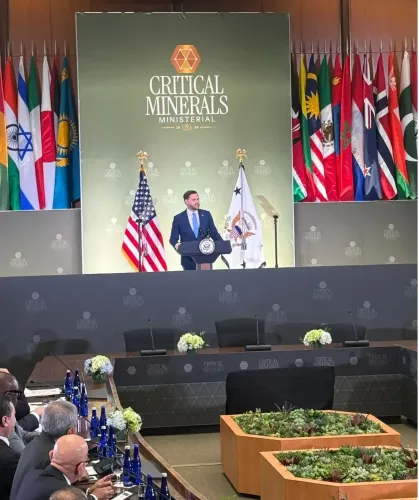
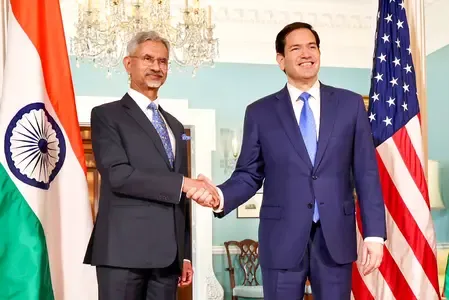
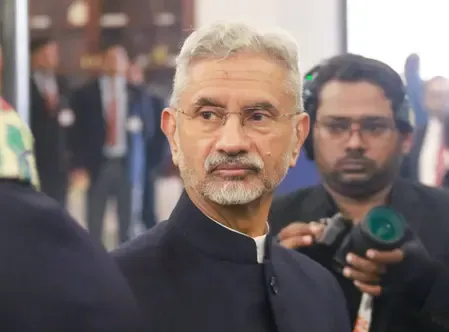
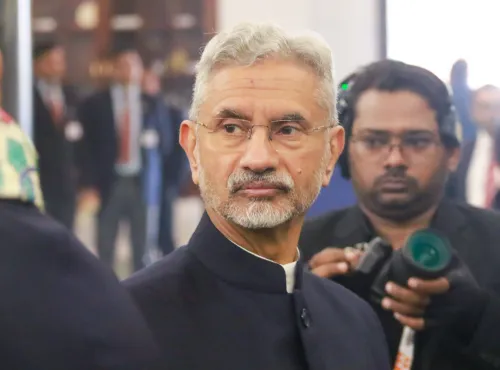
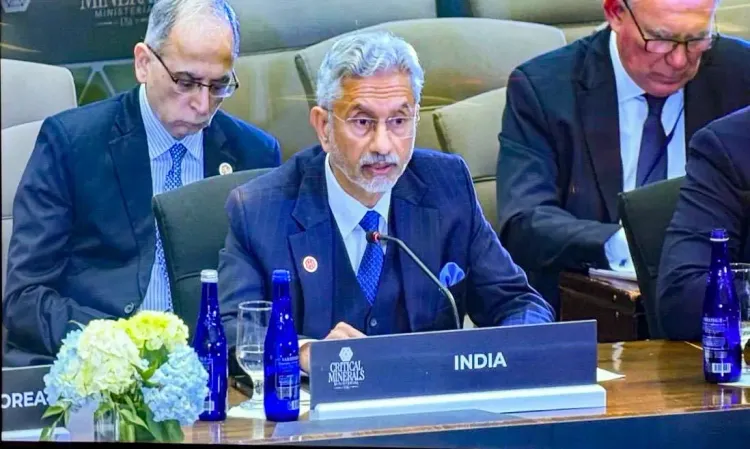
On February 4th in Washington, D.C., External Affairs Minister Dr. S. Jaishankar expressed India's commitment to fostering international collaboration aimed at mitigating risks associated with critical mineral supply chains. This statement was made as the United States called on its allies to develop a cohesive trading framework.
During the Critical Minerals Ministerial in Washington, EAM Jaishankar highlighted the dangers posed by the over-concentration of global supply chains. He underscored the necessity of minimizing these risks through structured and coordinated partnerships among nations.
He emphasized India's initiatives to enhance resilience, including the National Critical Minerals Mission, Rare Earth Corridors, and responsible trade practices. Jaishankar also expressed India's endorsement of the FORGE initiative concerning critical minerals.
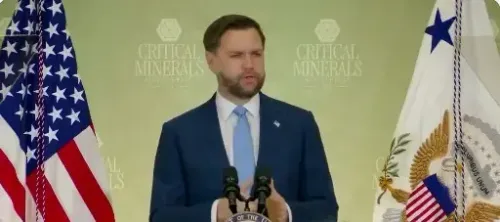
His comments coincided with Vice President J.D. Vance's call for allies and partners to collaborate in reconfiguring the global critical minerals market.
Vance remarked that modern economies continue to rely on essential resources, asserting that critical minerals are as vital as oil and gas. He cautioned that current supply chains are both fragile and overly concentrated.
“There is nothing more tangible than critical minerals,” he asserted.
Vance pointed out that erratic pricing and market irregularities have hindered long-term investments. He referenced instances where mining and processing operations failed due to sudden market fluctuations resulting in price drops.
He informed attendees that the nations present at the meeting collectively represent close to two-thirds of the global GDP. Acting collaboratively, he noted, they possess the ability to alter market dynamics.
“We are all united,” Vance stated.
He proposed establishing a preferential trading zone for critical minerals among allies and partners, designed to shield against external disturbances and anchored on reference prices throughout the production phases.
These prices would serve as a baseline, reinforced by adjustable tariffs, to deter dumping that undermines domestic producers, Vance explained.
“We encourage allies and partners to form a trading bloc,” he added.
Vance conveyed that the objective is to establish stable prices, stimulate private investment, and facilitate long-term planning. He indicated that the bloc would also ensure access to critical minerals during crises.
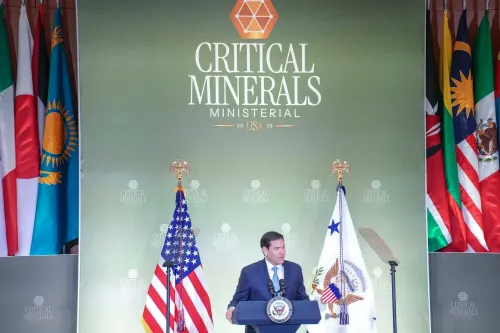
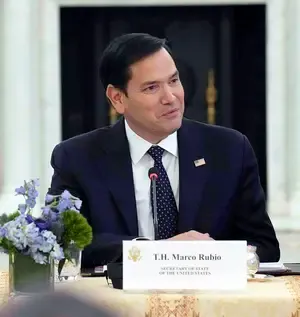
Secretary of State Marco Rubio followed with introductory comments, stressing the significance of the matter to national security.
“Critical minerals are essential for the devices we utilize daily,” Rubio stated, noting their role in powering infrastructure, industry, and national defense.
Rubio highlighted that President Donald Trump prioritized this issue immediately upon taking office, mentioning an executive order from March aimed at accelerating permitting processes, boosting domestic mining, and fortifying supply chains both domestically and internationally.
He noted ongoing efforts rather than new initiatives, stating that the United States secured over $10 billion in critical mineral agreements across five nations in October.
Rubio also referenced the Pax Silica Summit held in December, which initiated a partnership to cultivate a resilient silicon supply chain.
He warned that advancements in technologies like artificial intelligence would stall without reopening mines and revitalizing factories.
He drew an analogy to the Washington Energy Conference held nearly 50 years ago, which led to the formation of the International Energy Agency after oil was used as a political tool.
“This is not solely an American endeavor,” Rubio remarked. “This must evolve into a global initiative involving like-minded nations.”
Point of View
I endorse India's proactive stance in fostering international collaboration for critical minerals. This initiative not only bolsters national security but also strengthens global partnerships. The emphasis on structured cooperation is crucial in today's interconnected world, where supply chain vulnerabilities can have far-reaching consequences. Supporting a resilient and diversified supply chain is essential for both economic stability and technological advancement.
NationPress
27 Sept 2026
Frequently Asked Questions
What is the significance of critical minerals?
Critical minerals are essential for modern technologies, infrastructure, and national defense, making them vital for economic stability and security.
How is India contributing to critical mineral supply chains?
India is implementing initiatives like the National Critical Minerals Mission and Rare Earth Corridors to enhance resilience and foster international cooperation.
What was discussed at the Critical Minerals Ministerial?
The meeting focused on the risks in critical mineral supply chains and the need for coordinated efforts among allies to establish a stable trading framework.
Who is leading the discussion on critical minerals in the US?
Vice President J.D. Vance is spearheading the discussion, emphasizing the importance of critical minerals for modern economies and national security.
What are the implications of the proposed trading zone?
The proposed trading zone aims to stabilize prices, support private investment, and ensure access to critical minerals during emergencies.