US House panel seeks curbs on Chinese drug-trial data
Synopsis
A US House panel wants to bar drug-approval data from Chinese military hospitals and Xinjiang trial sites. Its 12 recommendations are not an enacted ban or a new FDA rule, while five drugmakers have made more limited commitments concerning military-run hospitals, according to the committee.
Key Takeaways
The House Select Committee on China proposed restrictions on Chinese clinical-trial data in US drug approvals.
The panel's 12 recommendations include a proposed ban on results from Chinese military hospitals and sites in Xinjiang .
The proposals are not an enacted ban or a new FDA rule.
The committee said AbbVie , Bristol Myers Squibb , Lilly , Merck and Pfizer would stop initiating trials at hospitals run by China's People's Liberation Army .
John Moolenaar previously sought restrictions unless the FDA had inspected a Chinese trial site within the preceding 12 months , according to the committee.
A US House panel has called for restrictions on Chinese clinical-trial data used in American drug approvals, including a proposed ban on results from Chinese military hospitals and trial sites in Xinjiang. The House Select Committee on China released its recommendations on Monday, 24 November, arguing that the United States should strengthen domestic drug development and reduce dependence on China.
The proposals are recommendations, not an enacted ban or a new Food and Drug Administration (FDA) rule. The source did not specify the year of the announcement.
Restrictions proposed for Chinese trial data
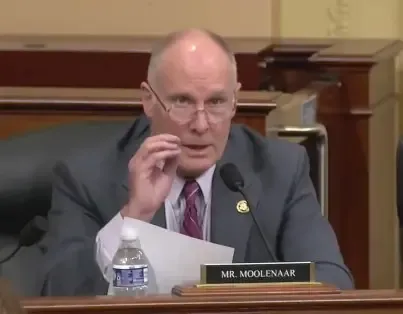
Committee Chairman John Moolenaar released the investigation under the title “Prescription America: How to Protect Americans from a Dangerous Dependence on China for Their Medicines.” It contains 12 recommendations addressing drug development and the review of clinical-trial evidence.
Among them are incentives for early-stage trials in the United States, stronger support for biomedical research and adequate staffing for FDA reviewers. The panel also recommends a White House biotechnology coordinator.
Another recommendation is to explore penalties on applications involving therapies developed through early-stage trials in China. The committee's proposals do not themselves change the standards currently applied by the FDA.
Drugmakers' commitments and inspection allegation
In a separate announcement, the committee said five major drugmakers, AbbVie, Bristol Myers Squibb, Lilly, Merck and Pfizer, would no longer initiate clinical trials at hospitals operated by China's People's Liberation Army.
Those commitments were described by the committee and concern particular trial locations. They do not amount to an announcement that the companies are withdrawing from all drug research in China.
The committee also alleged that an investigator at the 5th PLA Medical Center in Beijing obstructed FDA access in 2021 and again in 2024 by requiring inspectors to recognise Beijing's claims over Taiwan. That account comes from the panel's description of its investigation and is not a finding that every trial at the hospital produced unreliable results.
“Any facility that blocks the FDA from inspecting its clinical trials cannot be trusted to develop safe medicines for Americans,” Moolenaar said.
Current FDA rules for foreign studies
Clinical trials test experimental treatments in people and generate evidence regulators assess when deciding whether medicines can be marketed. Restrictions on where trial data can be generated would therefore affect the evidence drug developers may submit for review if such proposals were adopted.
Existing US regulations allow the FDA to accept certain foreign studies conducted outside an American investigational drug application if they meet good clinical practice standards. These include independent ethics review and informed consent, subject to specified exceptions.
The rules also require the FDA to be able to validate a study's data through an on-site inspection if it considers one necessary. They do not require an inspection of every foreign trial before its data can be considered.
Earlier request and next steps
The committee said Moolenaar wrote to the FDA in August seeking restrictions on Chinese trial data in applications for new trials or drug approvals unless the agency had inspected the site within the preceding 12 months.
The distinction between that request, the panel's latest recommendations and current regulations matters for drugmakers preparing applications: none of the recommendations is itself an enacted ban. Any change to how the FDA handles the data would require further action.
Point of View
Which permits qualifying foreign studies while allowing the FDA to inspect when necessary. Any eventual restrictions should be assessed against their effect on evidence quality, regulatory capacity and the development of medicines.
NationPress
24 Nov 2026
Frequently Asked Questions
What restrictions did the US House panel propose on Chinese trial data?
The panel called for restrictions on Chinese clinical-trial data used in US drug approvals, including a ban on results from Chinese military hospitals and trial sites in Xinjiang. The proposals are recommendations, not an enacted ban or a new FDA rule.
Why does Chinese clinical-trial data matter for US drug approvals?
Clinical trials generate evidence that regulators assess when deciding whether medicines can be marketed. Restrictions could affect the data drugmakers use in applications if the proposals are adopted.
Have drugmakers stopped all clinical research in China?
No, the committee described a narrower commitment concerning hospitals operated by China's People's Liberation Army. It said AbbVie, Bristol Myers Squibb, Lilly, Merck and Pfizer would no longer initiate trials at those hospitals.
Can the FDA currently accept foreign clinical-trial data?
Yes, the FDA can accept certain foreign studies conducted outside an American investigational drug application if they meet good clinical practice standards. The agency must be able to validate data through an on-site inspection if it considers one necessary, but an inspection of every foreign trial is not required.
What happens next to the House panel's recommendations?
The recommendations do not by themselves change FDA rules or enact a ban. Further action would be needed to change how the agency handles the data.