US pharma critically dependent on China supply chains, report warns
Synopsis
A detailed analysis in The National Interest lays bare a stark reality: the US has no independently American-owned commercial producer of heparin, a drug 70 per cent sourced from China. With Beijing's 15th Five-Year Plan doubling down on biomanufacturing dominance and Washington's SAPIR reserve unable to cover heparin, the supply chain gap is structural — and a single diplomatic rupture could put dialysis patients at immediate risk.
Key Takeaways
70 per cent of US heparin supply originates from China ; both US-based API plants are subsidiaries of Chinese companies.
Contaminated Chinese heparin killed at least 149 Americans in 2007–08 , reaching 11 countries ; no one was held accountable.
The Rhodium Group found China's 'highly dominant' product categories surged from 192 in 2021 to 315 in 2024 .
China's 15th Five-Year Plan (March 2026) targets biomanufacturing for 'decisive breakthroughs', deepening its pharmaceutical grip.
The SAPIR executive order ( August 2025 ) stockpiles APIs for roughly two dozen critical drugs but cannot cover heparin due to its biological origin.
A manufacturing failure or diplomatic dispute could cut heparin supplies, posing direct risk to dialysis patients across the US.
The United States pharmaceutical and biotechnology sector has grown critically reliant on Chinese inputs, exposing American patients and healthcare infrastructure to significant supply chain risks that Washington does not control, according to an analysis published in The National Interest. The report, flagged on 15 May 2026, uses the blood-thinning drug heparin as a case study for the systemic vulnerability.
The Heparin Problem
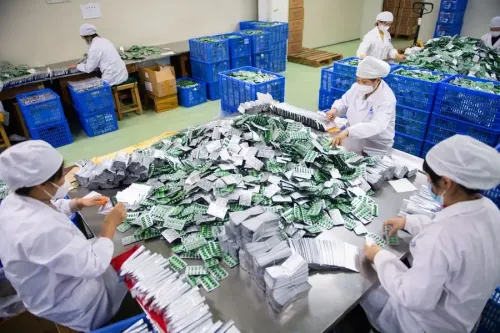
Approximately 70 per cent of the US supply of heparin originates from China. The two US-based plants that manufacture heparin active pharmaceutical ingredients (APIs) — SPL in Wisconsin and Smithfield BioScience in Ohio — are subsidiaries of Chinese parent companies. No commercially viable, independently American-owned producer of heparin exists, according to the report.
The stakes are not hypothetical. In 2007 and 2008, contaminated Chinese-origin heparin killed at least 149 Americans, with tainted supplies reaching 11 countries. The contaminant was traced to Changzhou, Jiangsu. Chinese officials denied that the contamination originated in China and refused the US Food and Drug Administration (FDA) access to conduct a criminal investigation. No individual or entity was held accountable.
Despite those fatalities, no structural change followed. The report notes that the current wave of supply shortages — driven by US companies exiting heparin production — has similarly failed to trigger diversification. 'Sources of production are thinning, not diversifying. Every exit narrows the field that Chinese API producers must satisfy and raises the share of American patients whose treatment depends on a supply chain Washington does not control,' the article states.
Beijing's Strategic Consolidation
The report cites a May 2026 analysis by the Rhodium Group of China's 15th Five-Year Plan, which concluded that Beijing 'is actively reinforcing its control over value chains using regulations and economic coercion to pre-empt de-risking and lock in its dominance across critical supply chains.' According to the Rhodium Group, the number of products in which China is 'highly dominant' rose sharply from 192 in 2021 to 315 in 2024.
China's 15th Five-Year Plan, issued in March 2026, names biomanufacturing as a sector targeted for 'decisive breakthroughs' — signalling that Beijing intends to move further up the pharmaceutical value chain even as American diversification efforts stall. The report also highlights China's use of dominance in rare earth and fertiliser sectors as economic leverage over trade partners, resulting in price surges.
Washington's Response and Its Gaps
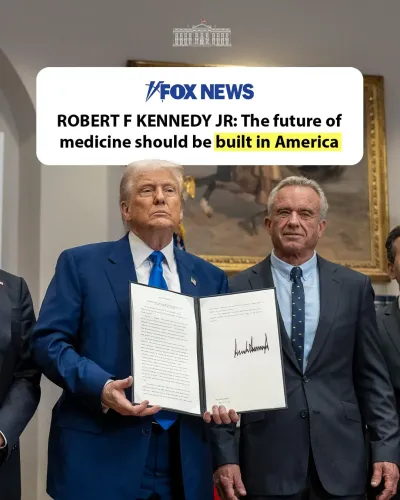
The August 2025 executive order establishing a Strategic Active Pharmaceutical Ingredients Reserve (SAPIR) directs the Administration for Strategic Preparedness and Response to stockpile six months' worth of APIs for roughly two dozen critical drugs, with a preference for domestic manufacturing.
However, the report identifies a structural flaw: the flagship federal investment in pharmaceutical resilience, the Phlow-BARDA programme, is built around continuous-flow chemistry — a technology suited to small-molecule drugs but incapable of producing heparin, which is a biologically derived polysaccharide extracted from animal tissue. The reserve strategy, in other words, does not address the heparin gap it was partly designed to close.
What a Disruption Could Mean
A manufacturing quality failure or a diplomatic dispute could cut off heparin supplies from China, with potentially dire consequences for dialysis patients who depend on the drug routinely. This comes amid broader US-China trade tensions, making the supply chain exposure a geopolitical risk as much as a public health one. Analysts warn that without an independently American-owned production base, the vulnerability is structural rather than cyclical — and will not resolve itself through market forces alone.
Point of View
And now finds that the two domestic plants capable of producing the drug are themselves Chinese-owned. Washington's SAPIR reserve is a partial fix that explicitly cannot address the most glaring gap. Meanwhile, Beijing's 15th Five-Year Plan is not a passive consolidation but an active strategy to deepen chokehold leverage. The 2008 deaths produced no structural reform; the question is whether geopolitical pressure in 2026 will succeed where 149 fatalities did not.
NationPress
1 Oct 2026
Frequently Asked Questions
Why is the US so dependent on China for heparin?
About 70 per cent of US heparin supply comes from China, and the only two US-based plants producing heparin APIs are subsidiaries of Chinese parent companies. No commercially viable, independently American-owned producer exists, making the supply chain structurally dependent on Chinese sources.
What happened during the 2007–08 heparin contamination crisis?
Contaminated Chinese-origin heparin killed at least 149 Americans and reached 11 countries. The contaminant was traced to Changzhou, Jiangsu, but Chinese officials denied responsibility and refused FDA access for a criminal investigation. No individual or entity was held accountable.
What is the Strategic Active Pharmaceutical Ingredients Reserve (SAPIR)?
SAPIR is a reserve established by a US executive order in August 2025, directing the Administration for Strategic Preparedness and Response to stockpile six months' worth of APIs for roughly two dozen critical drugs, with a preference for domestic manufacturing. However, it cannot cover heparin because the drug is biologically derived and incompatible with the continuous-flow chemistry technology the programme relies on.
How is China expanding its pharmaceutical dominance?
China's 15th Five-Year Plan, issued in March 2026, names biomanufacturing as a sector targeted for 'decisive breakthroughs.' A Rhodium Group analysis found that the number of products in which China is 'highly dominant' rose from 192 in 2021 to 315 in 2024, reflecting an active strategy to deepen supply chain control rather than retreat from it.
Who is most at risk if China's heparin supply is disrupted?
Dialysis patients are the most immediately at risk, as heparin is routinely used in dialysis procedures. A manufacturing quality failure or a diplomatic dispute between the US and China could cut off supplies, with no domestic alternative at commercial scale to fill the gap.