PAIL Act: US House unanimously passes Raja Krishnamoorthi China trade crimes bill
Synopsis
The US House passed the PAIL Act unanimously — a rare bipartisan feat — creating a dedicated Justice Department unit to prosecute China-linked trade crimes. Indian-American Congressman Raja Krishnamoorthi co-led the bill, which now heads to the Senate. If enacted, it would be the most structural upgrade to US trade-crime enforcement in years.
Key Takeaways
The US House of Representatives unanimously passed the PAIL Act on 1 September , targeting trade crimes including tariff evasion and forced-labour violations.
Congressman Raja Krishnamoorthi (Democrat, Illinois) co-led the bipartisan legislation alongside Ashley Hinson , John Moolenaar , and Ted Lieu .
The bill would create a dedicated enforcement unit within the Justice Department's Criminal Division for international trade offences.
Supporters say the measure primarily targets China-based companies alleged to circumvent US trade laws.
Backers include United Steelworkers , AFL-CIO , American Iron and Steel Institute , and the Campaign for Uyghurs .
The bill must now pass the US Senate before being presented to the President for signature.
The US House of Representatives has unanimously passed the Protecting American Industry and Labor from International Trade Crimes Act — the PAIL Act — bipartisan legislation co-led by Indian-American Congressman Raja Krishnamoorthi of Illinois to sharpen federal investigations and prosecutions of trade offences including tariff evasion, illegal transshipment, and forced-labour violations. The bill, passed on 1 September, now awaits a Senate vote before it can be sent to the President for signature.
What the PAIL Act Does
The legislation would establish a dedicated enforcement structure within the Justice Department's Criminal Division specifically tasked with investigating and prosecuting international trade crimes. It would also strengthen coordination and training across federal, state, and local law-enforcement agencies dealing with cross-border trade violations.
The bill further enables parallel criminal and civil enforcement actions — a provision that allows the government to pursue both tracks simultaneously in complex cases. Additionally, the US Attorney General would be required to submit an annual report to Congress detailing the Justice Department's anti-trade-crime work, introducing a layer of legislative accountability.
The China Dimension
Supporters of the PAIL Act have been explicit about its primary target. The bill is aimed particularly at practices allegedly employed by companies based in China that circumvent US trade laws, placing American manufacturers and workers at a competitive disadvantage. The House Select Committee on the Chinese Communist Party, whose chairman John Moolenaar co-led the legislation, has framed trade crime enforcement as a matter of national economic security.
'China has spent decades finding ways to undermine American workers and our economy,' said co-sponsor Republican Congresswoman Ashley Hinson of Iowa. 'My bill will finally give the DOJ real tools to stop these blatant violations and ensure penalties are meaningfully enforced.'
Moolenaar added that 'these crimes devastate American manufacturing, and they are a threat to the prosperity of every single American.'
Krishnamoorthi's Role and Remarks
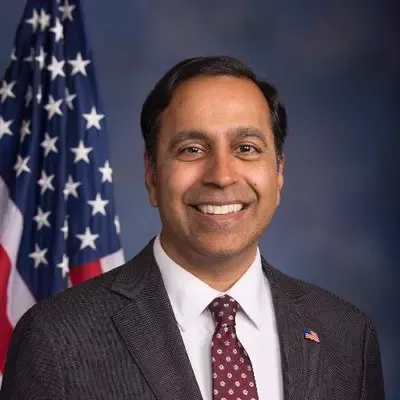
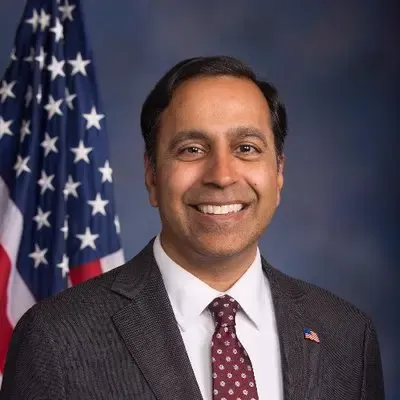
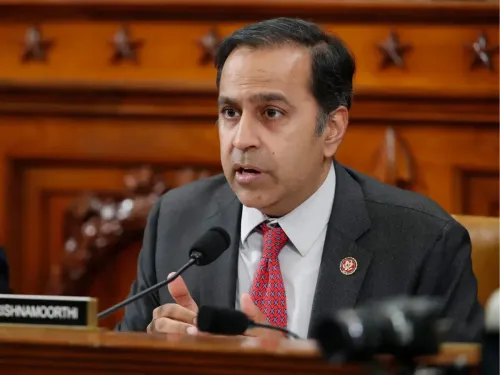
Krishnamoorthi, a Democrat representing Illinois' 8th Congressional District, co-led the bill alongside Hinson, Moolenaar, and Democratic Congressman Ted Lieu of California. A broader bipartisan coalition also backed the measure.
'Today's unanimous House passage of the PAIL Act is an important victory for American workers and manufacturers who have been forced to compete against companies based in the PRC that violate US trade laws,' Krishnamoorthi said. He urged the Senate to 'pass the PAIL Act without delay and send it to the President's desk.'
Krishnamoorthi, first elected to Congress in 2016, serves on the House Intelligence Committee and the Select Committee on the Strategic Competition Between the United States and the Chinese Communist Party.
Industry and Labour Support
The PAIL Act has drawn backing from a wide coalition of US worker and manufacturer organisations, including the United Steelworkers, AFL-CIO, American Iron and Steel Institute, Alliance for American Manufacturing, National Council of Textile Organizations, and the Steel Manufacturers Association. The Campaign for Uyghurs has also endorsed the measure, underscoring its forced-labour enforcement dimension.
What Happens Next
The bill must clear the US Senate before it reaches the President's desk. Given the unanimous House vote and broad bipartisan support, proponents are pressing for swift Senate action — though the legislative calendar and competing priorities could affect the timeline.
Point of View
Not just a statute. In a Congress defined by gridlock, a bipartisan trade-crime bill that names China — implicitly and explicitly — as the primary offender reflects how far the Washington consensus has shifted on economic competition with Beijing. Yet the real test will be resourcing: dedicated DOJ units have been promised before, and enforcement has historically lagged legislative intent. The annual reporting requirement to Congress is the bill's most underrated provision — it creates a public accountability mechanism that past trade-enforcement pushes lacked. Whether the Senate moves quickly or lets it stall will say as much about political will as the unanimous House vote did.
NationPress
16 Oct 2026
Frequently Asked Questions
What is the PAIL Act passed by the US House?
The PAIL Act — Protecting American Industry and Labor from International Trade Crimes Act — is bipartisan legislation passed unanimously by the US House on 1 September. It would create a dedicated unit within the Justice Department's Criminal Division to investigate and prosecute trade offences such as tariff evasion, illegal transshipment, and forced-labour violations, particularly those linked to China-based companies.
Who co-led the PAIL Act in Congress?
The bill was co-led by Democratic Congressman Raja Krishnamoorthi of Illinois, Republican Congresswoman Ashley Hinson of Iowa, House Select Committee on the Chinese Communist Party Chairman John Moolenaar, and Democratic Congressman Ted Lieu of California.
Why is the PAIL Act focused on China?
Supporters argue that companies based in China have systematically circumvented US trade laws through tariff evasion, illegal transshipment, and forced-labour practices, placing American manufacturers and workers at a competitive disadvantage. The bill's co-sponsors, including the chair of the House Select Committee on the Chinese Communist Party, have framed trade-crime enforcement as an economic security priority.
What happens to the PAIL Act next?
Having cleared the House unanimously, the PAIL Act must now pass the US Senate before it can be sent to the President for signature and become law. Congressman Krishnamoorthi has called on the Senate to act 'without delay.'
Which organisations support the PAIL Act?
The legislation is backed by the United Steelworkers, AFL-CIO, American Iron and Steel Institute, Alliance for American Manufacturing, National Council of Textile Organizations, Steel Manufacturers Association, and the Campaign for Uyghurs, reflecting broad support from both labour and industry groups.