Strait of Hormuz reopening hinges on US-Iran MoU, deal imminent

Synopsis
The Trump administration says a US-Iran MoU is hours away — one that could reopen the Strait of Hormuz and begin dismantling Tehran's nuclear programme. But with Obama-era negotiators warning the timeline is unrealistic and Israeli strikes continuing in Lebanon, the deal faces its first real stress test before the ink is dry.
Key Takeaways
The Trump administration signalled on 14 June that a US-Iran MoU could be signed within hours.
Defence Secretary Pete Hegseth confirmed the deal is 'performance-based' — no benefits to Iran until it complies.
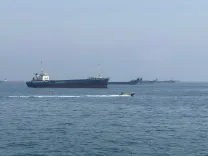
The MoU would potentially reopen the Strait of Hormuz , shut for more than three months due to the conflict.
UN Ambassador Mike Waltz said Iran must end uranium enrichment and support for proxy groups as core conditions.
Former President Barack Obama expressed doubt the new deal would be a meaningful improvement on the 2015 JCPOA .
Former Deputy Secretary Wendy Sherman warned the 60-day framework is likely too short for the required technical work.
The Trump administration on Sunday, 14 June signalled that a memorandum of understanding (MoU) aimed at ending the ongoing conflict with Iran could be signed within hours, potentially reopening the Strait of Hormuz — one of the world's most critical energy corridors — and paving the way for broader negotiations on Tehran's nuclear programme. The announcement came as senior US officials expressed confidence in the deal's progress despite fresh Israeli strikes against Hezbollah targets in Lebanon.
Key Statements from US Officials
US Defence Secretary Pete Hegseth, speaking in an interview with CBS News, said: 'From all I know, we are on track. It's not a matter of if, it's a matter of when.' He described the proposed arrangement as 'performance-based', making clear that Tehran would receive no tangible benefits unless it fulfilled its commitments. 'There will be no money released to Iran until they perform,' Hegseth said. 'There's no trust here, and we're going to verify everything.'
US Ambassador to the United Nations Mike Waltz, appearing on ABC News, echoed that confidence, stating that President Donald Trump had 'every intent' of completing the agreement. Waltz said Iranian negotiators were keeping the teams 'hands full' but that the President remained committed to closing the deal.
What the Proposed MoU Would Require
According to the administration, the agreement would mark the first formal step toward ending more than three months of conflict that has severely disrupted shipping through the Strait of Hormuz. Waltz outlined the core demands: Iran must abandon highly enriched uranium, walk away from its enrichment capabilities, and end support for regional proxy groups. 'The highly enriched uranium has to go. Their enrichment capabilities, they have to walk away from. Their support for terrorist proxies has to end,' he said.
Officials also stressed that the deal would unfold within what is currently described as a 60-day framework, though critics have questioned whether that timeline is realistic.
How This Differs from the 2015 Nuclear Deal
The Trump administration was emphatic in distancing the emerging agreement from the 2015 Joint Comprehensive Plan of Action (JCPOA) negotiated under former President Barack Obama. Hegseth characterised the earlier accord as 'a path to a bomb', while describing the proposed MoU as 'a wall to a bomb' — a framing that signals a significantly more restrictive set of demands on Tehran's nuclear infrastructure.
Critics Push Back
The emerging deal has drawn scepticism from figures closely associated with the Obama-era negotiations. Former President Barack Obama said it was 'doubtful that any agreement that arises is going to be significantly different or a significant improvement from the deal that we had in the first place.' Former Deputy Secretary of State Wendy Sherman, who played a central role in negotiating the original accord, warned that any final arrangement would require extensive technical work and cautioned that the process could take far longer than the 60-day window currently being discussed.
What Happens Next
If signed, the MoU would initiate a phased process aimed at dismantling Iran's nuclear programme and restoring navigation through the Strait of Hormuz — a waterway through which a significant share of global oil supplies transit daily. The deal's durability will depend on whether verification mechanisms satisfy both sides, and whether regional dynamics — including the ongoing Israeli operations against Hezbollah — allow diplomatic momentum to hold.
Point of View
Compressed into a 60-day window. Sherman's warning deserves more attention than it is getting; nuclear diplomacy of this complexity has never moved that fast. Meanwhile, Israeli strikes on Hezbollah in Lebanon introduce a variable Washington does not fully control, and any escalation there could collapse the diplomatic track before an MoU is even formalised. The Strait of Hormuz's reopening is the economic carrot, but the geopolitical risks surrounding this deal are far from resolved.
NationPress
21 Sept 2026
Frequently Asked Questions
What is the US-Iran MoU being discussed?
It is a memorandum of understanding that the Trump administration says could be signed within hours, aimed at ending more than three months of conflict with Iran. The deal would potentially reopen the Strait of Hormuz and initiate a process to dismantle Iran's nuclear programme.
What does the US demand from Iran under this deal?
The US is demanding that Iran abandon highly enriched uranium, give up its enrichment capabilities, and end support for regional proxy groups. Defence Secretary Pete Hegseth has said no financial benefits will be released to Iran until it demonstrates compliance.
How is this deal different from the 2015 Iran nuclear agreement?
The Trump administration says the 2015 JCPOA was 'a path to a bomb', while the new MoU is designed to be 'a wall to a bomb', imposing stricter conditions on Iran's nuclear infrastructure. The new deal is described as performance-based, with benefits tied directly to verified Iranian compliance.
Why are former US officials sceptical of the deal?
Former President Barack Obama said it was doubtful the new agreement would be significantly better than the 2015 deal. Former Deputy Secretary of State Wendy Sherman warned that the technical complexity involved means the 60-day framework being discussed is likely insufficient.
What is the significance of the Strait of Hormuz in this context?
The Strait of Hormuz is one of the world's most important energy corridors, through which a substantial share of global oil supplies transit. It has been disrupted for more than three months due to the US-Iran conflict, and its reopening is a central objective of the proposed MoU.