US, Japan, South Korea sign Arctic cooperation pact at G20 Atlanta
Synopsis
At the G20 foreign ministers' meeting in Atlanta, the US, Japan, and South Korea quietly signed an Arctic memorandum of cooperation — a coordinated move to counter coercion in a region where melting ice is rapidly raising geopolitical stakes. Combined with Rubio's defence of a separate Greenland security arrangement, Washington is signalling a structured Arctic strategy, even as key operational details remain undisclosed.
Key Takeaways
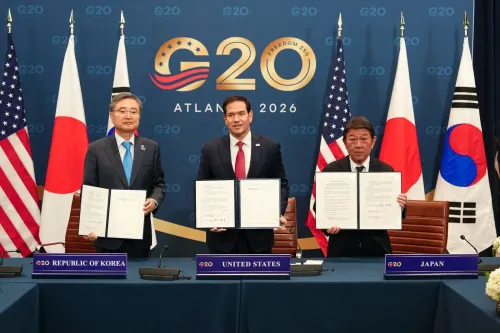
US , Japan , and South Korea signed an Arctic memorandum of cooperation on 31 October at the G20 foreign ministers' meeting in Atlanta .
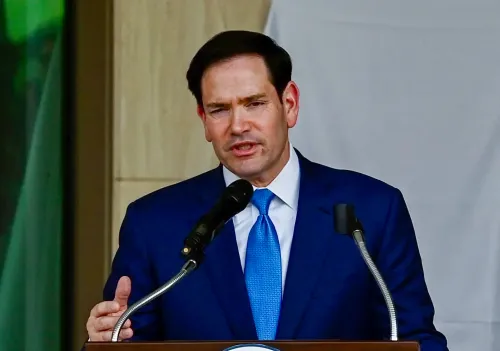
Secretary of State Marco Rubio said the pact aims to keep the Arctic 'free of dominion or coercion' and open to peaceful commerce.
No specific projects, funding figures, or implementation timelines were disclosed at the press conference.
Rubio separately defended a Greenland security arrangement, describing it as lasting 'in perpetuity' and beneficial to Canada and NATO allies.
He cited Greenland 's growing strategic importance beyond missile defence, linking it to broader Arctic developments.
The G20 Atlanta agenda centred on energy access, critical minerals, and supply chain resilience.
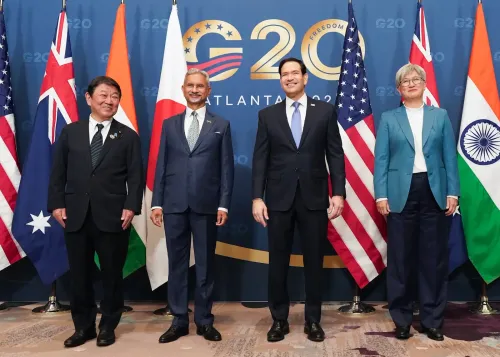
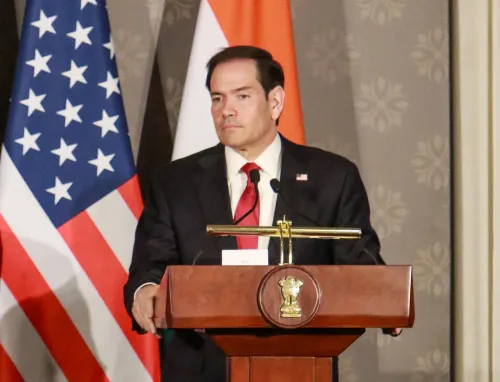
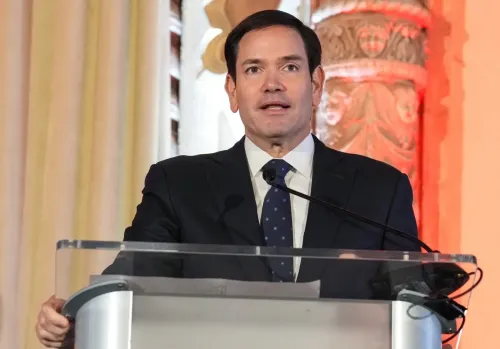
United States Secretary of State Marco Rubio announced on 31 October that the US, Japan, and South Korea have signed a memorandum of cooperation on the Arctic, committing the three nations to keeping the region open to peaceful commerce and free from coercion. The announcement came at the close of the G20 foreign ministers' meeting in Atlanta, following a dedicated trilateral session among the three countries' top diplomats.
What the Memorandum Covers
Rubio described the agreement's central purpose as ensuring that the Arctic 'remains a region free of dominion or coercion and that it instead remains a place of peaceful relations and commerce.' The memorandum was framed as part of a broader set of diplomatic engagements held on the sidelines of the G20 gathering, where energy access, supply chain resilience, and freedom of navigation were among the headline concerns.
Rubio did not disclose specific projects, funding commitments, or an implementation timetable at the press conference. The agreement's operational provisions were not outlined publicly, leaving its mechanics subject to further diplomatic detail.
The Greenland Dimension
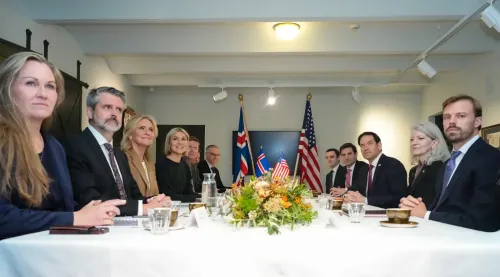
Separately, Rubio defended a distinct arrangement concerning Greenland, saying it addressed US national security imperatives while also protecting the interests of Canada and other NATO allies. When asked about differing perceptions of the deal in Denmark and Greenland, Rubio said he was unfamiliar with the specific comments being cited and had not followed their coverage in Denmark.
'Suffice it to say we have a very good deal. One the president is fully advised of. He understands and is very supportive of,' Rubio said.
He presented the Greenland arrangement as building on longstanding US activity in the territory. One of its stated purposes, he said, was to prevent a potential adversary from gaining access through commercial means in ways that could harm the countries involved. Rubio added that these protections were designed to endure regardless of whether Greenland chose independence or remained part of the Kingdom of Denmark.
Greenland's Strategic Importance
Rubio underscored that Greenland's geographical position was central to President Trump's longstanding interest in the territory. Its strategic value, he said, extended well beyond missile defence to broader developments unfolding across the Arctic.
'It has always played a critical role in national security. It is more pronounced now, not just because of defences against missiles, but because of the Arctic,' he said. He described the Greenland arrangement as lasting in perpetuity and said its benefits extended to Canada and other NATO partners.
G20 Atlanta: Broader Economic Agenda
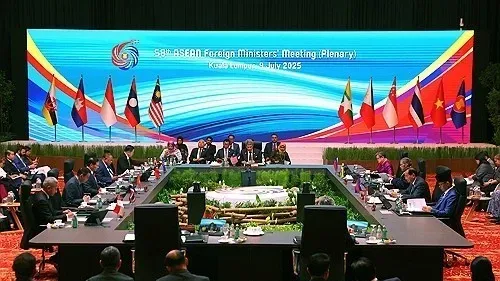
Rubio used the Atlanta forum to emphasise the economic focus of the US G20 presidency. He said the ministerial meeting had addressed access to energy, critical minerals, and reliable supply chains as issues that would shape the global economy over the coming decades. Countries also used the sidelines for bilateral meetings, with Washington pursuing cooperation on maritime security and infrastructure alongside its multilateral commitments.
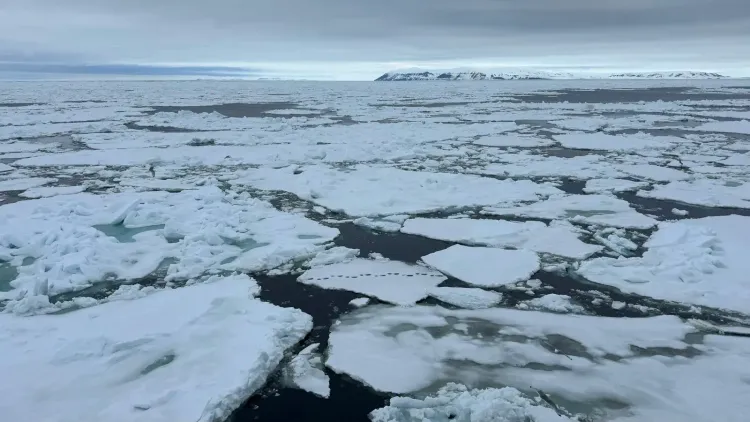
This comes amid growing geopolitical competition in the Arctic, where melting sea ice is opening new shipping lanes and resource extraction opportunities, drawing intensified interest from major powers including Russia and China. The trilateral memorandum signals a coordinated Western-aligned push to shape the region's governance before those dynamics solidify.
Point of View
Which raises the question of whether this is a strategic framework or a diplomatic statement dressed as one. The Greenland dimension is equally telling: Rubio's 'in perpetuity' language and his explicit invocation of adversarial commercial access suggest the US views Greenland not as a bilateral curiosity but as a load-bearing pillar of its northern flank strategy. How Denmark and Greenland's own government ultimately respond to that framing will determine whether this arrangement endures or becomes a friction point within NATO itself.
NationPress
1 Nov 2026
Frequently Asked Questions
What is the US-Japan-South Korea Arctic memorandum of cooperation?
It is a trilateral agreement signed on 31 October at the G20 foreign ministers' meeting in Atlanta, committing the United States, Japan, and South Korea to keeping the Arctic free from coercion and open to peaceful commerce. Secretary of State Marco Rubio announced it after a dedicated trilateral meeting with his Japanese and South Korean counterparts, though specific projects and funding were not disclosed.
Why is the Arctic significant for US foreign policy?
Melting sea ice is opening new shipping lanes and resource extraction opportunities in the Arctic, intensifying geopolitical competition involving Russia and China. Rubio described Greenland's position as central to US national security, noting its importance extends beyond missile defence to broader Arctic developments.
What did Rubio say about the Greenland arrangement?
Rubio defended a separate US-Greenland security arrangement, saying it addressed US national security concerns and protected the interests of Canada and NATO allies. He described it as lasting in perpetuity and designed to prevent potential adversaries from gaining access through commercial means, regardless of whether Greenland chooses independence or remains part of the Kingdom of Denmark.
What were the broader themes of the G20 Atlanta foreign ministers' meeting?
The meeting focused on energy access, critical minerals, and reliable supply chains as long-term drivers of the global economy. Countries also used the sidelines for bilateral discussions, with the US pursuing cooperation on maritime security and infrastructure alongside its multilateral agenda.
What details are still missing from the Arctic memorandum?
Rubio did not outline specific projects, funding commitments, or an implementation timetable at the press conference. The agreement's operational provisions remain undisclosed, leaving its practical mechanics to be detailed through subsequent diplomatic channels.