US, Japan, South Korea sign Arctic Pacific pact at G20 Atlanta meet
Synopsis
Three of the world's most consequential US-aligned democracies have just extended their strategic partnership into the Arctic — a region warming faster than anywhere on Earth and drawing intensifying great-power competition. The TAPP, signed at the G20 in Atlanta, is the third trilateral document in under four months, and it lands the same day as an emergency call triggered by a fresh North Korean missile launch.
Key Takeaways
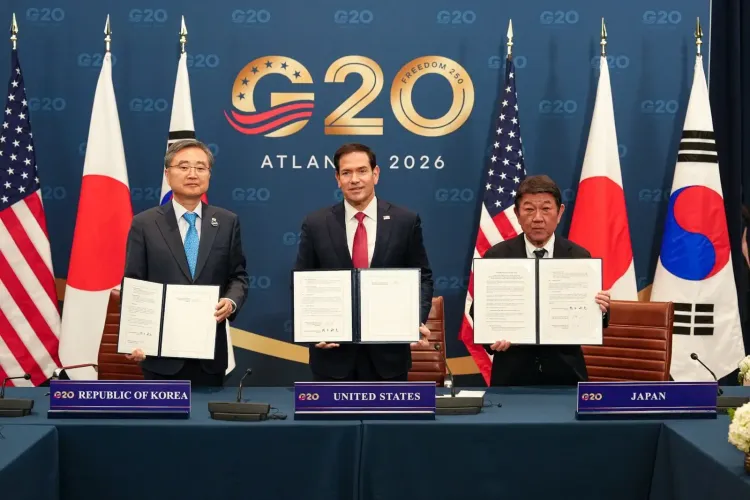
The US, Japan, and South Korea signed the Trilateral Arctic Pacific Partnership (TAPP) in Atlanta on 31 October 2026 , on the sidelines of the G20 foreign ministers' meeting.
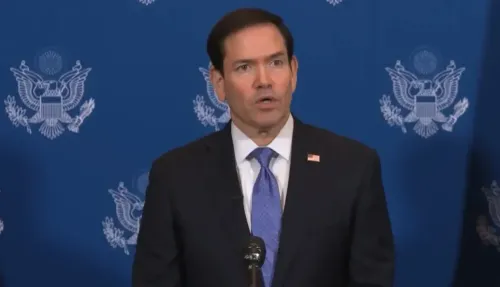
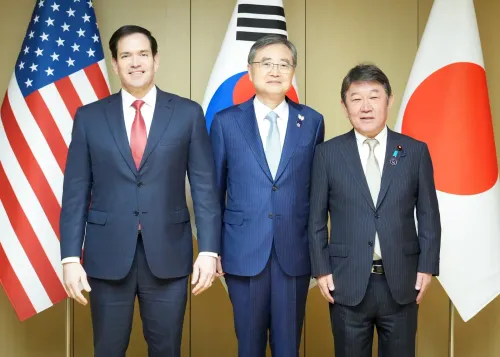
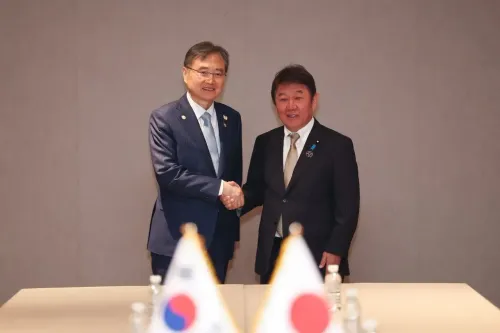
Signatories were Secretary of State Marco Rubio , Foreign Minister Toshimitsu Motegi , and Foreign Minister Cho Hyun .
The pact covers maritime and economic cooperation in the Pacific Arctic ; no specific projects, investment amounts, or deadlines were announced.
Following North Korea's ballistic missile launch on 30 October , officials from all three countries held an emergency telephone meeting on 31 October .
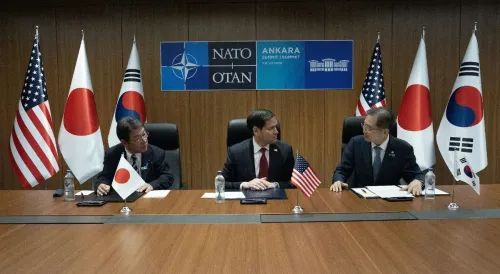
The ministers also reviewed their separate small modular nuclear reactor (SMR) cooperation framework, first signed in Ankara on 7 July .
This is the third major trilateral document signed by the three foreign ministers in under four months.
The United States, Japan, and South Korea signed a trilateral memorandum on 31 October 2026 to explore maritime and economic cooperation in the Pacific Arctic, as their top diplomats gathered on the sidelines of the G20 foreign ministers' meeting in Atlanta. The agreement, officially titled the Trilateral Arctic Pacific Partnership (TAPP), marks a significant expansion of the three nations' strategic alignment into one of the world's most contested and resource-rich regions.
What the TAPP Agreement Covers
US Secretary of State Marco Rubio, Japanese Foreign Minister Toshimitsu Motegi, and South Korean Foreign Minister Cho Hyun signed the document in Atlanta. According to the US State Department, the memorandum was signed 'to explore maritime cooperation and economic partnership in the Pacific Arctic.' The State Department's account did not identify specific commercial projects, investment amounts, or implementation deadlines tied to the Arctic initiative.
The three ministers also reviewed implementation of a separate trilateral memorandum on deploying small modular nuclear reactors (SMRs), first signed in Ankara on 7 July. That framework seeks to coordinate private-sector participation in reactor projects in third countries and strengthen Indo-Pacific energy security, according to Japan's Foreign Ministry. Its objectives include identifying interested host countries, encouraging industry consortia, and helping mobilise financing and investment, while maintaining nuclear safety, security, and non-proliferation standards.
North Korea, Taiwan, and Regional Security
The ministers reaffirmed their commitment to the complete denuclearisation of North Korea and full implementation of UN Security Council resolutions, including restrictions on activities generating revenue for Pyongyang's nuclear weapons and ballistic missile programmes. They also commended the Multilateral Sanctions Monitoring Team's work in exposing North Korean violations and sanctions evasion.
Separately, following North Korea's ballistic missile launch on 30 October, foreign ministry officials from all three countries held an emergency telephone meeting on 31 October. The participants — US Deputy Assistant Secretary of State David Wilezol, Japanese official Takashi Ariyoshi, and South Korean official Baek Yong-jin — condemned the launch as a violation of Security Council resolutions and called on Pyongyang to halt such actions.
The ministers also stressed the importance of peace and stability across the Taiwan Strait. Rubio raised US concerns about China's efforts to assert control over the South China Sea and what the State Department described as coercive behaviour in the East China Sea and Yellow Sea. He also raised the issue of Russia-China cooperation that Washington said undermined peace and stability in the Indo-Pacific.
Economic Security and Supply Chain Resilience
Economic security formed a central strand of the Atlanta discussions. The ministers reaffirmed their opposition to economic coercion and the use of supply chains as instruments of geopolitical pressure. They reviewed areas of cooperation identified during a trilateral consultation in Seoul on 15 October, which spanned supply-chain resilience, cybersecurity, nuclear energy, and joint military exercises.
At their previous meeting in New York on 21 September, during the UN General Assembly, the three sides had agreed to advance international disaster relief and work against transnational organised crime in Southeast Asia, in collaboration with the UN Office on Drugs and Crime (UNODC). They reaffirmed commitments from that joint statement in Atlanta and agreed to continue trilateral meetings at all levels.
The Broader Strategic Picture
This comes amid intensifying great-power competition in the Arctic, a region that has gained strategic importance as melting sea ice opens new shipping lanes and exposes vast untapped energy reserves. Washington has framed the TAPP within its broader vision of a 'free and open Indo-Pacific,' signalling that Arctic ambitions are now woven into the same alliance architecture that underpins US-Japan-South Korea security cooperation in Asia.
Notably, this is the third major trilateral document signed by these three foreign ministers in under four months — following the SMR memorandum in Ankara in July and the New York joint statement in September — reflecting a sustained acceleration of trilateral diplomacy. The next moves, including whether specific Arctic projects and financing frameworks emerge from the TAPP, will be closely watched by both allied and rival capitals.
Point of View
No money, and no deadlines, it is a statement of intent rather than a plan of action. What it does reveal is that the US-Japan-South Korea trilateral architecture, historically anchored in the Korean Peninsula and East China Sea, is now being stretched geographically to compete with Russia and China's Arctic ambitions. The pace of trilateral document-signing — three agreements in four months — suggests Washington is using structured diplomacy to lock in allied alignment before domestic political cycles in Tokyo or Seoul can loosen it. The harder test will come when these frameworks demand actual investment and industrial commitment from three economies that are themselves navigating trade tensions and energy transitions.
NationPress
31 Oct 2026
Frequently Asked Questions
What is the Trilateral Arctic Pacific Partnership (TAPP)?
The TAPP is a memorandum signed by the United States, Japan, and South Korea on 31 October 2026 in Atlanta, committing the three countries to explore maritime cooperation and economic partnership in the Pacific Arctic. The State Department did not specify commercial projects, investment amounts, or timelines in its initial readout.
Why did the three foreign ministers meet in Atlanta?
The ministers convened on the sidelines of the G20 foreign ministers' meeting in Atlanta, where they signed the TAPP and reviewed existing cooperation frameworks on small modular nuclear reactors, supply-chain resilience, and North Korea sanctions.
How did the three countries respond to North Korea's latest missile launch?
Following North Korea's ballistic missile launch on 30 October, officials from all three countries held an emergency telephone meeting on 31 October. They condemned the launch as a violation of UN Security Council resolutions and reaffirmed close coordination, calling on Pyongyang to halt such actions.
What is the small modular nuclear reactor agreement between the US, Japan, and South Korea?
The SMR memorandum was first signed in Ankara on 7 July 2026. It seeks to coordinate private-sector participation in reactor projects in third countries, strengthen Indo-Pacific energy security, and help identify host countries, encourage industry consortia, and mobilise financing while maintaining nuclear non-proliferation standards.
What other issues did the three ministers discuss in Atlanta?
Beyond the Arctic pact, the ministers discussed the denuclearisation of North Korea, peace and stability in the Taiwan Strait, China's assertiveness in the South China Sea and East China Sea, Russia-China cooperation in the Indo-Pacific, and opposition to economic coercion and weaponisation of supply chains.