US, Japan, South Korea launch $150 billion SMR push across Europe
Synopsis
On the sidelines of UNGA, the US, Japan, and South Korea unveiled a $150 billion SMR investment push for Europe, with GE Vernova, Hitachi, Samsung C&T, and Poland's SGE signing a deployment framework for the BWRX-300 reactor. The move signals a direct challenge to Russian and Chinese dominance in global nuclear markets — but with no committed financing, project sites, or timelines yet named, the real test is execution.
Key Takeaways
The US, Japan, and South Korea announced an SMR deployment plan at UNGA on 24 September 2026 , targeting more than $150 billion in European nuclear investment.
An industry consortium of GE Vernova , Hitachi , Samsung C&T , and Poland's SGE signed a framework to deploy the BWRX-300 SMR across Europe.
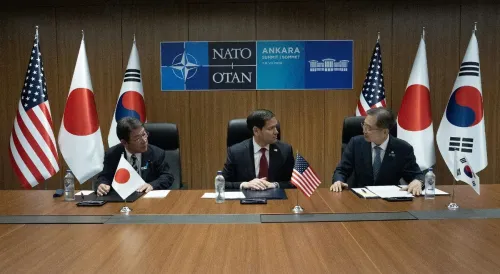
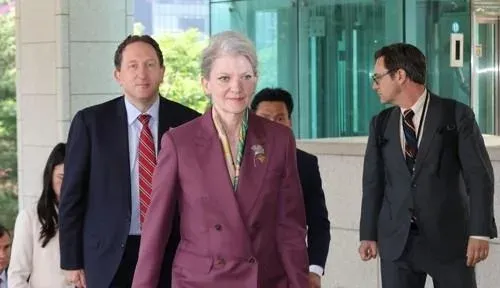
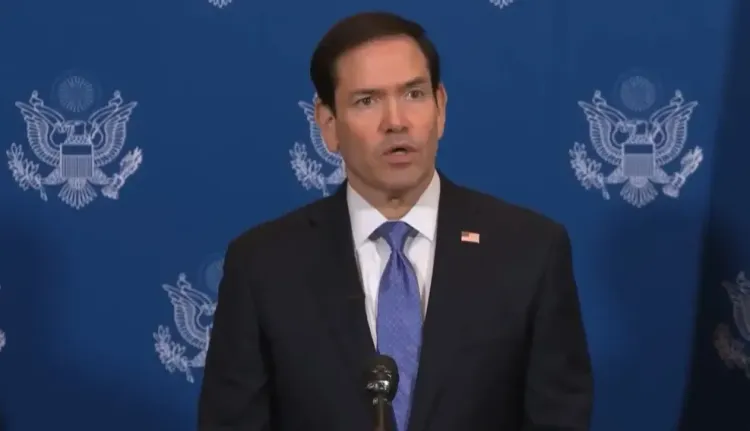
Deputy Secretary of State Christopher Landau attended the industry framework signing; the deal aligns with a trilateral memo signed in Ankara on 7 July by Secretary of State Marco Rubio .
The $150 billion figure is an aspirational investment target — no committed financing, project sites, or construction timelines were identified.
India was not named as a participant or deployment location in either framework.
The initiative is widely seen as a Western counter to Rosatom and CNNC dominance in global nuclear export markets.
The United States, Japan, and South Korea on 24 September 2026 announced a coordinated plan to advance small modular reactor (SMR) deployment across other countries, alongside an industry-level initiative aimed at mobilising more than $150 billion in nuclear reactor investment across Europe. The announcements were made on the sidelines of the United Nations General Assembly (UNGA) in New York, following a ministerial-level meeting among the three governments.
The State Department confirmed the developments, noting that the investment figure represents an ambition for the coming years rather than committed financing — with no individual project costs, construction schedules, or European project sites identified at this stage.
The Trilateral Framework
The three governments formalised an implementation plan in support of a memorandum of cooperation on SMR deployments originally signed in Ankara on 7 July. According to the State Department, the arrangement is designed to serve the mutual security interests of the three nations while pursuing reactor deployments to meet growing global energy demand.
The government-level agreement covers cooperative deployments in third countries broadly, while the separate industry framework announced Wednesday focuses specifically on Europe.
Industry Consortium and the BWRX-300
Deputy Secretary of State Christopher Landau attended the signing of an industry cooperation framework that brings together GE Vernova of the United States, Japan's Hitachi, South Korea's Samsung C&T, and Poland's SGE. The consortium is focused on deploying the BWRX-300 small modular reactor across the European market.
The State Department said the consortium aimed to deliver reliable baseload nuclear power — electricity supplied consistently to meet underlying demand — to millions of people, and to promote more than $150 billion in reactor investment over the coming years. The effort, officials said, aligns with the broader objectives of the trilateral memorandum signed earlier this year by Secretary of State Marco Rubio and his Japanese and South Korean counterparts.
What Are Small Modular Reactors
SMRs are designed to produce less power per unit than conventional large nuclear reactors. Their modular construction is intended to allow key components to be manufactured and assembled in ways that support repeat construction across multiple sites — a feature advocates say could accelerate nuclear rollout and reduce costs compared to traditional megaprojects.
Notably, the State Department specified that the effort would pursue reactors meeting the highest standards of nuclear safety, security, and non-proliferation — a signal to both domestic audiences and potential host nations wary of proliferation risks.
What the Announcement Left Out
Several critical details remain unresolved. The announcement did not name specific European deployment sites, the number of reactors envisaged, or expected timelines for bringing them online. The investment figure of $150 billion represents an aspirational target, with no committed financing identified. Civil nuclear projects also require regulatory approvals, fuel arrangements, trained personnel, and radioactive waste management — elements that go well beyond reactor technology and typically take years to arrange.
India was not named as a participant or a proposed deployment location in either the government or industry frameworks. This comes amid a broader global push by Western-aligned nations to counter Russian and Chinese nuclear exports, which have dominated new reactor construction in emerging markets over the past decade.
Strategic and Geopolitical Context
The trilateral initiative reflects a wider strategic calculus: the US, Japan, and South Korea are seeking to present a credible alternative to Russian state-owned Rosatom and China's CNNC in global nuclear markets. Europe, grappling with energy security concerns since Russia's 2022 invasion of Ukraine, has emerged as a priority market for Western nuclear exporters. Poland, whose SGE is a party to the industry framework, has been one of the most active European nations pursuing nuclear expansion.
How quickly the consortium can move from framework to shovels in the ground will determine whether this initiative reshapes global nuclear energy markets or remains a high-profile announcement without operational follow-through.
Point of View
But the announcement is light on the details that actually build reactors: no committed financing, no named project sites, no construction schedules. The gap between ambition and execution has long plagued Western nuclear exports — while Rosatom has moved faster precisely because it offers state-backed financing and turnkey solutions. The real geopolitical contest is not who signs the most frameworks at UNGA, but who breaks ground first in Poland or Central Europe. For this trilateral initiative to matter, GE Vernova, Hitachi, and Samsung C&T will need to demonstrate that a Western consortium can match the speed and financing flexibility of their Russian and Chinese rivals — something the industry has so far failed to do at scale.
NationPress
24 Sept 2026
Frequently Asked Questions
What did the US, Japan, and South Korea announce at UNGA 2026?
The three countries announced an implementation plan for small modular reactor deployments in third countries, backed by a separate industry framework targeting more than $150 billion in nuclear investment across Europe. The announcements were made on 24 September 2026 on the sidelines of the United Nations General Assembly in New York.
What is the BWRX-300 small modular reactor?
The BWRX-300 is a small modular reactor design being developed by GE Vernova and Hitachi. It is the specific reactor model that the industry consortium — comprising GE Vernova, Hitachi, Samsung C&T, and Poland's SGE — intends to deploy across European markets under the newly signed cooperation framework.
Is the $150 billion in committed nuclear investment?
No. The $150 billion figure represents an aspirational investment target for the coming years, not committed financing. The announcement did not identify individual project costs, specific funding sources, European deployment sites, or construction timelines.
Why are the US, Japan, and South Korea focusing on European nuclear deployment?
Europe has been a priority market for Western nuclear exporters following Russia's 2022 invasion of Ukraine, which accelerated European energy security concerns. The trilateral initiative is also seen as a strategic effort to offer an alternative to Russian and Chinese nuclear exports, which have dominated new construction in emerging and transitioning energy markets.
Is India part of this nuclear cooperation plan?
No. India was not named as a participant in either the trilateral government framework or the industry cooperation agreement. The government-level memorandum of cooperation covers deployments in third countries broadly, while the industry framework signed on 24 September focuses specifically on Europe.