Will Small Modular Reactors Be Deployed at Brownfield Sites?
Synopsis
India is set to embrace Small Modular Reactors (SMRs) at brownfield locations to enhance energy security and drive decarbonisation. As the nation gears up for a greener energy future, SMRs offer a promising solution for repurposing older power plants and extending energy access to remote areas.
Key Takeaways
SMRs are being prioritized for deployment in brownfield sites.
They are essential for decarbonisation efforts in energy-intensive sectors.
SMRs can be designed for flexible operation and rapid construction.
The government aims for 100 GW of nuclear capacity by 2047.
Nuclear waste management strategies are being refined for SMR implementation.
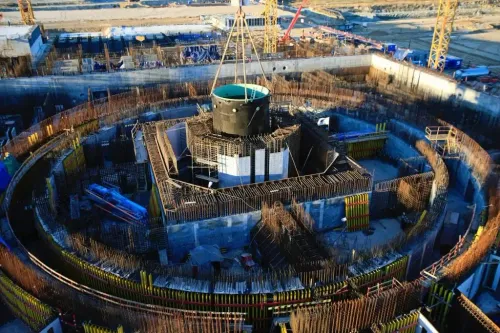
New Delhi, Feb 4 (NationPress) India is focusing on the implementation of Small Modular Reactors (SMRs) at brownfield sites, utilizing them as dedicated power plants to facilitate swift decarbonisation in energy-intensive industries. This initiative aims to repurpose aging fossil fuel power stations and provide energy in remote areas lacking grid infrastructure, as reported to Parliament on Wednesday.
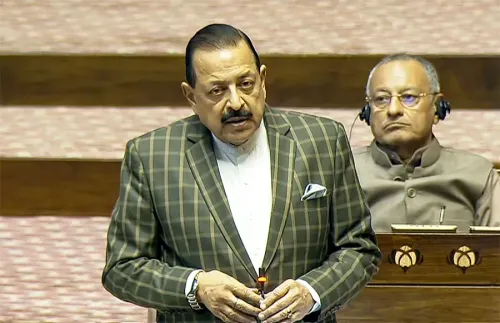
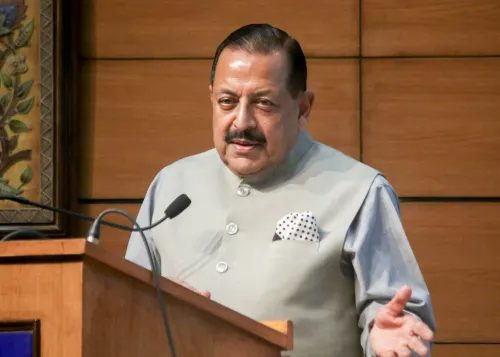
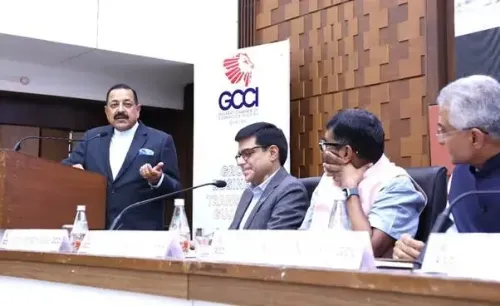
The ambitious goal of achieving 100 GW of nuclear capacity by 2047 can be met through the use of large reactors, including indigenous 700 MWe Pressurised Heavy Water Reactors (PHWRs) and advanced reactor designs sourced from abroad at greenfield locations. According to Dr. Jitendra Singh, the Minister of State in the Prime Minister’s Office and Atomic Energy, SMRs are particularly well-suited for accelerating decarbonisation in the energy sector at brownfield sites.
SMRs represent a cutting-edge technology for industrial decarbonisation, especially in contexts requiring a dependable and consistent power supply. They can be designed with load-follow capabilities, enhancing operational flexibility. The construction time is reduced, leading to lower capital costs, and their designs can be standardized for mass production, the minister emphasized.
The Nuclear Energy Mission includes a new project from the Bhabha Atomic Research Centre (BARC) for the design and development of SMRs, which encompasses the 220 MWe Bharat Small Modular Reactor (BSMR-200). The detailed project report has received approval, and financial sanction is pending. Various pre-project activities are currently underway, he added.
In principle, the proposal for the 55 MWe Small Modular Reactor (SMR-55) has also been approved, with design detailing progressing. The design and development of key prototype equipment are ongoing.
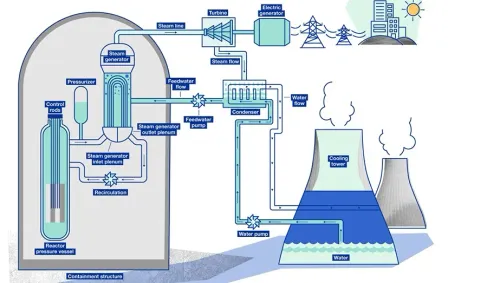
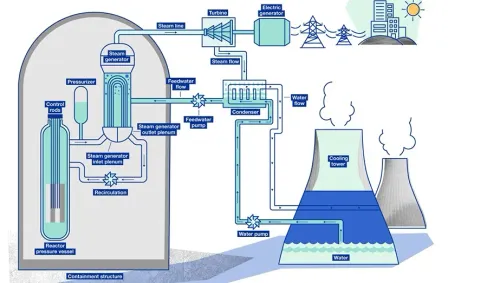
The Department of Atomic Energy (DAE) has developed significant expertise throughout the nuclear fuel cycle due to its experience with indigenous PHWRs. This knowledge is being applied to the pressurised water-based SMRs. Slightly Enriched Uranium (SEU) is being considered as a viable fuel option for the proposed SMRs. For domestic fuel, plans include reprocessing spent fuel to recover valuable nuclear materials and lessen the overall nuclear waste burden, the minister stated.
Furthermore, the minister reiterated that the overarching strategy for nuclear waste management remains unchanged, focusing on reducing the overall waste burden. This involves recovering useful radioisotopes, minimizing volume, followed by vitrifying waste in a stable glass matrix and storing it in engineered facilities monitored to meet internationally recognized standards. However, for SMRs, the reprocessing technology will be adapted based on fuel configurations.
The DAE possesses the necessary scientific and technological expertise for the design and development processes, with most equipment being within the manufacturing capabilities of Indian industries, supported by BARC’s technological guidance, the minister concluded.
Point of View
The strategic focus on Small Modular Reactors (SMRs) signifies India's commitment to achieving energy security, sustainability, and technological advancement. This approach aligns with global trends in nuclear energy and reflects the government's proactive measures to address climate change while ensuring reliable power supply.
NationPress
20 Sept 2026
Frequently Asked Questions
What are Small Modular Reactors (SMRs)?
Small Modular Reactors (SMRs) are compact nuclear reactors designed for flexibility, safety, and efficiency, suitable for various applications including energy production in remote locations.
How does India plan to utilize SMRs?
India intends to deploy SMRs at brownfield sites to facilitate rapid decarbonisation and repurpose aging fossil fuel power plants while extending energy access to areas without grid connectivity.
What is the target nuclear capacity for India by 2047?
India aims to achieve a nuclear capacity of 100 GW by the year 2047, incorporating both large reactors and Small Modular Reactors (SMRs).
What are the benefits of using SMRs?
SMRs offer numerous benefits including lower construction costs, reduced construction times, operational flexibility, and the potential for serial production.
How does India plan to manage nuclear waste?
India's strategy for nuclear waste management focuses on recovering valuable materials, reducing waste volume, and safely storing the waste in engineered facilities.