US open to expanding security role in Iceland amid Arctic threats
Synopsis
Secretary of State Marco Rubio travelled to Reykjavik and signalled Washington's willingness to expand its security footprint in Iceland — nearly two decades after the US withdrew its enduring presence. With Arctic threats multiplying, from hybrid warfare to undersea cable sabotage, Iceland's Cold War-era strategic value is rapidly reasserting itself.
Key Takeaways
Secretary of State Marco Rubio visited Reykjavik on 7 October 2026 and signalled US openness to deeper security cooperation with Iceland .
Rubio cited threats to undersea cables , shipping lanes , and covert/irregular activity in the Arctic as drivers of renewed focus.
The US maintained a military presence in Iceland until 2006 ; Rubio said the security environment had changed significantly since then.
Iceland is a founding NATO member but has no traditional standing military, making its geography its primary strategic asset.
No specific new agreements were announced; Rubio indicated Washington would act only in full cooperation with Icelandic officials.
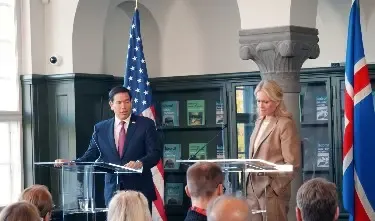
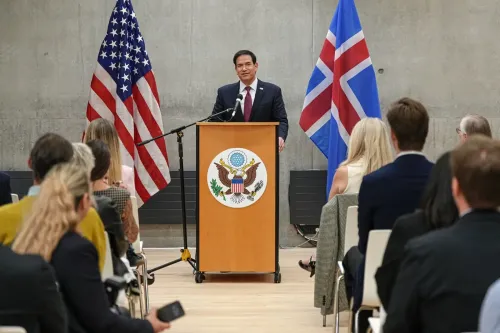
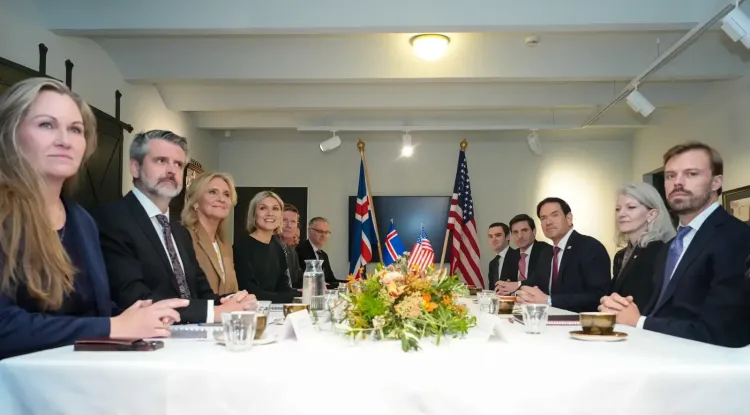
Secretary of State Marco Rubio said on 7 October 2026 that the United States is open to deepening security cooperation with Iceland, citing the country's critical geographic position in the North Atlantic and growing threats across the Arctic, including risks to undersea cables and shipping lanes. Rubio made the remarks during a joint media availability with Icelandic Foreign Minister Thorgerdur Katrin Gunnarsdottir in Reykjavik.
What Rubio Said
'We would be open to having those conversations to see what more we can do together,' Rubio said. 'I know there's interest in doing more together. And obviously, if there's opportunities that make sense for both countries, it's something we would pursue.'
Rubio stressed that any expanded cooperation would be pursued in full consultation with Icelandic officials. 'We would never do anything without cooperating with officials here about what's available,' he said. He added that Iceland could contribute infrastructure, technology, surveillance capabilities and domain awareness to wider collective security efforts.
Why the Arctic Is Back in Focus
The remarks come as Washington sharpens its strategic attention on the High North — a region that has gained renewed geopolitical salience due to both conventional and non-conventional threats. Rubio flagged concerns about 'irregular measures, covert measures,' as well as threats to undersea cables and shipping lanes that have direct implications for national security.
'There are direct threats and those threats in the 21st century aren't just military threats. They're also economic commercial threats that have implications on the national security of our respective countries,' he said.
The US maintained an enduring military presence in Iceland until 2006, when forces were reallocated to other regions. Rubio acknowledged the world had changed substantially since then. 'The reality of it is the world has changed over the last 20 years,' he said. 'There's a lot of focus on the Arctic. I think Iceland plays a very critical role in the defense of NATO writ large.'
Iceland's Strategic Importance
Iceland is a founding member of NATO but does not maintain a traditional standing military. Its position astride the GIUK Gap — the stretch of ocean between Greenland, Iceland, and the United Kingdom — has historically made it indispensable for transatlantic surveillance, anti-submarine operations, and maritime security.
The US–Iceland bilateral defence agreement, signed in 1951, has long underpinned this relationship, providing Washington access to Icelandic facilities and enabling joint operations across the North Atlantic. Rubio's visit also followed a separate agreement involving the US, Greenland, and Denmark, underscoring a broader American push to lock in Arctic partnerships.
'I think Iceland and its location plays a critical role in the defense both of Europe, but also of the homeland of the United States because of geography,' Rubio said.
What Comes Next
No specific agreements were announced during Rubio's visit, and the language remained deliberately open-ended — signalling intent without committing to a timeline or troop numbers. Analysts will watch whether this leads to a formal renegotiation of the 1951 defence agreement or new basing arrangements. With NATO allies increasingly alert to hybrid threats across the Arctic, Iceland's role as a surveillance and logistics hub is likely to feature prominently in upcoming alliance discussions.
Point of View
Not an absence of intent. What is notable is the framing: Rubio explicitly tied Iceland's security to the defence of the American homeland, language that goes beyond standard alliance reassurance and suggests Washington is rethinking the post-2006 drawdown as a strategic error. Whether this translates into a renegotiated 1951 agreement or new facilities will depend on domestic Icelandic politics — a country with no army and a historically cautious public on foreign military presence.
NationPress
7 Oct 2026
Frequently Asked Questions
What did US Secretary of State Marco Rubio say about Iceland's security role?
Rubio said the United States is open to expanding security cooperation with Iceland, describing the country's geographic position as critical to the defence of both Europe and the American homeland. He made the remarks during a joint media availability with Icelandic Foreign Minister Thorgerdur Katrin Gunnarsdottir in Reykjavik on 7 October 2026.
Why is the US renewing focus on Iceland and the Arctic?
Washington is concerned about growing threats in the High North, including risks to undersea cables, shipping lanes, and covert or irregular activity attributed to adversaries. Rubio noted the international security environment has changed significantly since the US withdrew its enduring military presence from Iceland in 2006.
Does Iceland have a military of its own?
Iceland is a founding NATO member but does not maintain a traditional standing military. Its strategic value stems primarily from its location in the North Atlantic, which is vital for transatlantic surveillance, anti-submarine operations, and maritime security across the GIUK Gap.
What is the US–Iceland 1951 defence agreement?
The bilateral defence agreement signed in 1951 has underpinned the US–Iceland security relationship for over seven decades, granting Washington access to Icelandic facilities and enabling joint NATO operations across the North Atlantic and Arctic. Rubio's visit has raised speculation about whether it could be renegotiated or supplemented.
Were any new agreements signed during Rubio's Reykjavik visit?
No specific new agreements were announced. Rubio's language was deliberately open-ended, indicating intent to explore deeper cooperation without committing to a timeline, troop numbers, or specific new basing arrangements. He stressed that any steps would be taken in full consultation with Icelandic officials.