Canada warns Arctic threats 'shifted significantly' as Russia, US tensions rise
Synopsis
Canada's Foreign Affairs Minister Anita Anand has declared that Arctic security threats have 'shifted significantly' — and in a striking poll, 48 per cent of northern Canadians now regard the United States, not Russia, as the region's biggest threat. Ottawa is responding with 12 new submarines, fresh consulates in Greenland and Alaska, and a push for NATO to look north as well as east.
Key Takeaways
Canada's Foreign Affairs Minister Anita Anand has warned that Arctic security threats have 'shifted significantly' due to Russia's war in Ukraine and intensifying strategic competition.
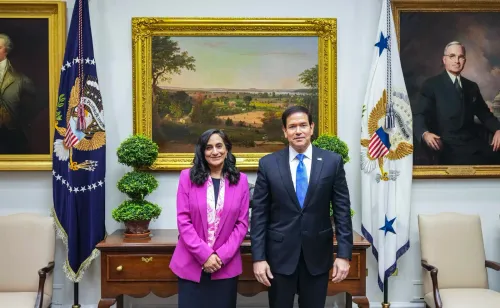
Anand attended an Arctic nations meeting convened by US Secretary of State Marco Rubio and called for closer Canada-US Arctic coordination within NATO .
PM Mark Carney's government has contracted German shipbuilder TKMS for up to 12 submarines and is expanding its diplomatic presence with consulates in Nuuk and Anchorage .
A poll found 48 per cent of northern Canadians view the United States as the greatest Arctic threat, compared to 30 per cent for Russia and 12 per cent for China .
India , which has an Arctic Policy since 2022 , maintains a research presence focused on climate science, shipping routes, and the Arctic's impact on the Indian monsoon.
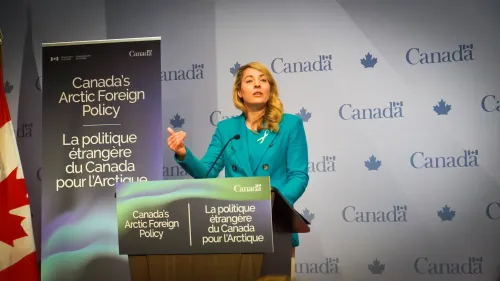
Canada's Foreign Affairs Minister Anita Anand has warned that the security threats facing the Arctic region have 'shifted significantly', citing Russia's ongoing war in Ukraine, intensifying strategic competition, and unresolved questions over sovereignty as key forces reshaping the geopolitics of the far north. The remarks, made to Global News, come as Ottawa navigates an increasingly complex relationship with Washington — a partner it depends on for Arctic defence yet is at odds with over tariffs and other political disputes.
Anand's Key Remarks on Arctic Security
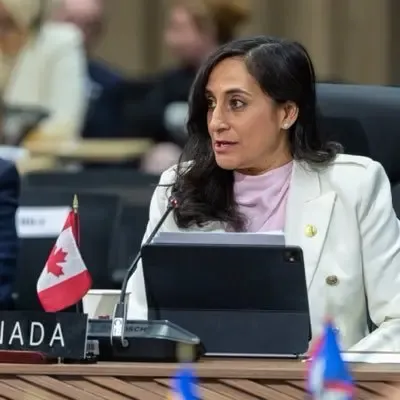
Anand, who attended an Arctic nations meeting convened last week by US Secretary of State Marco Rubio, described the gathering as a forum for a 'frank discussion about the collective need to work together on Arctic security.' She was explicit that the United States remains a central participant in that conversation.
'So the United States is very much at the table in this conversation,' Anand said. She also detailed the bilateral dialogue with Rubio: 'One of the ongoing dialogues that Secretary Rubio and I have had specifically … is in fact how can Canada and the United States ensure that our shared interests in the Arctic are advocated, are worked on within the confines of multilateral organizations including NATO.'
Notably, Anand — who is of Indian origin — called for NATO to broaden its strategic lens beyond its eastern European flank and pay greater attention to threats in the north. 'NATO, the North Atlantic Treaty Organization, should have a view that is based on a strategic assessment of the North and the Arctic, in order to ensure that we are well defended and protected,' she said.
Canada's Defence Build-Up in the Arctic
Prime Minister Mark Carney's government has announced a series of measures to boost Canada's military presence in the region. These include a contract with German shipbuilder TKMS for a fleet of as many as 12 submarines. A decision on new fighter aircraft has not yet been finalised.
On the diplomatic front, Ottawa has opened a consulate in Nuuk, Greenland, and plans to establish an additional one in Anchorage, Alaska — moves that signal a deliberate expansion of Canada's footprint across the broader Arctic zone.
Public Unease: US Seen as Bigger Threat Than Russia
The security cooperation between Canada and the United States is unfolding against a strikingly different public mood in northern Canada. A poll conducted for the Observatoire de la politique et la sécurité de l'Arctique, covering residents of Nunavut, the Northwest Territories, Yukon, and Nunavik, found that 48 per cent of respondents regarded the United States as the greatest threat facing the Arctic region. By comparison, Russia was identified by 30 per cent, while China was cited by 12 per cent.
The findings expose a significant gap between Canada's strategic dependence on its southern neighbour and the uneasy public perception of that same neighbour — a tension that Anand's remarks appeared designed, at least in part, to manage. Ottawa's position seems to be that bilateral political and trade disputes should not be allowed to undermine practical cooperation on defence and sovereignty.
The Broader Arctic Contest: Russia, China and India
The Arctic is growing in strategic importance as retreating sea ice opens new shipping lanes and makes natural resources more accessible. Russia maintains a substantial military presence in the region, while China — which describes itself as a 'near-Arctic state' — has actively pursued a larger economic and scientific role. The two countries represent different categories of challenge: Russia as a direct military actor, and China as an assertive economic and scientific player seeking influence.
India, meanwhile, has maintained a research presence in the Arctic and released a formal Arctic Policy in 2022. New Delhi's stated interests span climate science, polar research, emerging shipping routes, and the impact of Arctic environmental changes on the Indian monsoon and the Himalayan ecosystem — reflecting the region's relevance well beyond its immediate geography.
Both Canada and the United States remain partners in the North American Aerospace Defence Command (NORAD), the joint command used to monitor aircraft, missiles, and other threats approaching the continent. How that partnership evolves amid shifting public attitudes and geopolitical pressures will be one of the defining security questions of the coming years.
Point of View
Consulates, NATO advocacy) in response to Russian and Chinese assertiveness, while managing domestic public opinion that has turned sceptical of its most essential security partner. The push for NATO to 'look north' is also a coded message — that Europe-centric alliance structures are ill-suited to the contest now unfolding in the High Arctic, and Canada wants the framework redrawn before it is too late.
NationPress
28 Sept 2026
Frequently Asked Questions
Why has Canada warned that Arctic security threats have shifted?
Canada's Foreign Affairs Minister Anita Anand says security threats in the Arctic have 'shifted significantly' because Russia's invasion of Ukraine has changed how governments assess risk in both Europe and the far north, while strategic competition from Russia and China and unresolved sovereignty questions are simultaneously reshaping the region's geopolitics.
What steps is Canada taking to strengthen its Arctic defence?
Prime Minister Mark Carney's government has signed a contract with German shipbuilder TKMS for up to 12 submarines and is expanding its diplomatic presence by opening a consulate in Nuuk, Greenland, and planning another in Anchorage, Alaska. A decision on new fighter aircraft has not yet been finalised.
Why do many northern Canadians see the US as a bigger Arctic threat than Russia?
A poll covering residents of Nunavut, the Northwest Territories, Yukon, and Nunavik found 48 per cent regarded the United States as the greatest Arctic threat, compared to 30 per cent for Russia. The finding reflects growing unease over Canada-US political and trade tensions, even as both countries remain formal defence partners through NORAD.
What role does NATO play in Arctic security, and what is Canada asking for?
Canada and the US coordinate Arctic aerospace defence through NORAD, but NATO's strategic focus has historically centred on its eastern European flank. Minister Anand has called on NATO to develop a dedicated strategic assessment of the North and the Arctic, arguing that the alliance's security posture cannot afford to overlook the region.
What is India's interest in the Arctic?
India has maintained a scientific research presence in the Arctic and released a formal Arctic Policy in 2022. New Delhi's stated interests include climate science, polar research, emerging shipping routes, and studying the impact of Arctic environmental changes on the Indian monsoon and the Himalayan ecosystem.