Middle powers at UNGA 2026 demand strategic autonomy as bloc rivalry intensifies
Synopsis
At the UN General Assembly on 27 September 2026, Canada, Australia, the Netherlands, and small island states delivered a rare coordinated rebuke of great-power rivalry — demanding strategic autonomy and warning that middle and small nations risk becoming collateral damage in a world rapidly sorting itself into rival blocs. The language closely mirrors India's long-held foreign policy posture, suggesting that strategic autonomy is no longer a regional preference but a global one.
Key Takeaways
Canada , Australia , the Netherlands , and several small island nations used UNGA on 27 September 2026 to demand greater strategic autonomy amid major-power rivalry.
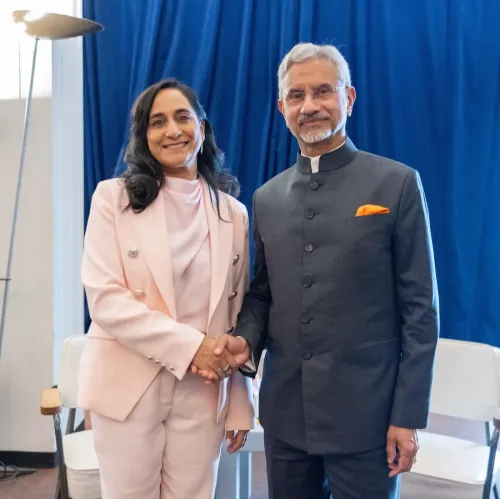
Canadian Foreign Minister Anita Anand warned of 'a rupture, not a transition,' citing a retreat from global economic cooperation; Ottawa secured more than 20 economic and defence agreements in the past year.
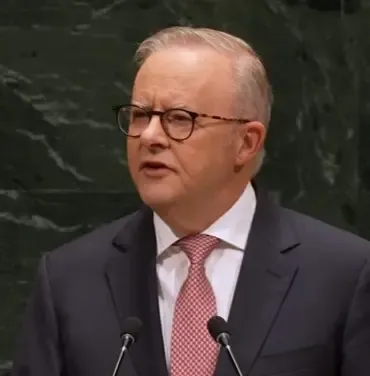
Australian PM Anthony Albanese said the UN's mission cannot be left to great powers alone, and outlined Indo-Pacific partnerships to deliver sovereign choices free from coercion.
Dominica President Sylvanie Burton warned that 'small states must never become collateral damage' in great-power competition.
Maldives Vice President Hussain Mohamed Latheef said competition in the Indian Ocean must not restrict smaller states' sovereign choices.
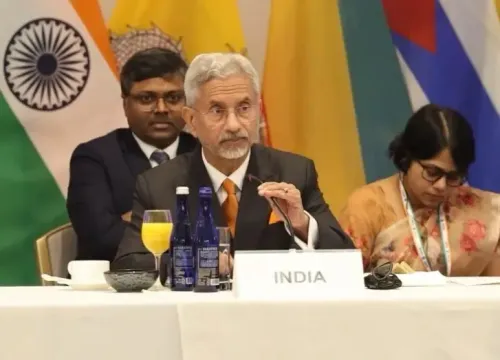
India 's strategic autonomy framework — balancing ties with the US, Russia, and the Global South — was cited as a model now being adopted more broadly.
Canada, Australia, the Netherlands, and a coalition of smaller nations used the UN General Assembly on 27 September 2026 to mount a coordinated push for strategic autonomy, warning that deepening rivalry among major powers is forcing countries to choose sides and eroding both economic cooperation and national sovereignty. The speeches marked a striking convergence of language among mid-tier states that rarely speak with a unified voice.
Canada's Warning: 'A Rupture, Not a Transition'
Canadian Foreign Minister Anita Anand delivered one of the sharpest addresses of the session. 'We are facing a rupture, not a transition,' Anand said, accusing major powers of retreating from global economic cooperation and dismantling the architecture of economic integration that has underpinned decades of growth.
Anand argued that Canada could no longer afford to be overly reliant on any single partner, saying Ottawa had secured more than 20 economic and defence agreements over the past year while scaling up security investments. The goal, she said, was to preserve Canada's capacity to make sovereign decisions — a capacity she warned was under genuine threat.
Australia and the Netherlands Push for a Larger Middle-Power Role
Australian Prime Minister Anthony Albanese echoed that framing, arguing that the UN's mission could not be entrusted solely to great powers, the largest countries, or the loudest voices. 'As a middle power, Australia is showing leadership and working with others on fresh ideas,' Albanese said. He outlined partnerships across the Indo-Pacific designed to strengthen sovereign choices — covering economic security, energy, technology, and transnational crime — free from what he described as external coercion.
Dutch Prime Minister Rob Jetten urged middle powers to assume a greater stabilising role as major powers increasingly pursued narrow national interests. Jetten called for deeper cooperation on international law, climate accountability, and institutional reform, arguing that middle powers were among the last credible defenders of the multilateral order.
Small Island States: 'We Must Not Become Collateral Damage'
The concern was expressed most urgently by representatives of small island nations, who argued they lacked the economic and military capacity to absorb external shocks generated by great-power competition. Dominica President Sylvanie Burton put it starkly: 'Small States must never become collateral damage in the competition among larger Powers.' She linked economic resilience — particularly reduced dependence on imported energy — to genuine political independence.
Seychelles President Mathew Herminie said smaller nations sought shared solutions, not strategic competition. He noted that conflicts in which island countries played no role could still impose higher shipping, fuel, and security costs on their economies, and he called for stronger intelligence-sharing, maritime surveillance, and law-enforcement cooperation.
Maldives Vice President Hussain Mohamed Latheef focused specifically on the Indian Ocean, warning that competition among major powers in the region must not restrict the choices of smaller states. Sovereignty, he argued, could be weakened without a border being crossed — when external powers limited a country's freedom to chart its own course.
India's Strategic Autonomy as a Template
Notably, India has long championed strategic autonomy as a defining feature of its foreign policy, maintaining simultaneous partnerships with the United States, Russia, Europe, and countries across the Global South while participating in groupings including the Quad, BRICS, and the G20. The UNGA session indicated that this once-distinctive Indian posture is now being adopted, and explicitly articulated, by a far wider range of countries — suggesting that the strategic autonomy framework is migrating from a regional preference into a mainstream global position.
This comes amid a broader fragmentation of the post-Cold War order, in which trade blocs, security alliances, and technology supply chains are being reorganised along geopolitical lines. The speeches collectively signal that middle and small powers intend to resist being sorted into rival camps — and that they see multilateral forums like the UN General Assembly as the primary venue for that resistance.
What to Watch Next
Whether this convergence of rhetoric translates into coordinated diplomatic action — at the G20, in WTO reform negotiations, or in regional security forums — remains to be seen. The common thread running through virtually every speech was an appeal to rules-based institutions at precisely the moment those institutions are under the most strain they have faced in decades.
Point of View
Australia, and the Maldives are not natural allies, yet they are now reading from the same strategic script. What this actually produces in institutional terms is another matter: middle-power rhetoric at the UN has a long history of dissolving into communiqués that change little. The more interesting signal is what this means for India, whose strategic autonomy doctrine — once treated as a post-colonial idiosyncrasy — is now being embraced by US treaty allies. That shifts the diplomatic ground for anyone trying to frame the world as a binary contest between Western and non-Western blocs.
NationPress
27 Sept 2026
Frequently Asked Questions
What did middle powers demand at the UN General Assembly in 2026?
Canada, Australia, the Netherlands, and several smaller countries used the UN General Assembly on 27 September 2026 to demand strategic autonomy — the ability to make sovereign foreign, economic, and security decisions without being forced to align with any single great power. They warned that intensifying rivalry between major nations was eroding multilateral cooperation and threatening smaller countries' independence.
What did Canadian Foreign Minister Anita Anand say at UNGA?
Anand described the current global moment as 'a rupture, not a transition,' accusing major powers of retreating from economic integration. She said Canada had secured more than 20 economic and defence agreements in the past year and was building partnerships with small states, middle powers, and major powers to protect its sovereign decision-making.
Why are small island states especially concerned about great-power competition?
Small island states lack the economic and military capacity to absorb shocks from conflicts or rivalries in which they play no role. Dominica's President Sylvanie Burton warned they must not become 'collateral damage,' while the Seychelles and Maldives noted that great-power competition in their regions raises shipping, fuel, and security costs even when those countries are not parties to the dispute.
How does India's foreign policy relate to the strategic autonomy debate at UNGA?
India has long pursued strategic autonomy, maintaining ties with the US, Russia, Europe, and the Global South while participating in the Quad, BRICS, and G20. The UNGA speeches showed that this posture — once associated primarily with India and a handful of non-aligned states — is now being explicitly adopted by a much wider group of countries, including US allies like Canada and Australia.
What did Australian PM Anthony Albanese say about middle powers at the UN?
Albanese argued that the UN's mission could not be entrusted solely to great powers, the largest countries, or the loudest voices. He said Australia was working with partners across the Indo-Pacific to strengthen national capabilities and offer countries sovereign choices free from coercion, covering areas including economic security, energy, technology, and transnational crime.