US clears $2.1 billion Patriot missile sale to Ukraine, allies to fund deal
Synopsis
The US has cleared a $2.1 billion Patriot missile package for Ukraine — and for the first time in a deal of this scale, not a single dollar comes from Washington. Canada, Germany, Norway, and the EU's Ukraine Support Loan are footing the entire bill, signalling a deliberate Western shift toward burden-sharing that keeps US political heat low while sustaining Kyiv's air defences.
Key Takeaways
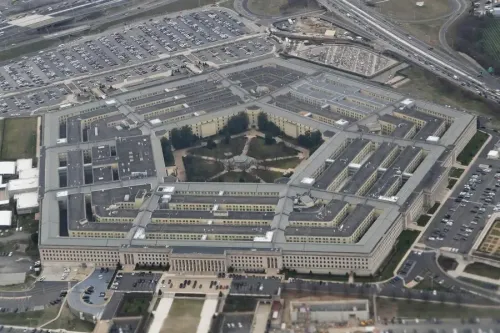
The US State Department approved a possible sale of 500 Patriot PAC-3 MSE interceptors to Ukraine , estimated at $2.1 billion .
The deal is funded entirely by Canada , Germany , and Norway via the JUMPSTART programme and the EU's Ukraine Support Loan — no US funds involved.
The package also includes classified and unclassified spare parts and logistics support, listed as non-major defence equipment.
Congress has been formally notified and retains authority to review or block the sale during the statutory window.
No additional US government or contractor personnel will be deployed to Ukraine as a result of this transaction.
The US State Department has approved a possible Foreign Military Sale to Ukraine of 500 Patriot PAC-3 Missile Segment Enhancement (MSE) interceptors and related equipment, valued at an estimated $2.1 billion. Crucially, no American taxpayer funds are involved — the purchase will be financed entirely by partner nations and the European Union, marking a significant diplomatic arrangement in Western support for Kyiv.
What the Sale Covers
The package, announced by the Bureau of Political-Military Affairs on 31 October and formally notified to Congress, includes 500 PAC-3 MSE missiles along with classified and unclassified spare parts, logistics support, and programme management elements. The State Department categorised the non-missile components as non-major defence equipment.
The Patriot Advanced Capability-3 (PAC-3) MSE is a high-performance surface-to-air interceptor designed to defeat ballistic missiles, cruise missiles, and advanced aerial threats — precisely the categories Ukraine has faced in sustained Russian strikes on its energy and civilian infrastructure.
Who Is Paying and How
The funding structure draws from multiple Western contributors. According to the State Department notification, Canada, Germany, and Norway will contribute via the JUMPSTART programme alongside national funds, with the transaction further backed by the European Union's Ukraine Support Loan. The department explicitly stated: 'No U.S. funds are involved in this sale.'
This financing model reflects a broader Western strategy of sustaining Ukraine's defence capabilities while distributing the fiscal burden across allied nations — a formula that has gained traction as debate over direct US military spending on Ukraine has intensified in Washington.
Strategic Rationale
The State Department framed the approval in terms of US foreign policy objectives, stating the sale 'will support the foreign policy and national security objectives of the United States by improving the security of a partner country that is a force for political and economic stability in Europe.' It added that the proposed transaction 'will sustain existing PATRIOT system operations against ongoing aerial threats.'
Officials also confirmed that the deal will not require additional US government or contractor personnel to be deployed inside Ukraine, and that it will have 'no adverse impact on U.S. defense readiness.'
Context and Significance
Ukraine has repeatedly requested expanded Patriot coverage as Russian aerial campaigns have targeted power grids and civilian infrastructure. This sale, if completed, would substantially replenish Ukrainian interceptor stocks at a moment when existing inventories have been drawn down by sustained combat use.
Notably, this is a Congressional notification of a possible sale — a standard procedural step that opens a review window before any formal transfer proceeds. Congress retains the authority to block or modify the sale during this period. The transaction represents one of the largest single air-defence packages approved for Ukraine under the Foreign Military Sales framework.
As allied contributions continue to underwrite Ukraine's defence posture, the next phase will depend on how quickly the JUMPSTART funding is disbursed and whether Congress raises any objections during its review window.
Point of View
Washington insulates the transaction from domestic political friction while keeping Kyiv's air defences replenished. The JUMPSTART mechanism is quietly becoming the preferred vehicle for sustaining Ukraine without triggering Congressional appropriations battles. Yet the 'possible sale' label is a reminder that nothing is final — and in the current US political climate, the review window carries real uncertainty. The deeper question is whether this burden-sharing model can be institutionalised fast enough to outlast the political cycles in donor capitals.
NationPress
31 Oct 2026
Frequently Asked Questions
What is the $2.1 billion Patriot missile sale approved for Ukraine?
The US State Department has approved a possible Foreign Military Sale of 500 Patriot PAC-3 Missile Segment Enhancement (MSE) interceptors to Ukraine, valued at an estimated $2.1 billion. The package also includes spare parts and logistics support, with the entire cost to be borne by allied nations — not the United States.
Which countries are funding the Patriot missile purchase for Ukraine?
Canada, Germany, and Norway will contribute through the JUMPSTART programme and their own national funds, with additional financing from the European Union's Ukraine Support Loan. The US State Department confirmed that no American funds are involved in the transaction.
What is the Patriot PAC-3 MSE and why does Ukraine need it?
The Patriot Advanced Capability-3 Missile Segment Enhancement is a high-performance surface-to-air interceptor designed to defeat ballistic missiles, cruise missiles, and advanced aerial threats. Ukraine has needed sustained replenishment of these interceptors as Russian aerial strikes on its infrastructure have drawn down existing stocks.
Is the sale finalised or can Congress block it?
The State Department has notified Congress of a 'possible' Foreign Military Sale, which is a standard procedural step. Congress retains authority to review and potentially block or modify the transaction during the statutory review window before any formal transfer is completed.
Will US personnel be deployed to Ukraine as part of this deal?
No. The State Department confirmed that the sale will not require any additional US government or contractor representatives to be assigned to Ukraine, and that it will have no adverse impact on US defence readiness.