Ukraine gets €3.3 billion EU defence tranche for missiles, drones
Synopsis
The EU has funnelled another €3.3 billion into Ukraine's war machine — part of a €45 billion defence-and-budget lifeline for 2026 — while Russia summoned Britain's top diplomat in Moscow over London's decision to let MBDA share classified SCALP missile data with Kyiv. The twin developments on Friday mark a sharp simultaneous escalation on both the financial and diplomatic fronts.
Key Takeaways
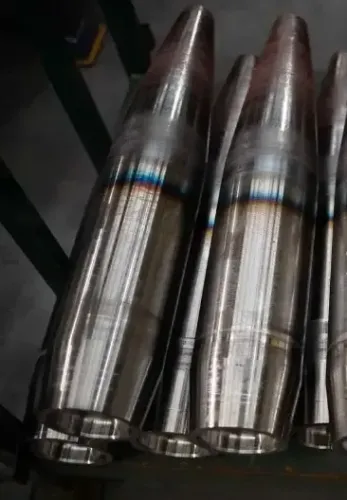
Ukraine received a €3.3 billion EU tranche on 19 September 2026 under the Ukraine Support Loan mechanism, earmarked for missiles and drones .
The mechanism envisages up to €45 billion in EU assistance to Ukraine in 2026 ; the broader loan framework totals €90 billion through 2027.
The Russian Foreign Ministry summoned British charge d'affaires Danae Dholakia over London's escalating arms supplies, including SCALP missile data-sharing.
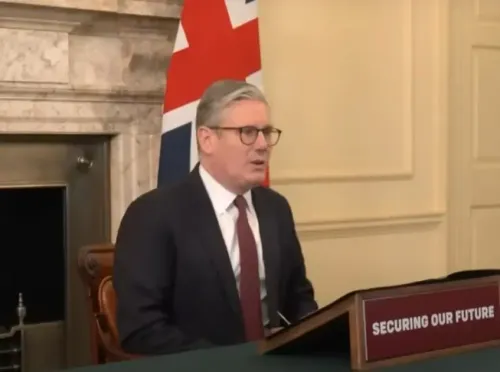
British PM Andy Burnham's office confirmed on 24 August that MBDA was authorised to share classified SCALP missile component information with Kyiv.
Russia warned that British military facilities in Ukraine used to strike Russian territory would be considered legitimate targets.
The Russian Defence Ministry claimed two massive and five group strikes over the past week, seizing ten settlements — figures that remain unverified.
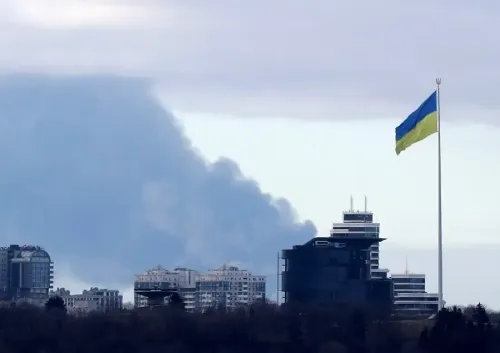
Ukraine has received a fresh €3.3 billion (approximately $3.78 billion) tranche from the European Union to fund priority defence needs, Ukrainian Prime Minister Sergii Koretskyi announced on Friday, 19 September 2026. The disbursement, confirmed by Koretskyi via Telegram, will be directed specifically toward the purchase of missiles and drones, underscoring Kyiv's continued reliance on Western financial lifelines to sustain its war effort.
Ukraine Support Loan Mechanism
The funds were released under the Ukraine Support Loan mechanism, which envisages up to €45 billion in total assistance to Ukraine in 2026, covering both defence procurement and budgetary support. The broader framework was finalised by the EU in April 2026 as part of a €90 billion support loan intended to run through 2027. Friday's tranche marks one of the larger single disbursements under this arrangement and signals that EU member states remain aligned on sustaining Kyiv's military capacity.
Russia Summons British Diplomat Over Arms Supplies
In a parallel development on the same day, the Russian Foreign Ministry summoned Britain's charge d'affaires in Moscow, Danae Dholakia, over what it described as London's escalating arms supplies to Ukraine. The diplomatic flashpoint stems from an announcement made on 24 August by British Prime Minister Andy Burnham's office, which confirmed that defence company MBDA had been authorised to share classified technical information on British components of the long-range SCALP missile — intelligence that would enable Kyiv to assemble these weapons domestically.
The Russian Foreign Ministry characterised Britain's posture as 'sharply confrontational,' stating it was 'clearly subordinated to the task of dragging out and escalating the armed conflict by all means, and only pushes further away the prospect of its political settlement.' Moscow also warned that any British military facilities on Ukrainian territory used to launch strikes against Russia would be treated as legitimate targets, and that Russia reserved the right to take 'necessary retaliatory measures.'
Russian Military Claims Weekly Strikes and Territorial Gains
Separately, the Russian Defence Ministry on Friday reported that its forces had conducted two massive and five group strikes against Ukrainian targets over the past week, seizing ten settlements. According to the ministry's statement — which could not be independently verified — the strikes hit defence plants, metallurgical and electronic enterprises, military logistics hubs, fuel and railway infrastructure, drone manufacturing workshops, ammunition depots, ports, and temporary deployment zones for Ukrainian forces and what Russia described as foreign mercenaries.
At sea, the ministry claimed hits on 12 Ukrainian dry cargo ships, two sea ferries, one tanker, and one tugboat. Russian air defence systems, it added, had intercepted 44 guided aerial bombs, eight HIMARS rockets, two Neptune long-range guided missiles, and 5,706 Ukrainian drones during the same period. These figures are Moscow's own claims and have not been independently confirmed.
What the Escalation Signals
This comes amid a broader pattern of deepening Western military and financial involvement in the conflict, even as diplomatic channels remain effectively closed. The EU's structured multi-year loan mechanism — now disbursing at scale — represents a qualitative shift from ad hoc aid packages to institutionalised long-term support. Britain's decision to declassify SCALP missile component data is similarly significant: it moves the UK from supplier to co-manufacturer in functional terms. Russia's summoning of the British diplomat and its explicit threat to target British facilities in Ukraine signals a deliberate effort to raise the diplomatic cost of such decisions. How London and Brussels respond will shape the conflict's trajectory in the months ahead.
Point of View
Which is precisely why Moscow chose a formal diplomatic protest rather than a rhetorical one. Russia's threat to target British facilities in Ukraine is untested, but it is not empty: Moscow has a track record of following through on publicly declared red lines. The real question is whether the West has a coherent theory of how this ends, or whether the €90 billion framework is financing a conflict with no defined exit ramp.
NationPress
19 Sept 2026
Frequently Asked Questions
What is the €3.3 billion EU tranche Ukraine received?
It is a disbursement under the EU's Ukraine Support Loan mechanism, announced on 19 September 2026, specifically earmarked for purchasing missiles and drones. The mechanism provides up to €45 billion in assistance to Ukraine across 2026, covering both defence and budgetary needs.
What is the Ukraine Support Loan mechanism?
It is a structured EU financial arrangement finalised in April 2026 that commits up to €90 billion in loans to Ukraine over 2026 and 2027. The funds cover both defence procurement and general budgetary support, replacing earlier ad hoc aid packages with a multi-year framework.
Why did Russia summon Britain's charge d'affaires?
Russia summoned Danae Dholakia, Britain's charge d'affaires in Moscow, on 19 September 2026 over London's decision to authorise defence company MBDA to share classified information on British components of the SCALP long-range missile with Ukraine. Moscow described Britain's approach as escalatory and warned of retaliatory measures.
What is the SCALP missile and why does it matter?
The SCALP is a long-range cruise missile jointly developed by MBDA; it has been supplied to Ukraine by Britain and France. The UK's decision to share classified component data allows Kyiv to potentially assemble these weapons domestically, a significant step beyond standard arms transfers.
How credible are Russia's claims about strikes and territorial gains?
The Russian Defence Ministry's claims — including two massive strikes, seizure of ten settlements, and the downing of over 5,700 drones in one week — are Moscow's own statements and have not been independently verified. They should be read as official Russian government claims, not confirmed facts.