Has the US-Pakistan Relationship Really Changed?
Synopsis
Despite recent high-profile meetings, a South Asia expert reveals that the essence of the US-Pakistan relationship remains unaltered. The anticipated gains in economic and military ties appear more symbolic than substantive, raising questions about the future of this critical partnership.
Key Takeaways
US-Pakistan relations remain largely symbolic.
Pakistan's Board of Peace participation is a key diplomatic move.
Expectations for military and economic gains are tempered by reality.
Domestic sentiments about foreign military involvement are crucial.
American investments face challenges due to security concerns.
Washington, Feb 18 (NationPress) Despite a more favorable appearance and elevated interactions over the previous year, the core of the US-Pakistan relationship remains fundamentally unchanged, a prominent expert on South Asia remarked, cautioning that the symbolism has yet to yield any significant economic or military benefits for Islamabad.
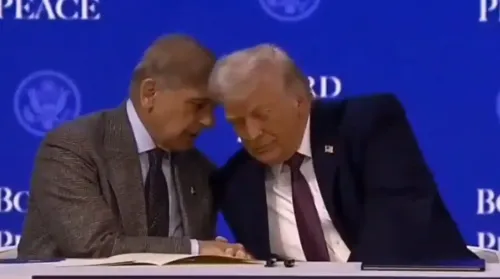
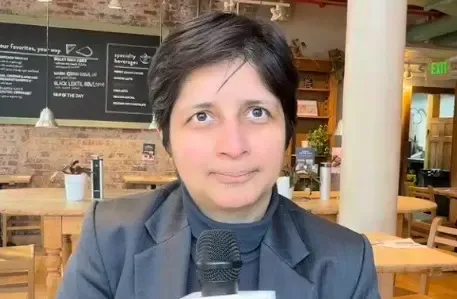
Pakistan's involvement in the forthcoming Board of Peace meeting is being portrayed in Islamabad as proof of revitalized connections with Washington. However, Aparna Pande from the esteemed Hudson Institute indicated that this shift is more about symbolism than any structural changes.
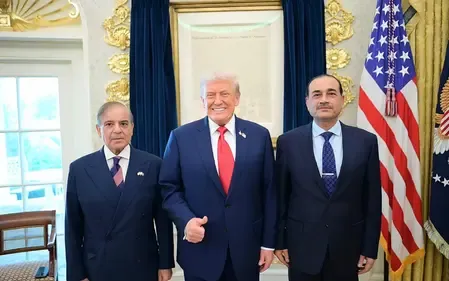
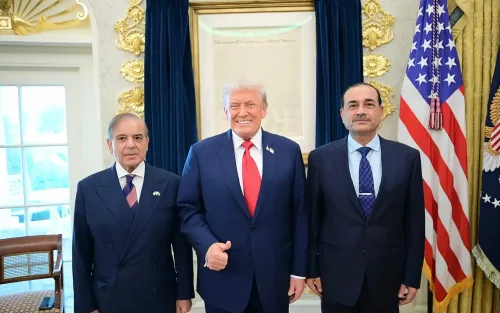
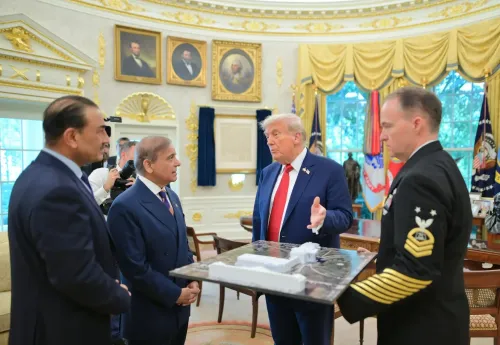
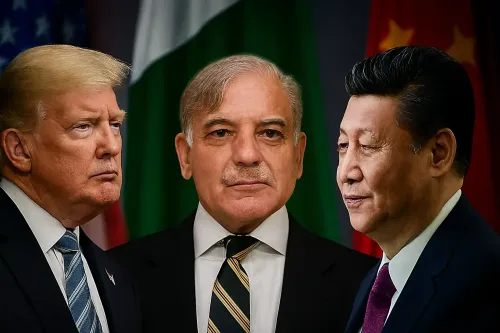
“This visit is primarily for attending the Board of Peace meeting,” she explained, emphasizing that the Pakistani delegation would likely highlight “the altered US-Pakistan relationship from last year” and the “closer personal ties” between the Pakistani Prime Minister, the Army chief, and President Trump.
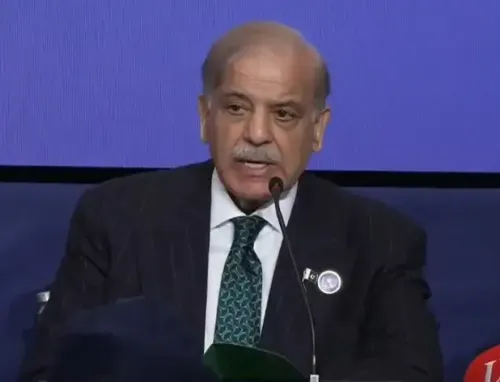
Prime Minister Shehbaz Sharif is expected to arrive in Washington this week to take part in the inaugural meeting of the Board of Peace, convened by Trump.
Islamabad is also anticipated to underscore trade relations and may pursue a bilateral discussion on the sidelines. “Whether this bilateral meeting occurs remains to be seen,” she remarked.
“Symbolically, the relationship appears strong,” Pande noted. “However, substantively, I don’t believe much has altered in the last year to year and a half within Pakistan.”
Regarding Gaza, she mentioned that Pakistan has historically sought to “assume a role in any Muslim-majority nation and in matters concerning Muslims and the Muslim Ummah.” Participation in the Board of Peace as well as involvement in Gaza would, to some extent, be welcomed domestically.
However, she set clear boundaries. “As long as Pakistani forces are strictly there for peacekeeping and do not engage with local civilians,” it would be acceptable. If they were “expected to dismantle Hamas and engage in actual combat,” it would “not be viewed positively by the Pakistani populace.”
Pande expressed that if Pakistani troops were perceived as “pro-Israel rather than supportive of the Palestinian citizens, it wouldn’t reflect well.” Overall, while “symbolically it may appear favorable,” Islamabad would seek clarity on the role its forces are expected to play in any international stabilization initiative in Gaza.
On internal political matters, she stated that members of Congress “might pose questions,” but “I don’t believe the Trump administration will raise any concerns… as it doesn’t hold significance for them.”
Pande asserted that Pakistan has “effectively leveraged its geographical position… to serve the current American administration’s interests in Iran and Gaza.” From Islamabad’s viewpoint, this regional utility should lead to bilateral advantages.
“Currently, this has resulted in mere symbolism and some investment announcements… but has not delivered more,” she stated. She highlighted frustration in Pakistan, referencing a recent comment by the country’s defense minister describing Pakistan as being “used like a toilet roll by the United States.”
Regarding military relations, she was straightforward. “This administration isn’t inclined to provide high-end military equipment. Pakistan will need to procure it.” While nations like Saudi Arabia or Turkey could potentially fund such acquisitions, “Pakistan lacks the economic means for this.”
On the economic side, she mentioned that American firms “may invest in critical minerals,” but many resources are located in Balochistan, where “the insurgency… deters many companies from entering a country that does not guarantee their safety.”
Point of View
We recognize the delicate balance of international relations. The insights from expert Aparna Pande highlight the importance of understanding both the symbolic and substantive elements of diplomatic ties. Our commitment remains to present the facts transparently, aligning with the interests of our nation and its citizens.
NationPress
30 Sept 2026
Frequently Asked Questions
What is the current status of the US-Pakistan relationship?
Despite recent meetings, the core relationship remains unchanged with no significant economic or military gains.
What are the implications of Pakistan's participation in the Board of Peace?
It's viewed as a symbolic gesture of improved ties, but experts caution against expecting substantial outcomes.
What is Pakistan's role in Gaza?
Pakistan seeks to play a role in Muslim-majority issues but must ensure its forces are only involved in peacekeeping.
How do American investments impact Pakistan?
While there might be interest in critical minerals, security concerns in Balochistan pose significant challenges.
Will the US provide military equipment to Pakistan?
Current indications suggest that high-end military equipment is unlikely to be provided; Pakistan may need to procure it independently.